
Triple Harmonies (三合)
三合 · Earthly Branch dynamics in BaZi
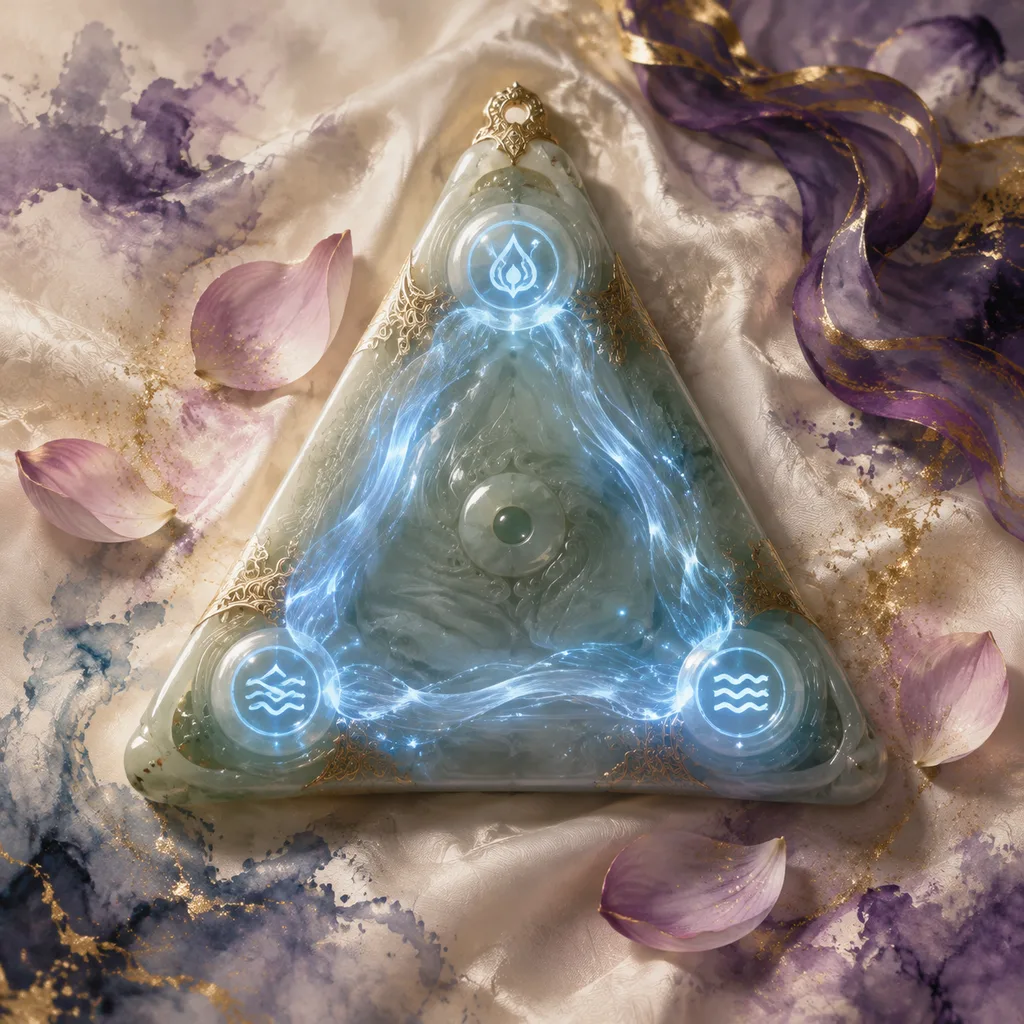
In BaZi astrology, the Three Harmonies (San He) (三合) is one of the fundamental interactions between Earthly Branches (地支). Three branches that form a complete elemental trine, creating powerful synergy. The three harmonies are: Shen-Zi-Chen (Water), Hai-Mao-Wei (Wood), Yin-Wu-Xu (Fire), and Si-You-Chou (Metal).
Three Harmonies is the most reliable elemental synthesis in BaZi. When all three branches are present, the transformed element almost always manifests, providing a dominant force that can define the chart's dynamics.
Each frame includes Birth, Bloom, and Grave branches, representing the creation, peak, and storage phases. This cycle gives the alliance depth and stability, making it more powerful than simple pairs.
The three branches span three different seasons, creating a structural bond that overcomes seasonal conflicts. This cross-seasonal nature gives the frame resilience and broad influence in a reading.
| Quick Facts | |
|---|---|
| Chinese Name | 三合 (San He) |
| Category | Combination |
| Interaction Type | Synthesis |
| Number of Interactions | 4 directional frames |
| Core Mechanism | Three branches spaced 120° apart form a triangular alliance that generates a new elemental force. |
| Transformation Rule | When all three branches are present, they transform into a single dominant element, overriding original branch elements. |
| Hidden Stem Role | Hidden stems reveal the life-cycle phases: Birth, Bloom, and Grave of the synthesized element. |
| Directional Pattern | Triangular, each vertex 120° apart on the zodiac wheel, spanning three consecutive seasons. |
| Classical Source | Yuan Hai Zi Ping (淵海子平), Treatise on Three Harmonious Combinations |
| Practical Significance | Indicates a powerful, stable support or challenge in a chart, often defining career, relationships, and life direction. |
Strongest Elemental Transformation
Three Harmonies is the most reliable elemental synthesis in BaZi. When all three branches are present, the transformed element almost always manifests, providing a dominant force that can define the chart’s dynamics.
Complete Life Cycle of the Element
Each frame includes Birth, Bloom, and Grave branches, representing the creation, peak, and storage phases. This cycle gives the alliance depth and stability, making it more powerful than simple pairs.
Cross-Seasonal Alliance
The three branches span three different seasons, creating a structural bond that overcomes seasonal conflicts. This cross-seasonal nature gives the frame resilience and broad influence in a reading.
The Triangular Alliance: Structural Mechanics
The Three Harmonies is formed by three Earthly Branches spaced exactly 120° apart on the zodiac wheel, creating an equilateral triangle. This geometric precision reflects a natural resonance: the branches are not adjacent but equidistant, ensuring a balanced yet powerful synthesis. The four frames are Shen-Zi-Chen (Water), Hai-Mao-Wei (Wood), Yin-Wu-Xu (Fire), and Si-You-Chou (Metal). Each frame corresponds to a season’s beginning, middle, and end: for example, Shen (late summer/autumn), Zi (winter), Chen (spring) — together they span three seasons, yet unify into Water. The transformation occurs because the branches’ intrinsic energies align to generate a new, dominant element. In a natal chart, if all three are present, they form a ‘frame’ that overrides the individual branch elements. The frame is considered ‘complete’ only when all three appear; two alone do not transform but may indicate potential. The presence of the frame’s element in the luck pillars or year pillar can activate or complete the alliance. This structural bond is the strongest in BaZi because it combines spatial, seasonal, and elemental logic.
Hidden Stems: The Inner Life Cycle
Each Three Harmonies frame conceals a deeper narrative through its hidden stems (藏干). The three branches are not equal: one is the Birth (生方) where the element originates, one is the Bloom (旺方) where it peaks, and one is the Grave (墓方) where it is stored. For the Water frame (Shen-Zi-Chen): Shen hides Geng (Metal), which generates Water; Zi hides Gui (Water), the element itself at full strength; Chen hides Wu (Earth), which acts as a reservoir for Water. This life-cycle sequence explains why the alliance is self-sustaining: the Birth branch provides the source, the Bloom branch manifests the element, and the Grave branch stores it for future use. In readings, if the Day Master aligns with the Bloom branch, the person embodies the element fully. If the Grave branch is prominent, the element may be stored or hidden, requiring activation. Hidden stems also reveal potential conflicts: for example, in the Fire frame (Yin-Wu-Xu), Yin hides Jia (Wood) which feeds Fire, but Xu hides Xin (Metal) which can be harmed by Fire. These nuances modify the surface harmony, adding layers of complexity that a skilled practitioner interprets.
Transformation: When and How It Works
The Three Harmonies transformation is conditional, though more reliable than other combinations. The primary condition is the presence of all three branches in the natal chart, luck pillars, or year pillar. Once complete, the branches lose their individual elemental identities and collectively produce the frame’s element. This transformation is so strong that it can override the Day Master’s original element, especially if the frame’s element is favorable. However, if the frame’s element clashes with the Day Master, it can create intense pressure. Transformation can be blocked by certain conditions: if a branch is ‘harmed’ by a clash or if the frame’s element is severely weakened by opposing elements (e.g., Earth destroying Water). In such cases, the frame may be ‘incomplete’ or ‘broken,’ and the branches revert to their original nature. A key classical rule is that the frame must be ‘supported’ by the season or luck pillar: for instance, a Water frame in winter is stronger than in summer. Practitioners also check if the frame’s element appears in the hidden stems of the Birth branch; if not, the transformation may be delayed. When conditions are met, the frame acts as a dominant force, often dictating career direction, relationship dynamics, and major life events.
Real-World Manifestations in Readings
In practice, a Three Harmonies frame indicates a concentrated, directional energy that manifests in specific life areas. For career, if the frame’s element is favorable to the Day Master, the person may excel in fields related to that element: Water frames suit logistics, travel, or fluid industries; Fire frames suit leadership, entertainment, or technology. The frame often shows up in the luck pillars, marking periods of major transformation. For relationships, the frame can indicate a powerful bond or a triangular dynamic: for example, a Fire frame in a marriage pillar may indicate passionate but volatile relationships. Health-wise, the frame’s element governs corresponding organs: Water frames affect kidneys and bladder; Wood frames affect liver and eyes. Timing is crucial: when a luck pillar activates one of the three branches, it may ‘complete’ the frame, triggering events. For instance, if a person has Shen and Zi in their natal chart, and a Chen year arrives, the Water frame activates, possibly bringing a career change or new relationship. Practitioners also watch for clashes with the frame: a clash to any branch can break the harmony, leading to sudden disruptions. The frame’s presence in the Hour Pillar can indicate late-life fulfillment, while in the Year Pillar it suggests family or ancestral influence.
Classical Wisdom: Yuan Hai Zi Ping and Modern Lens
The classical source for Three Harmonies is the Yuan Hai Zi Ping (淵海子平), specifically the treatise on ‘Three Harmonious Combinations’ (三合局). The text states: ‘When the three branches combine, they form a bureau (局) that generates a specific element. This bureau is like a government office: it has authority and structure.’ The original teaching emphasizes that the frame is not merely a combination but a ‘bureau’ that governs the chart’s direction. The Birth branch is the ‘official seal,’ the Bloom branch is the ‘minister,’ and the Grave branch is the ‘storehouse.’ This bureaucratic metaphor highlights the frame’s hierarchical power. In modern interpretation, we see the frame as a concentrated energy pattern that can be harnessed. For contemporary readers, the key is to assess whether the frame’s element is useful (favorable) or harmful (unfavorable). If favorable, the person should lean into its qualities; if unfavorable, they may need to introduce balancing elements. For example, a Water frame unfavorable to a Fire Day Master can be mitigated by introducing Earth or Wood. The classical text also warns that a broken frame (due to clashes or missing branches) can lead to ‘scattered energy’ or ‘rebellion.’ Modern practitioners use this to advise on timing: avoid breaking a favorable frame during critical periods. The wisdom endures because it describes fundamental patterns of energy concentration and release.
Frequently Asked Questions
What does Three Harmonies mean in BaZi?
Three Harmonies (三合) is a powerful combination of three Earthly Branches spaced 120° apart that unite to form a ‘frame’ generating a single dominant element. For example, Shen, Zi, and Chen combine to produce Water. This alliance is the strongest elemental synthesis in BaZi, often indicating a concentrated, directional force in a person’s life. When present in a chart, it can define career paths, relationships, and major life events, acting as a stable foundation or a challenging pressure depending on its alignment with the Day Master.
Is Three Harmonies good or bad?
Three Harmonies is neither inherently good nor bad; its effect depends on its relationship to the Day Master. If the frame’s element is favorable (supports or balances the Day Master), it brings strength, stability, and success. If unfavorable (overwhelms or clashes), it can create intense pressure, obstacles, or health issues. For example, a Water frame for a Fire Day Master may be draining. Practitioners assess the overall chart to determine whether the frame is beneficial or detrimental, and may recommend adjustments through elements, timing, or lifestyle choices.
How does Three Harmonies affect relationships/marriage?
In relationships, a Three Harmonies frame in the marriage pillar or luck pillars can indicate a powerful bond, often with a triangular dynamic (e.g., three people involved or a strong third-party influence). For example, a Fire frame may bring passion but also volatility. If the frame’s element is favorable to both partners, it can create deep harmony and shared goals. If unfavorable, it may lead to power struggles or emotional intensity. The presence of a frame in the Spouse Palace suggests the partner has a strong, defined role in the person’s life.
How does Three Harmonies affect career and wealth?
Three Harmonies strongly influences career and wealth by concentrating energy in a specific element. If the frame’s element is favorable, it can indicate a clear career path: Water frames suit logistics, travel, or fluid industries; Wood frames suit education, writing, or agriculture; Fire frames suit leadership, entertainment, or tech; Metal frames suit finance, law, or engineering. The frame often appears in luck pillars, marking periods of major career advancement or wealth accumulation. However, if unfavorable, it may bring career challenges or financial instability, requiring careful timing and balancing.
What is the difference between Three Harmonies and other similar relations?
Three Harmonies differs from Six Harmonies (六合) in that it involves three branches forming a triangular alliance that transforms into a new element, whereas Six Harmonies is a pair that produces a specific element but is less powerful. Compared to Three Clashes (三刑), which indicate conflict and injury, Three Harmonies is harmonious and constructive. Three Harmonies also contrasts with the ‘Three Directions’ (三会) which are three consecutive branches forming a seasonal alliance (e.g., Hai-Zi-Chou for winter) — Three Directions does not transform elements but concentrates seasonal energy. Three Harmonies is considered the strongest because it spans seasons and generates a new, dominant element.
How do practitioners resolve or work with Three Harmonies in a reading?
Practitioners first identify if a Three Harmonies frame is present in the natal chart or activated by luck pillars. They assess whether the frame’s element is favorable or unfavorable to the Day Master. If favorable, they advise leveraging its energy through career choices, timing, and environment. If unfavorable, they may recommend introducing a balancing element (e.g., Earth to control Water) or avoiding activities that strengthen the frame. Timing is key: when a luck pillar completes a favorable frame, it’s a good time for major moves; when it breaks an unfavorable frame, relief may come. Practitioners also check for clashes to any branch, as a clash can break the frame and cause disruptions.