
Lamp-Fire (覆灯火)
覆灯火 · One of the 30 NaYin elemental combinations
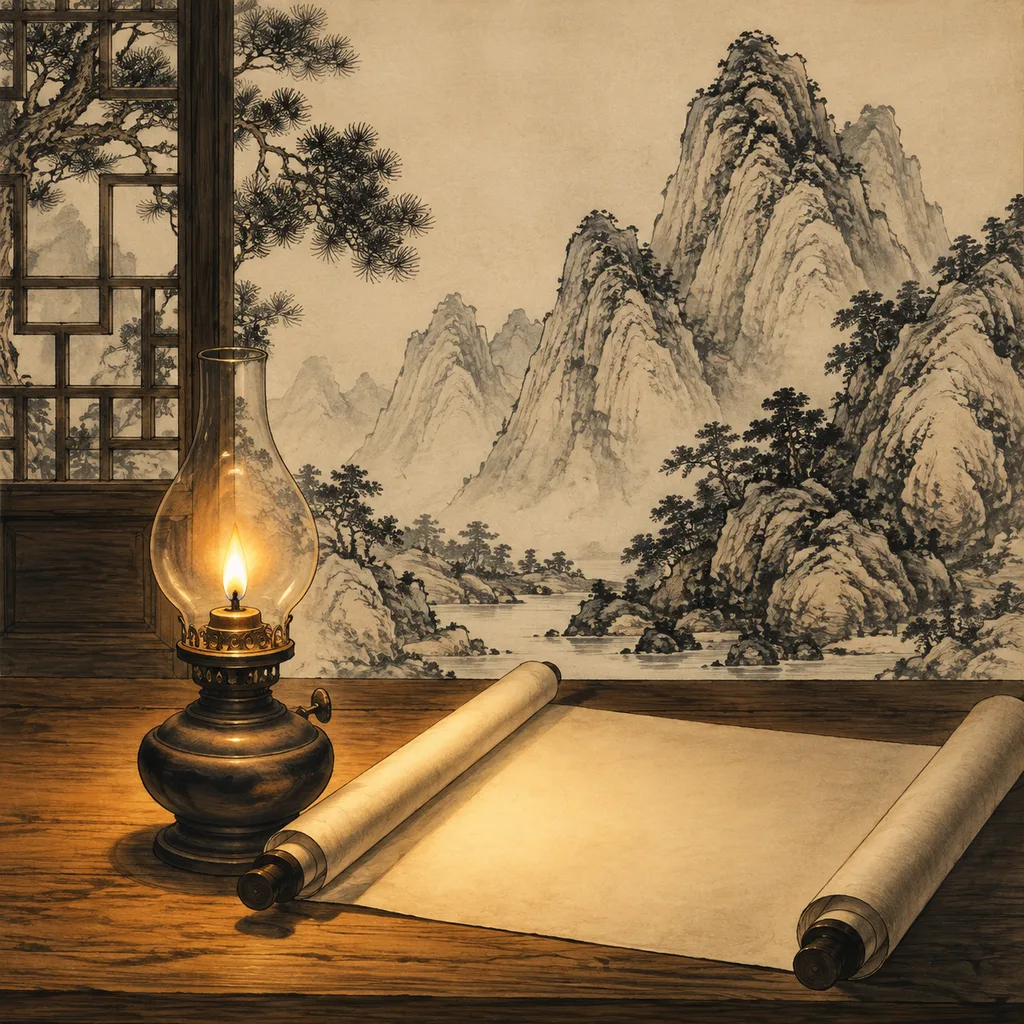
覆灯火, or Lamp-Fire, literally translates to 'covered lamp fire.' Imagine a small, steady flame sheltered beneath a paper lantern in a quiet temple, or a single oil lamp that burns all night in a scholar's study. This is not a roaring blaze or a fleeting spark—it is a focused, purposeful fire that illuminates the darkness for others. Ancient astrologers chose this image to represent a refined, nurturing, and deeply human type of Fire, one that does not consume for its own sake but provides light and warmth to those around it. This page explores the essence of Lamp-Fire, its classical sources, personality traits, life applications, and the two pillars that embody it.
The image of Lamp-Fire teaches us about steady, directed purpose.
The classical text *San Ming Tong Hui* (三命通会) by Wan Minying (1587) states: '覆灯火者,金盏光,玉台吐艳,照日月不照之处,明天地未明之时。此火乃人间...
Lamp-Fire individuals radiate a calm, reassuring presence.
| NaYin Name | Lamp-Fire (覆灯火) |
| Element | Fire (火) |
| Ganzhi Pillars | 甲辰, 乙巳 (Yang Wood, Yin Wood) Stems |
| Associated Animals | Dragon, Snake |
| Years in 60-Year Cycle | 1904, 1964, 2024, 1905, 1965, 2025 |
| Classical Source | 《三命通会》明·万民英,1587 · 卷三十「论纳音取象」/ 《五行要论》 |
Key Takeaways
- Lamp-Fire represents purposeful illumination — steady light that guides others through darkness.
- This NaYin describes people whose gift is teaching, counseling, and showing the way forward.
- The lamp metaphor carries a vital rhythm: lamps need oil. Rest is refueling, not weakness.
- Classical texts describe light passing from darkness to dawn, mothers and children sustaining each other.
Unpacking the Image
The image of Lamp-Fire teaches us about steady, directed purpose. Unlike Mountain-Fire, which rages uncontrollably across a hillside, or Lightning-Fire, which flashes and vanishes, Lamp-Fire is a candle in the window—a beacon for travelers. It burns not from ambition or passion but from duty and compassion. The lamp requires a wick (wood) and oil (water) to sustain its flame; without these, it dies. This teaches interdependence: Lamp-Fire individuals thrive when supported by others, and they shine brightest when serving a cause greater than themselves. The paper shade tempers the light, making it gentle rather than harsh—a reminder that true influence is soft, not forceful. Just as a temple lantern guides pilgrims through the night, Lamp-Fire people guide others through confusion with quiet wisdom and consistent care.
Wisdom from the Source Texts
The classical text *San Ming Tong Hui* (三命通会) by Wan Minying (1587) states: '覆灯火者,金盏光,玉台吐艳,照日月不照之处,明天地未明之时。此火乃人间夜明之火,以木为心,以水为油。' This translates to: 'Lamp-Fire is the light of a golden cup, the bloom of a jade terrace, illuminating what sun and moon cannot reach, lighting the time before heaven and earth are bright. This fire is the night-lighting fire of the human world, with wood as its heart and water as its oil.' The passage emphasizes Lamp-Fire's role as a light in darkness, dependent on wood (the wick) and water (the oil) for its existence. It is a fire of qi that is gentle yet persistent. The *Yu Xiao Bao Jian* further notes its refined nature, comparing it to a lamp that never goes out as long as it is tended. These sources frame Lamp-Fire as a nurturing, civilizing force.
覆灯火者,金盏光,玉台吐艳,照日月不照之处,明天地未明之时。此火乃人间夜明之火,以木为心,以水为油。
— 《三命通会》明·万民英,1587 · 卷三十「论纳音取象」/ 《五行要论》
甲辰: 甲辰,偏库之火,多火助之吉,所谓同气之求,以资其不足。
乙巳: 乙巳,临官之火,水不能克,盖水绝于巳,得水济之,则为纯粹,若得二三火助之,亦佳。
Who You Are When No One Is Looking
Lamp-Fire individuals radiate a calm, reassuring presence. In my years of reading charts, I've noticed that Lamp-Fire-born individuals often become the quiet confidant in their social circles—the person others turn to for advice in the middle of the night, much like a lamp that stays lit when all else is dark. They are not flashy or domineering; their strength lies in consistency and reliability. They listen more than they speak, and when they do speak, their words carry weight. However, this steady flame can be easily extinguished by neglect or lack of support. They may struggle with self-doubt when isolated, feeling that their light is dimmed by the vastness of the world. Their challenge is to remember that even a small lamp can dispel a roomful of darkness. They are natural nurturers, but must guard against burning out by overextending themselves for others.
Career Currents, Financial Tides, and Matters of the Heart
Career-wise, Lamp-Fire resonates with professions that involve guiding, teaching, or healing—such as counseling, medicine, education, or spiritual leadership. They excel in roles where they can provide clarity and comfort, like a lighthouse keeper guiding ships to shore. Financially, they tend to be cautious and prudent, preferring stable savings over risky investments. They view money as oil for their lamp—necessary to sustain their ability to help others. In love, Lamp-Fire partners are devoted and protective. They seek relationships that feel like a safe harbor, where both parties nurture each other's flame. They are not passionate in a fiery, consuming way, but rather steady and warm—a slow-burning love that deepens over time. However, they must avoid partners who drain their energy without replenishing it.
The Twin Faces of Lamp-Fire
Lamp-Fire appears in two pillar combinations: 甲辰 (Wood Dragon) and 乙巳 (Wood Snake). In the 甲辰 pillar, the Dragon represents ambition and authority, tempered by the Lamp-Fire's humility. Notable figures like Deng Xiaoping (1904) and Jack Ma (1964) exemplify this: both were transformative leaders who worked behind the scenes, illuminating paths for others rather than seeking personal glory. In contrast, the 乙巳 pillar (Wood Snake) is more introspective and artistic. The Snake's wisdom combines with Lamp-Fire's gentle light, producing creators like Gong Li (1965) and Björk (1965), whose work illuminates the human condition. The years for 甲辰 are 1904, 1964, 2024; for 乙巳, 1905, 1965, 2025. While both pillars share the core Lamp-Fire nature, the Dragon lends a public, reformist quality, while the Snake favors private, aesthetic expression.
A Daily Practice for Lamp-Fire
To nurture your inner Lamp-Fire, practice daily acts of quiet service—lighting a candle for someone else without expectation of return. Remember that your flame is not diminished by sharing its light; it is sustained by the purpose it serves. When you feel your energy waning, tend to your own wick and oil: rest, reflection, and connection with those who replenish you. To discover whether this energy appears in your chart, explore your full BaZi reading.
Discover whether Lamp-Fire appears in your chart. Calculate your free BaZi reading →
Your birth data stays in your browser and is never stored or shared.
References & Classical Sources
This page draws on the following primary sources, cross-referenced with our in-house library of 16+ classical BaZi texts:
- San Ming Tong Hui (三命通会) — Wan Minying (万民英), Ming Dynasty, 1587. Volume 30, “On NaYin Imagery”. Core quote: “覆灯火者,金盏光,玉台吐艳,照日月不照之处,明天地未明之时。此火乃人间夜明之火,以木为心,以水为油。”
- Yu Xiao Bao Jian (玉霄宝鉴) — Song Dynasty. Supplementary notes on 覆灯火 pillars.
- Yan Dongsou’s Commentary (阎东叟注) — Song Dynasty.
- Di Tian Sui (滴天髓) — Ming/Song Dynasty. Cross-referenced for Fire-element behavioral patterns.
- Zi Ping Zhen Quan (子平真诠) — Shen Xiaozhan, Qing Dynasty. Referenced for Nayin classification methodology.
All translations by the 12Zodiacs Editorial Team, reviewed against the original classical Chinese. Full methodology available on our Methodology page.
More in NaYin Elements
Creek Water · Forest Wood · Gold Leaf Metal · Hairpin Metal · Hearth Fire · Heavenly Water · Highway Earth · Lightning Fire