
Yin Water (癸)
癸 · One of the 10 Heavenly Stems
Yin Water (Gui) (癸) is one of the Ten Heavenly Stems (天干) in Chinese astrology. It represents Water energy in its Yin form — the fundamental building block of your Day Master and personality core.
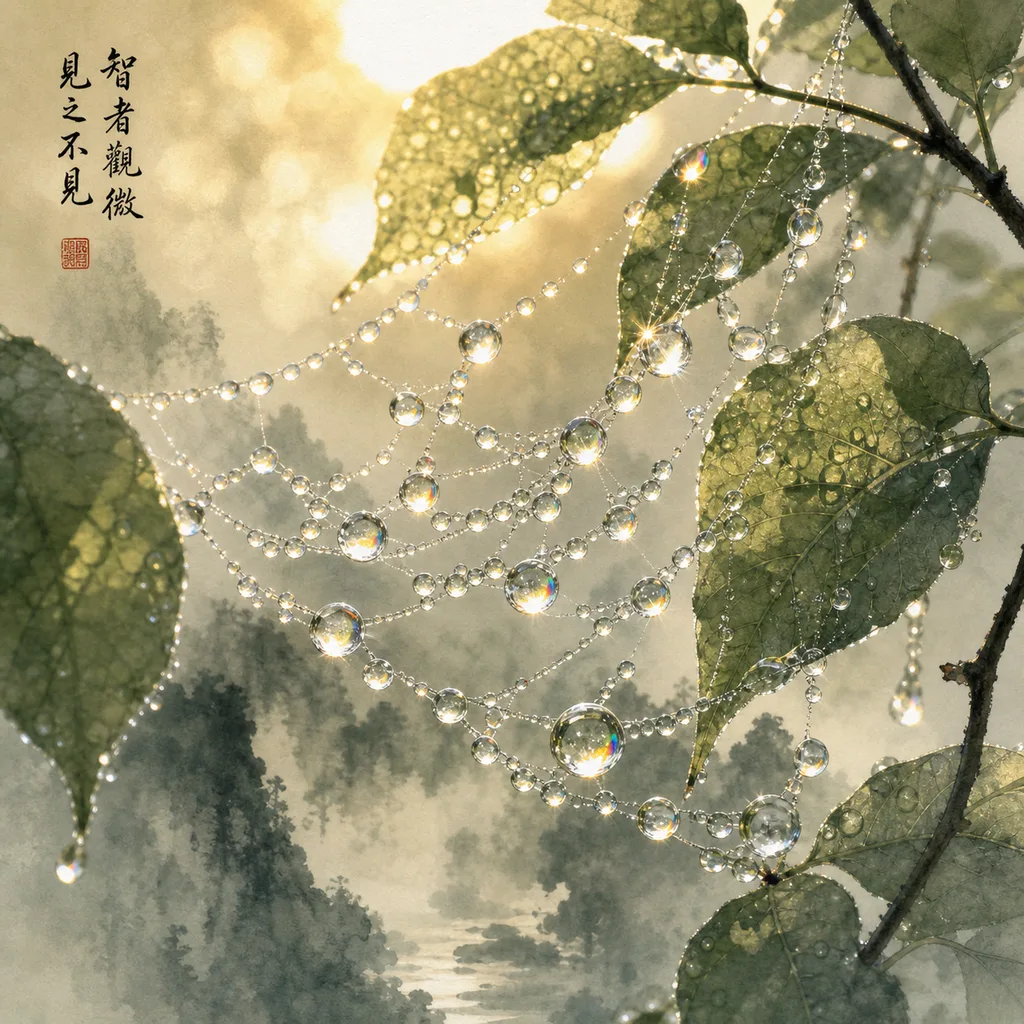
Yin Water (u7678) is the morning dew: subtle, pervasive, and life-giving. Its power lies in patience and infiltration, not force. Embrace your ability to influence softly—your presence shapes the world without needing to announce itself.
In work, Yin Water thrives in behind-the-scenes roles that require deep analysis and empathy. You excel at gathering information and building networks. Trust your intuition to guide you to opportunities that others miss.
Like the I Ching's Well hexagram, Yin Water's depth must be accessed with intention. Cultivate stillness and patience. Your inner resources are vast, but they require conscious effort to draw forth.
Quick Facts: Yin Water
| Chinese Character | 癸 (Gui) |
| Element | Water |
| Polarity | Yin |
| Season | Late Winter |
| Direction | North |
| Associated Organ | Kidneys and Bladder |
| Elemental Color | Misty Blue / Lavender |
| Combination | Wu (Yang Earth) to transform into Fire energy |
| Clash | Ding (Yin Fire) — the flame that would warm the dew |
| I Ching | Hexagram 5 (Xu / Waiting) and Hexagram 48 (Jing / The Well) |
The Nature of Yin Water (Gui)
Gui (癸), the Yin Water stem, is the morning mist — subtle, pervasive, and essential. Where Ren is the river you can see and hear, Gui is the humidity you feel, the underground spring you tap into. Its season is late winter, when water is most still, gathering itself for the spring thaw. Gui people carry this subtle quality: they are intuitive, perceptive, and influential through presence rather than assertion.
Personality of Yin Water (Gui) Day Master
Gui Day Masters are the chart’s intuitives and empaths, people who absorb information through channels others don’t possess. They sense moods before they’re spoken, read between every line, and often know things without being able to explain how. Professionally, Gui excels in counseling, research, strategic advisory, creative writing, and any field requiring deep insight combined with subtle influence. Their challenge is boundaries: mist has no edges, and Gui people may absorb others’ emotions and stress to the point of losing their own center. Their growth edge is condensation — learning to gather their diffuse sensitivity into focused droplets, becoming wells rather than weather systems.
Yin Water (Gui) in the Four Pillars
Gui in the Year Pillar suggests an intuitive family lineage — ancestors known for sensitivity, spiritual depth, or subtle forms of intelligence. The Month Pillar places Gui’s perceptive abilities at your career’s core: research, counseling, creative writing, strategic insight, or any field requiring deep understanding beneath surface appearances. In the Hour Pillar, Gui points to a contemplative later life, rich with inner exploration and spiritual development. Gui’s pillar expressions always emphasize the invisible over the visible, the felt over the measured.
Yin Water (Gui) Combinations and Interactions
Gui combines with Wu (Yang Earth) to transform into Fire — the mist meeting the mountain, the compression producing heat. This combination gives Gui people the grounding and stability they naturally lack, producing practical intuitives who can manifest their insights in tangible form. Gui clashes with Ding (Yin Fire), the competing subtle energy — this clash between mist and candlelight produces people of exquisite sensitivity who must learn to protect their inner flame from environmental dampness.
Elemental Relationships
The Yin nature of Gui (癸) means its water energy manifests as the receptive, inward-turning expression of water. The water element generates its child (wood) while restraining (fire). Yin water does this through inward-turning expression of its essence. On the receiving end: metal — Metal condenses Water, so structured, disciplined environments help Water individuals focus; the shadow side: earth — Earth dams Water, meaning excessive control or restriction can block Water natural flow.
Health and Yin Water (Gui)
The following reflects Traditional Chinese Medicine energetic associations, not clinical medical advice. The Kidney system in Gui people is subtle rather than dramatic — issues may manifest as chronic low-grade fatigue, hormonal imbalances, or emotional sensitivity that seems disproportionate to external circumstances. Gui’s health is profoundly affected by environment: you are sensitive to electromagnetic fields, chemical exposures, and the emotional atmosphere of spaces and people. In Traditional Chinese Medicine, the recommended balancing practice is establishing boundaries: limiting exposure to overwhelming stimuli, creating quiet sanctuaries, and developing grounding practices that keep your diffuse Water energy from scattering. Regular connection with natural water sources — ocean, lakes, streams — is uniquely restorative for Gui people.
Yin Water in Career and Vocation
Like the morning dew that seeps into every crack and crevice, Yin Water (癸) Day Masters excel in roles that require subtle influence and deep penetration. Their work style is quietly pervasive—they gather information, build networks, and solve problems without making a fuss. They thrive in collaborative environments where they can support from behind the scenes, but they also possess the strategic clarity to lead when necessary, guiding others with gentle persistence rather than forceful command. Yin Water’s strength lies in patience and intuition; they see what others miss and adapt like water finding its way through stone. Ideal career paths include research and analysis (especially in fields like data science or market research), counseling or therapy (where empathy and listening are key), creative arts (writing, music, or design that requires nuance), healthcare (particularly traditional Chinese medicine or nursing), and diplomacy or mediation (where their ability to harmonize opposing forces shines). When leading, they create space for others to contribute, fostering a culture of quiet excellence. When following, they absorb knowledge and refine processes, becoming indispensable through their thoroughness and insight.
Yin Water in Love and Relationships
In love, Yin Water (癸) individuals are like the morning mist—intimate, enveloping, and deeply felt, yet not always easily grasped. They express affection through subtle acts of care: remembering a small detail, offering a listening ear, or creating a serene atmosphere. Their love seeps in slowly, nourishing the relationship from within. They need a partner who appreciates depth over drama, someone who can read the unspoken and value quiet presence. Yin Water’s blind spot is a tendency to retreat when overwhelmed, preferring to absorb emotions rather than confront them directly. Conflict resolution may involve long silences or indirect hints, which can frustrate more direct partners. To build trust, they must practice open communication and vulnerability. The ideal partner is someone stable and warm, like Yang Earth or Yang Fire, who can provide grounding and light without overpowering the dew. Together, they create a relationship where subtlety is understood and depth is cherished.
Yin Water and Wealth
These patterns reflect BaZi archetypal tendencies, not financial advice. Like the morning dew that gathers slowly and evaporates without trace, wealth for Yin Water (癸) tends to accumulate gradually and can dissipate just as quietly. They are natural savers, preferring to build financial security through consistent, small efforts rather than bold gambles. Their intuitive nature makes them excellent at spotting undervalued opportunities—stocks, real estate, or investments that others overlook—but their comfort with risk is low, so they rarely bet big. Financial psychology for Yin Water is about flow: money comes and goes in cycles, often tied to their emotional state or the needs of others. They may overspend on nurturing others (family, friends, causes) or on creating a comfortable home environment. Their key financial tendency to watch for is being too passive—waiting for the perfect moment instead of acting. To thrive, they need a structured financial plan and a trusted advisor to counterbalance their tendency to drift. Over time, their patient approach yields steady, reliable wealth, mirroring the dew that nourishes the earth drop by drop.
The Cultural Significance of Yin Water
The character 癸 (Gui) represents the tenth Heavenly Stem, associated with late winter, the north, and the element of Yin Water. In classical Chinese thought, 癸 is linked to the I Ching hexagrams Xu (Waiting, Hexagram 5) and Jing (The Well, Hexagram 48). Hexagram 5 speaks of waiting with sincerity—like dew forming in the stillness before dawn, Yin Water embodies patience and trust in timing. Hexagram 48, The Well, reflects the nourishing yet hidden nature of water: the well provides life-giving water but requires a rope and bucket to draw it out, symbolizing how Yin Water’s gifts must be accessed through effort and awareness. In traditional Chinese medicine, 癸 governs the Kidneys and Bladder, organs that store essence (jing) and regulate water metabolism. The Kidneys are considered the root of vitality, and Yin Water’s energy supports deep reserves of endurance and intuition. Etymologically, 癸 is said to depict a stream flowing through a valley, reinforcing its imagery of gentle, persistent movement. In the sexagenary cycle, 癸 pairs with 亥 (Hai, the Pig) to form the branch combination, and with 戊 (Wu, Yang Earth) to transform into Fire, illustrating its capacity for change and adaptation.
Frequently Asked Questions About Yin Water
What is the personality of Yin Water (癸) like?
Yin Water (癸) individuals are subtle, intuitive, and deeply perceptive. Like morning dew, they nourish their environment quietly without drawing attention. They are often empathetic listeners who absorb the emotions of others, making them excellent counselors or mediators. Their approach is gentle and indirect, preferring to influence through suggestion rather than force. They can be reserved in new situations, but once comfortable, they reveal a rich inner world of ideas and feelings. Their intuition is their greatest strength, allowing them to sense undercurrents that others miss. However, they may struggle with assertiveness and can become overwhelmed by intense emotions.
Which careers suit Yin Water (癸) Day Masters?
Yin Water (癸) Day Masters excel in careers that require subtlety, analysis, and empathy. Ideal fields include research and data analysis, where their ability to see patterns and details shines. They make excellent counselors, therapists, or social workers because of their deep listening skills. Creative pursuits like writing, music, or design allow their nuanced expression. Healthcare, especially traditional Chinese medicine or nursing, suits their nurturing nature. Diplomacy and mediation also align with their talent for harmonizing differences. They thrive in collaborative environments but can also lead with quiet determination when needed. Avoid high-pressure sales or roles demanding constant assertiveness.
How does Yin Water (癸) behave in relationships?
In relationships, Yin Water (癸) is affectionate in subtle, thoughtful ways. They remember small details, offer support without being asked, and create a calm, nurturing atmosphere. They need a partner who can read unspoken cues and value quiet intimacy. Their approach to conflict is indirect—they may withdraw or hint at issues rather than confront directly. This can frustrate more straightforward partners. They require patience and reassurance to open up emotionally. The ideal partner is stable and warm, providing grounding without overwhelming them. Trust and deep connection develop slowly, like dew forming at dawn, but once established, their loyalty is profound.
What elements are compatible with Yin Water (癸)?
Yin Water (癸) is most compatible with Yang Earth and Yang Fire . Yang Earth acts like a reservoir, providing structure and containment for the dew, creating a balanced partnership where Water’s flow is guided. Yang Fire offers warmth and light, helping Yin Water overcome its tendency toward passivity and low energy. Metal elements (especially Yang Metal) can also be supportive, as Metal generates Water in the productive cycle. However, too much Wood (especially Yin Wood) can drain Water’s resources, and too much Water may lead to emotional overwhelm. The combination with Wu (Yang Earth) transforms into Fire, indicating potential for dynamic change.
What is the spiritual meaning of Yin Water (癸)?
Spiritually, Yin Water (癸) represents the essence of receptivity, intuition, and hidden wisdom. In the I Ching, it connects to Hexagram 5 (Waiting) and Hexagram 48 (The Well), symbolizing patience and the deep, accessible resources within. Yin Water teaches that true strength lies in gentleness and persistence. It embodies the principle of wu wei (effortless action)—achieving results without force. In meditation, Yin Water energy encourages stillness and introspection, allowing insights to arise naturally. It is associated with the Kidneys, which store jing (vital essence), linking it to longevity and spiritual reserves. Embracing Yin Water means trusting the unseen and nurturing life from the shadows.
How to balance Yin Water (癸) energy in daily life?
To balance Yin Water (癸) energy, incorporate practices that ground and warm its cool, diffuse nature. Spend time in sunlight or near fire to counteract excessive Yin. Engage in physical activities like walking or yoga to move stagnant energy. Create routines that provide structure, as Yin Water can drift without direction. Financially, set clear budgets to avoid passive spending. Emotionally, practice expressing feelings directly to prevent overwhelm. Surround yourself with warm colors (red, orange) and earthy elements (clay, stone). In relationships, seek partners who offer stability and encourage openness. Meditate on the Well hexagram to draw upon your inner resources with intention.
More in Heavenly Stems
Yang Wood · Yin Wood · Yang Fire · Yin Fire · Yang Earth · Yin Earth · Yang Metal · Yin Metal