
Wall-Earth (壁上土)
壁上土 · One of the 30 NaYin elemental combinations
The term 壁上土 (Bì Shàng Tǔ) translates literally to 'Wall-Earth' or 'Earth on the Wall.' This imagery evokes a finished, interior wall—smooth, plastered, and often decorated, yet still fundamentally structural. Unlike the defensive ramparts of Rampart-Earth (城头土) or the packed dirt of a road, Wall-Earth represents strength that has been refined into beauty. Ancient astrologers chose this metaphor to describe individuals who appear polished and composed on the surface but possess a solid inner core. They are the ones who hold a household or organization together, not through brute force but through the quiet strength of a well-maintained wall. This page explores the essence, classical roots, personality traits, career tendencies, and the two pillar variations of this unique NaYin.
The Essence of Wall-Earth lies in its dual nature: it is both decorative and load-bearing.
Voices from the Classics: The San Ming Tong Hui (三命通会) by Wan Minying (1587) describes Wall-Earth as: '壁上土者,恃栋依梁...
Character and Temperament: Wall-Earth individuals are like the plastered wall—smooth, composed, and often admired for...
| NaYin Name | Wall-Earth (壁上土) |
| Element | Earth (土) |
| Ganzhi Pillars | 庚子, 辛丑 (Yang Metal, Yin Metal) Stems |
| Associated Animals | Rat, Ox |
| Years in 60-Year Cycle | 1900, 1960, 2020, 1901, 1961, 2021 |
| Classical Source | 《三命通会》明·万民英,1587 · 卷三十「论纳音取象」 |
Key Takeaways
- Wall-Earth (壁上土) represents refined structural beauty — earth that has been plastered, painted, and perfected.
- This NaYin describes people who present a polished surface while carrying real substance beneath.
- The interior-wall metaphor warns: don’t let paint hide your true nature. Substance matters more than surface.
- Classical texts describe earth sealed and contained, concealing and protecting, separating inside from outside.
The Essence of Wall-Earth
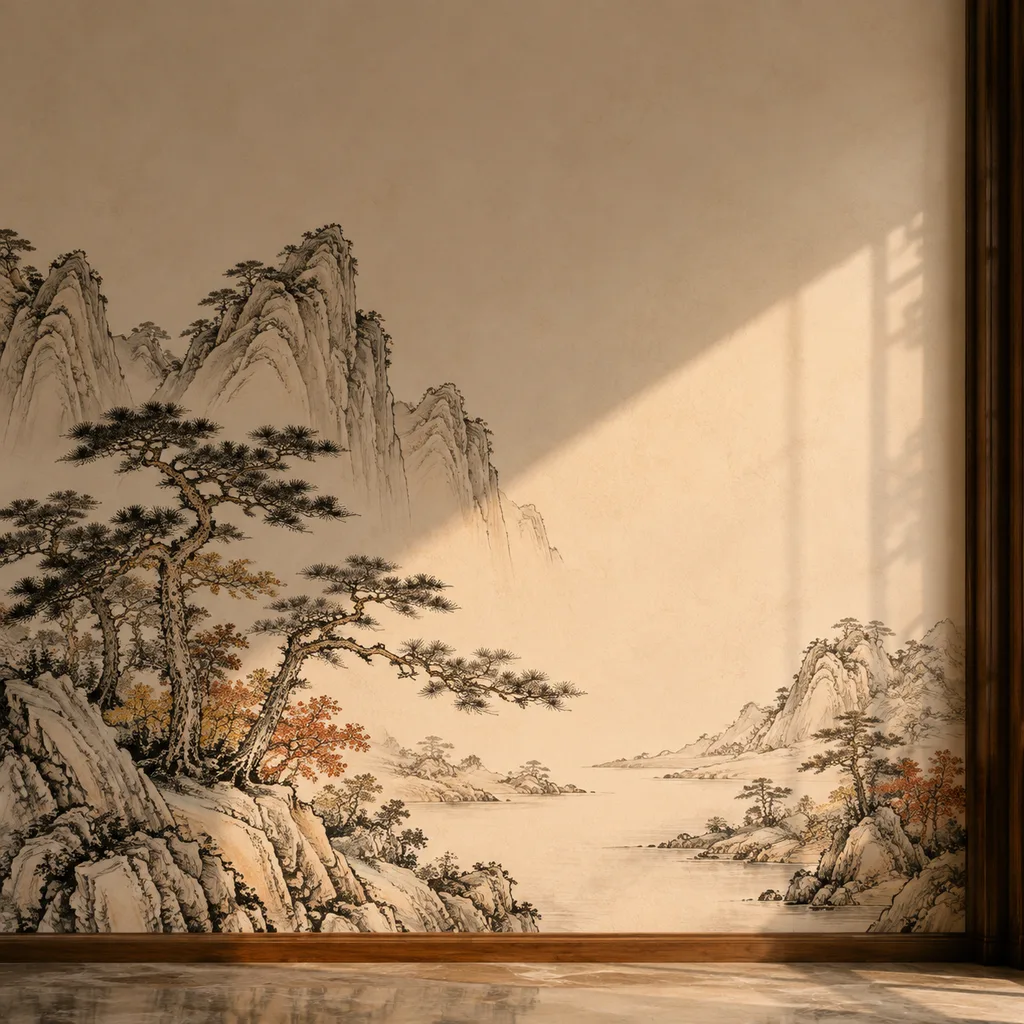
The Essence of Wall-Earth lies in its dual nature: it is both decorative and load-bearing. Imagine a finely plastered interior wall—perhaps painted with a mural or hung with art. It is the first thing visitors see, the face of a home. Yet behind that smooth surface, it supports the roof and separates rooms. This teaches us that true strength need not be rough or overt. Individuals of this type often have a polished exterior—well-spoken, socially graceful, and aesthetically inclined—but they are also the backbone of their circles. They are the ones others turn to for stability, the ones who quietly ensure things don't fall apart. Another metaphor: think of a vase set into a wall niche. It is beautiful and displayed, but it is also part of the building's structure. Wall-Earth energy knows how to blend elegance with duty. It is not about being flashy; it is about being presentable and reliable at the same time.
Voices from the Classics
Voices from the Classics: The San Ming Tong Hui (三命通会) by Wan Minying (1587) describes Wall-Earth as: '壁上土者,恃栋依梁,兴门立户,却暑御寒之德,遮霜护雪之功。' This translates to: 'Wall-Earth leans on ridgepoles and relies on beams; it raises doors and establishes households. Its virtue is warding off heat and cold; its merit is sheltering from frost and snow.' The concept of 'qi' here refers to the subtle energy that gives form to matter. The text emphasizes that this earth fulfills its purpose only in partnership with the wooden frame of a house—leaning on the structure, it becomes the finished wall that shields a home through every season. The Yu Xiao Bao Jian, another classical text, adds that Wall-Earth flourishes when receiving fire to bake it hard or metal to bring it into form. Together, these sources paint a picture of a nayin that requires external elements to reach its full potential.
壁上土者,恃栋依梁,兴门立户,却暑御寒之德,遮霜护雪之功。
— 《三命通会》明·万民英,1587 · 卷三十「论纳音取象」
庚子: 庚子,厚德之土,能克众水,不忌他木,盖木至子无气,若遇壬申之金,谓之明位禄,其贵必矣。
辛丑: 辛丑,福聚之土,众木不能克,盖丑为金库,丑中有金,见木何伤。
Character and Temperament
Character and Temperament: Wall-Earth individuals are like the plastered wall—smooth, composed, and often admired for their grace. Across hundreds of charts we've catalogued, Wall-Earth-born individuals show a notable tendency toward diplomacy and aesthetic sensibility. They are natural mediators, able to present a calm front even in chaos. Their strength is in their polish; they can navigate social situations with ease, making others feel at ease. However, this same smoothness can become a weakness. Like a wall that only shows its finished side, they may struggle to reveal their true feelings or vulnerabilities. There can be a tendency to prioritize appearances over substance, or to avoid conflict to maintain a perfect facade. The challenge for Wall-Earth is to remember that a wall is only as strong as its foundation—they must cultivate inner authenticity to match their outer poise. When balanced, they are both beloved and reliable, the glue that holds groups together without demanding credit.
Wall-Earth in Career, Wealth, and Relationships
Wall-Earth energy naturally gravitates toward careers that blend structure with beauty. Architecture, interior design, art restoration, or any role that involves creating polished, functional spaces resonates deeply. They also excel in diplomacy, public relations, or management—positions that require a presentable front and the ability to hold things together behind the scenes. Financially, they tend to be prudent but appreciative of quality. They will spend on a beautiful home or a fine piece of furniture that adds to their environment, but they are not reckless. They prefer stability and long-term security over risky ventures. In love and partnerships, Wall-Earth individuals are devoted and supportive, often playing the role of the steady partner who makes the relationship look effortless. They need a partner who values their depth beyond the surface, and who can appreciate the quiet strength they bring. The key is mutual respect for the 'wall' and the 'beams' that support it.
The Two Pillars of Wall-Earth
The Two Pillars of Wall-Earth: 庚子 (Geng Zi, Rat) and 辛丑 (Xin Chou, Ox) share the same nayin but differ in nuance. 庚子, with its Yang Metal stem, adds a sharper, more assertive edge to the Wall-Earth energy. Born in years like 1960 or 2020, these individuals often have a dynamic, charismatic quality—like a wall that gleams with metallic highlights. Diego Maradona (1960) exemplified this: brilliant, polished in his craft, yet fiercely competitive. 辛丑, with Yin Metal stem, brings a more refined, resilient quality. Born in 1961 or 2021, these people are like a wall with intricate carvings—detailed and lasting. Barack Obama (1961) and Andy Lau (1961) both show this: they are articulate, composed, and capable of enduring pressure with grace. The Rat pillar (庚子) is more restless, seeking recognition; the Ox pillar (辛丑) is more patient, building slowly. Both, however, share the core trait of being a presentable, supportive structure.
Living with Wall-Earth Energy
Living with Wall-Earth Energy: The wisdom of this nayin is that true strength can be beautiful. It teaches us that we do not need to be rough or loud to be solid. The wall's purpose is to enclose and protect, and its beauty enhances that function. For those with this energy, growth comes from embracing both the surface and the substance—allowing yourself to be seen while staying grounded. Remember that even the most elegant wall needs a foundation; nurture your inner world as carefully as your outer presentation. To discover whether this energy appears in your chart, explore your full BaZi reading.
Discover whether Wall-Earth appears in your chart. Calculate your free BaZi reading →
Your birth data stays in your browser and is never stored or shared.
References & Classical Sources
This page draws on the following primary sources, cross-referenced with our in-house library of 16+ classical BaZi texts:
- San Ming Tong Hui (三命通会) — Wan Minying (万民英), Ming Dynasty, 1587. Volume 30, “On NaYin Imagery”. Core quote: “壁上土者,恃栋依梁,兴门立户,却暑御寒之德,遮霜护雪之功。”
- Yu Xiao Bao Jian (玉霄宝鉴) — Song Dynasty. Supplementary notes on 壁上土 pillars.
- Yan Dongsou’s Commentary (阎东叟注) — Song Dynasty.
- Di Tian Sui (滴天髓) — Ming/Song Dynasty. Cross-referenced for Earth-element behavioral patterns.
- Zi Ping Zhen Quan (子平真诠) — Shen Xiaozhan, Qing Dynasty. Referenced for Nayin classification methodology.
All translations by the 12Zodiacs Editorial Team, reviewed against the original classical Chinese. Full methodology available on our Methodology page.
Related NaYin Pillars
The Wall-Earth (壁上土) resonance covers two pillars of the 60-year cycle:
- Wall-Earth Rat — 庚子 (Geng-Zi), years 1900, 1960, 2020
- Wall-Earth Ox — 辛丑 (Xin-Chou), years 1901, 1961, 2021
Note: Wall-Earth (壁上土, “earth atop the wall”) is distinct from the similarly named City-Wall Earth (城头土) NaYin, which governs the 戊寅 Wu-Yin Tiger and 己卯 Ji-Mao Rabbit pillars. The two share an English display name but are separate NaYin resonances in classical texts.
More in NaYin Elements
Creek Water · Forest Wood · Gold Leaf Metal · Hairpin Metal · Hearth Fire · Heavenly Water · Highway Earth · Lamp Fire