
Yin Wood (乙)
乙 · One of the 10 Heavenly Stems
Yin Wood (Yi) (乙) is one of the Ten Heavenly Stems (天干) in Chinese astrology. It represents Wood energy in its Yin form — the fundamental building block of your Day Master and personality core.
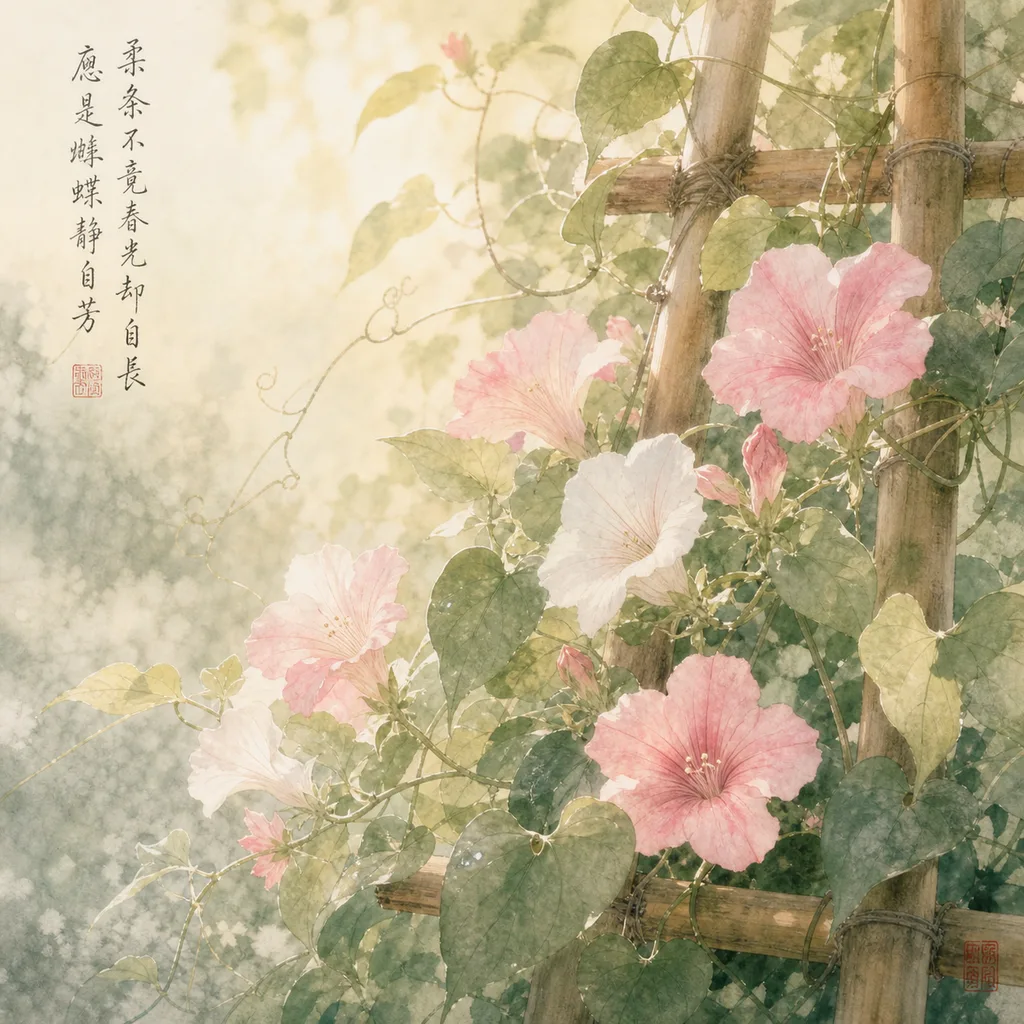
Yin Wood's strength lies in its ability to adapt and persist. Like a vine, you find a way through any crack toward the light. Embrace this soft persistence—it conquers what force cannot.
In career and relationships, your power is in persuasion, not dominance. You inspire loyalty by supporting others' growth. Choose environments that value collaboration and creativity over rigid hierarchy.
The I Ching reminds you to be like the wind: penetrating without force. Cultivate contemplation before action. Your patience and observation are tools for profound personal and spiritual development.
Quick Facts: Yin Wood
| Chinese Character | 乙 (Yi) |
| Element | Wood |
| Polarity | Yin |
| Season | Mid-Spring |
| Direction | East |
| Associated Organ | Liver and Gallbladder |
| Elemental Color | Light Green |
| Combination | Geng (Yang Metal) to transform into Metal energy |
| Clash | Xin (Yin Metal) — the scissors that would prune the vine |
| I Ching | Hexagram 57 (Xun / The Gentle) and Hexagram 20 (Guan / Contemplation) |
The Nature of Yin Wood (Yi)
Yi (乙), the Yin Wood stem, is the climbing vine — flexible, persistent, and quietly unstoppable. Where Jia confronts obstacles head-on, Yi flows around them, finding paths through the smallest cracks. Its season is late spring, when growth is lush and intertwined. Yi people carry this adaptive intelligence: they are diplomats, connectors, and strategists who achieve through indirection what force cannot.
Personality of Yin Wood (Yi) Day Master
Yi Day Masters are the chart’s social architects, building networks of relationship with patient skill. They read rooms instinctively, sensing power dynamics and emotional currents before others notice them. Professionally, Yi excels in advisory roles, creative fields, and any domain requiring negotiation or mediation. Unlike Jia’s commanding presence, Yi influences through charm, persistence, and the strategic deployment of information. Their growth challenge is assertiveness: because their natural mode is adaptation, they may lose sight of their own agenda, becoming so attuned to others’ needs that their own goals atrophy.
Yin Wood (Yi) in the Four Pillars
Yi in the Year Pillar suggests a family tradition of adaptability and social intelligence — your ancestors may have been diplomats, traders, or community connectors. In the Month position, Yi’s flexible intelligence shapes a career built on relationships and information flow rather than rigid structures. In the Hour Pillar, Yi influences your later years toward cultivated interests — gardening, art collecting, mentoring — activities that require patience and the long view. Unlike Jia’s monumental ambitions, Yi’s pillar expressions tend toward weaving and connecting rather than building and commanding.
Yin Wood (Yi) Combinations and Interactions
Yi combines with Geng (Yang Metal) to transform into Metal — the vine wrapping around a sword, eventually reshaping its purpose. This unlikely combination (Wood and Metal are enemies) produces extraordinary alchemy: Yi’s adaptability channeled through Metal’s discipline. Yi clashes with Xin (Yin Metal), the delicate pruning shears — this clash creates perfectionists who constantly refine and reshape themselves, sometimes to the point of self-erasure.
Elemental Relationships
Yi (乙) represents the Yin face of wood. Its place in the Five Element cycle is shaped by this polarity. In the generating cycle, wood creates fire — Wood feeds flame, meaning Wood-stem individuals naturally support and energize Fire-dominant people and situations. In the controlling cycle, wood governs earth — Wood roots break through soil, meaning Wood types can overextend into controlling practical matters. Conversely, Yi is nourished when water — Water nourishes Wood, so Water-dominant environments help Wood individuals grow, and challenged when metal — Metal chops Wood, meaning excessive Metal energy (rigidity, criticism) can stunt Wood growth.
Health and Yin Wood (Yi)
The following reflects Traditional Chinese Medicine energetic associations, not clinical medical advice. The Liver system (Wood’s domain) in Yi people tends toward patterns of over-extension rather than suppression. Because Yi naturally adapts to meet others’ needs, the nervous system can become chronically activated, producing anxiety, sleep disruption, or hormonal imbalances from sustained cortisol elevation. In Traditional Chinese Medicine, the recommended balancing practice is boundary-setting: learning to say no protects your physical health as much as your emotional wellbeing. Gentle, rhythmic movement practices — tai chi, yoga, swimming — suit Yi’s constitution better than high-intensity training, which can further deplete an already overextended system.
Yin Wood in Career and Vocation
Like a climbing vine, Yin Wood Day Masters thrive in environments that allow them to grow through obstacles toward the light. Their professional style is adaptive and collaborative rather than confrontational. They excel in roles that require finesse, negotiation, and a gentle touch—where persistence, not force, wins the day. Detail-oriented yet big-picture aware, they can see both the individual leaves and the forest. As leaders, they lead by persuasion and quiet example, not by decree; as followers, they bring loyalty and creative problem-solving. Ideal career fields include counseling or therapy (nurturing growth), diplomacy or international relations (finding the path through), design or architecture (shaping space with beauty), education (cultivating minds), and entrepreneurship in creative or service industries. Their work rhythm is steady, not explosive, and they flourish when given autonomy to find their own route to the goal.
Yin Wood in Love and Relationships
In love, Yin Wood is the vine seeking a sturdy trellis—someone stable and supportive, yet not suffocating. They express affection through small, thoughtful gestures rather than grand declarations, and they need a partner who appreciates their subtle, persistent care. Their relationship blind spot is a tendency to over-accommodate, wrapping themselves so tightly around their partner that they lose their own shape. Conflict resolution is indirect: they prefer to bend and find a way around an argument rather than confront it head-on. Emotional vulnerability comes slowly, as they fear being pruned or cut back. A complementary partner is one who is strong but not rigid, like a mature tree that offers support without demanding the vine change its nature. Metal-type partners (especially Geng or Xin) can challenge them to grow stronger, while Water types provide the nourishment they crave.
Yin Wood and Wealth
These patterns reflect BaZi archetypal tendencies, not financial advice. Like the climbing vine, wealth for Yin Wood accumulates gradually, tendril by tendril. They are natural savers who prefer steady growth over risky gambles, finding security in slow, persistent financial building. Their spending tends to be modest, directed toward nurturing their environment—home, education, or relationships. Money flows to them through networks and collaborations rather than solo ventures. Financial tendencies to watch for often stem from over-flexibility: they may lend money too easily or invest in ventures that seem promising but lack solid roots. Their challenge is to balance generosity with boundaries, and to recognize when a financial vine is growing on rotten wood. When they trust their patient, organic approach, they build wealth that endures like an ancient garden.
The Cultural Significance of Yin Wood
The character 乙 (Yi) originally depicted a shoot emerging from the ground, symbolizing the first stirrings of life. In the sexagenary cycle, it represents the second Heavenly Stem, following 甲 (Jia, Yang Wood). Classical texts such as the “Shuowen Jiezi” describe it as the sprouting of all things, full of potential but still pliable. This stem aligns with I Ching hexagram 57 (Xun, The Gentle), which embodies wind-like penetration and subtle influence, and hexagram 20 (Guan, Contemplation), reflecting the reflective observation of growth. In traditional Chinese medicine, Yin Wood governs the Liver—the organ that ensures smooth flow of Qi—and the Gallbladder, which governs decision-making. The Liver’s function mirrors the vine’s flexibility: it must bend without breaking, storing and releasing energy harmoniously. This cultural backdrop paints 乙 as the quiet, persistent life force that softens stone over time.
Frequently Asked Questions About Yin Wood
What is Yin Wood (乙) personality like?
Yin Wood personalities are like a climbing vine or flowering shrub—flexible, gentle, and persistent. They adapt to their environment, growing through any gap toward the light. They are often diplomatic, creative, and nurturing, but can be overly accommodating. Their soft exterior hides a quiet determination that wears down obstacles over time. They value harmony and prefer indirect approaches to conflict.
Which careers suit Yin Wood people?
Yin Wood individuals excel in careers that require finesse, adaptability, and a nurturing touch. Ideal fields include counseling, diplomacy, design, education, and creative entrepreneurship. They thrive in collaborative environments where they can influence through persuasion rather than authority. Their detail-oriented yet big-picture perspective makes them excellent problem-solvers who find elegant paths through challenges.
How does Yin Wood behave in relationships?
In relationships, Yin Wood is the vine seeking a supportive trellis. They express love through small, consistent gestures and need a partner who values subtlety. They can be overly accommodating, losing themselves in the relationship. Conflict is handled indirectly—they prefer to bend around issues rather than confront. Emotional openness takes time, but once trust is built, they are deeply loyal and devoted.
Who is Yin Wood compatible with?
Yin Wood is most compatible with Water stems (Ren, Gui) that nourish its growth, and with Earth stems (Wu, Ji) that provide stable ground. It can also harmonize with other Wood stems (Jia, Yi) in mutual support. Metal stems, especially Xin (Yin Metal), represent the scissors that prune the vine, creating creative tension but also potential conflict. Fire stems (Bing, Ding) can inspire but may exhaust Yin Wood if unbalanced.
What is the spiritual meaning of Yin Wood?
Spiritually, Yin Wood represents the principle of gentle, persistent growth. It embodies the I Ching hexagram 57 (Xun, The Gentle), symbolizing wind-like penetration and subtle influence. It teaches that true power lies in flexibility and patience, not force. In Taoist thought, it reflects the way of water—yielding yet overcoming. Meditating on Yin Wood can help one cultivate adaptability, resilience, and the wisdom to grow through life’s obstacles.
How can I apply Yin Wood energy in daily life?
To harness Yin Wood energy, practice flexibility in your routines and thoughts. When faced with an obstacle, look for an alternative path rather than forcing through. Nurture your environment—tend to relationships, your home, and your projects with gentle, consistent care. Embrace a growth mindset: see challenges as opportunities to bend and adapt. Cultivate patience and trust that slow, persistent effort will eventually break through even the hardest stone.
More in Heavenly Stems
Yang Wood · Yang Fire · Yin Fire · Yang Earth · Yin Earth · Yang Metal · Yin Metal · Yang Water