
Mutual Punishments (相刑)
相刑 · Earthly Branch dynamics in BaZi
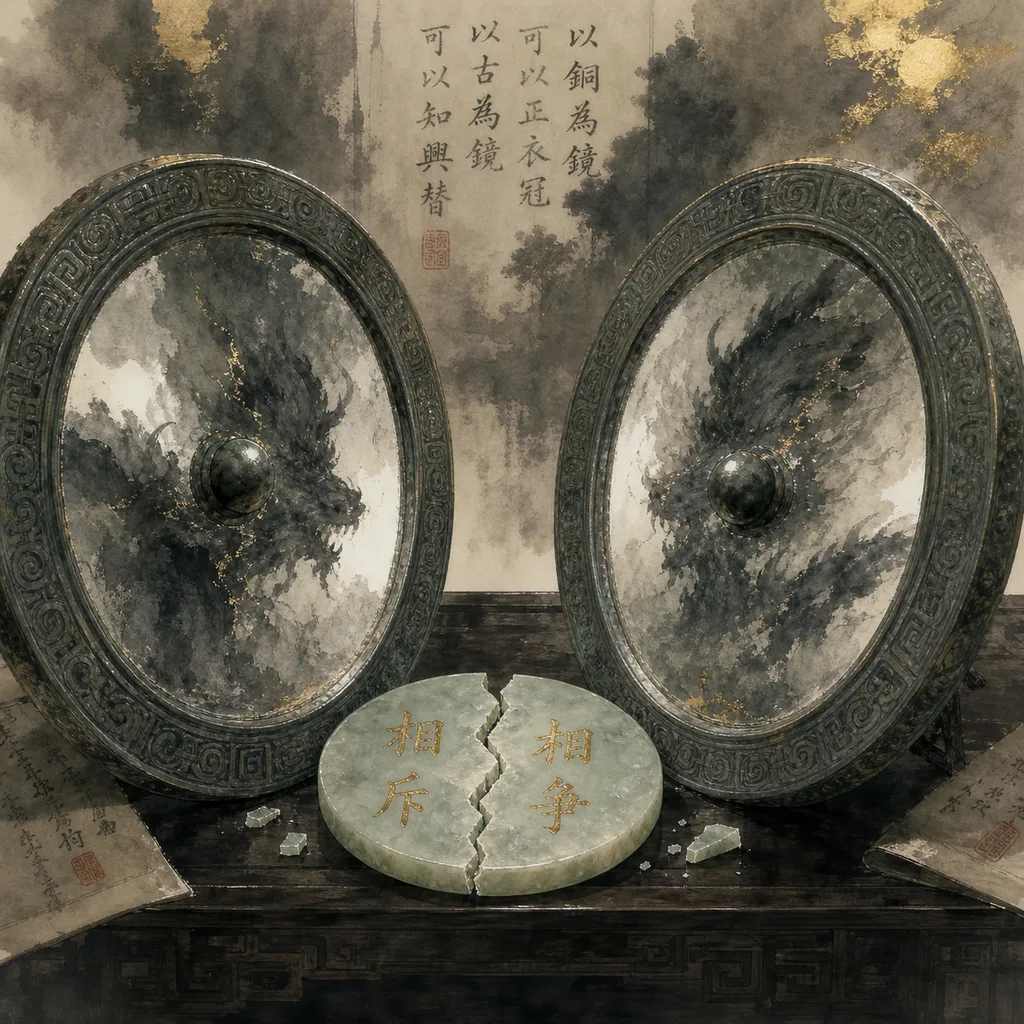
In BaZi astrology, the Mutual Punishments (互刑) is one of the fundamental interactions between Earthly Branches (地支). Branch pairs that mutually punish each other, creating bidirectional friction and karmic entanglement.
Unlike full punishment triangles involving three branches, mutual punishments focus on the direct friction between two branches. Each dyad represents a specific type of conflict, such as rudeness (Mao-Zi) or ungratefulness (Yin-Si).
The hidden stems within each branch reveal the underlying causes of punishment. For example, in Yin-Si punishment, Yin's hidden stem Bing Fire clashes with Si's hidden stem Geng Metal, creating a cycle of Wood generating Fire that consumes Metal.
Pairs like Yin-Shen and Chou-Wei are both clashing and punishing. This dual interaction intensifies conflict, often leading to explosive events or stubborn, long-standing disputes that are hard to resolve.
| Quick Facts | |
|---|---|
| Chinese Name | 相刑 (Xiang Xing) |
| Category | Punishment |
| Interaction Type | Confrontation |
| Number of Interactions | 7 dyadic pairs |
| Core Mechanism | Repeated friction between two branches sharing hidden stems that create conflict. |
| Transformation Rule | Does not transform elements; friction persists without elemental change. |
| Hidden Stem Role | Hidden stems reveal the true nature of conflict, such as resentment or betrayal. |
| Directional Pattern | Branches separated by 90° or 180° on the zodiac wheel. |
| Classical Source | Zi Ping Zhen Quan (子平真詮), Discourse on Mutual Punishment |
| Practical Significance | Indicates persistent interpersonal conflict, legal issues, or internal turmoil in a BaZi chart. |
Mutual Punishments Are Bilateral Frictions
Unlike full punishment triangles involving three branches, mutual punishments focus on the direct friction between two branches. Each dyad represents a specific type of conflict, such as rudeness (Mao-Zi) or ungratefulness (Yin-Si).
Hidden Stems Drive the Conflict
The hidden stems within each branch reveal the underlying causes of punishment. For example, in Yin-Si punishment, Yin’s hidden stem Bing Fire clashes with Si’s hidden stem Geng Metal, creating a cycle of Wood generating Fire that consumes Metal.
Simultaneous Clash and Punishment Amplify Volatility
Pairs like Yin-Shen and Chou-Wei are both clashing and punishing. This dual interaction intensifies conflict, often leading to explosive events or stubborn, long-standing disputes that are hard to resolve.
The Structural Mechanics of Mutual Punishments
Mutual Punishments arise when two Earthly Branches are positioned 90° apart on the zodiac wheel, forming a square aspect. These pairs are extracted from the larger punishment triangles (e.g., Mao-Zi from the Mao-Zi-Wu triangle). The logic is rooted in the interaction of their hidden stems: each branch contains a primary hidden stem that conflicts with the other’s primary hidden stem. For example, Mao (Rabbit) contains Yi Wood, while Zi (Rat) contains Gui Water. Wood and Water are not inherently conflicting, but the punishment arises from the ‘rudeness’ of Yi Wood floating on Gui Water, implying impropriety. Similarly, Yin (Tiger) contains Jia Wood and Bing Fire; Si (Snake) contains Bing Fire, Geng Metal, and Wu Earth. The Wood-Fire-Metal sequence creates a cycle of consumption and betrayal. The positional logic ensures that these branches are in a relationship of mutual disrespect, as they occupy positions that are neither harmonious (120°) nor directly opposite (180°), but rather in a tense 90° angle that symbolizes strained interaction.
Hidden Stem Dynamics: The True Nature of Conflict
The hidden stems are the key to understanding the specific flavor of each Mutual Punishment. In the Mao-Zi pair, Mao’s hidden stem Yi Wood and Zi’s Gui Water create a ‘floating wood on water’ scenario—Yi Wood is dependent on Gui Water, but the relationship is one of entitlement and boundary violation. In Yin-Si punishment, Yin’s hidden stem Jia Wood generates Si’s Bing Fire, which in turn consumes Yin’s Geng Metal (if present). This ‘ungrateful’ dynamic reflects a betrayal where one party supports the other only to be consumed. For Si-Shen punishment, Si’s Bing Fire controls Shen’s Geng Metal, but Shen’s Ren Water hidden stem counterattacks Si’s Bing Fire, creating a scheming, back-and-forth conflict. In Chou-Xu bullying punishment, Chou’s Ji Earth and Xin Metal clash with Xu’s Wu Earth and Ding Fire, leading to stubbornness and power abuse. The hidden stems thus act as the ‘secret agents’ of the conflict, revealing motives that are not apparent from the surface branches alone.
Transformation and Conditions: Why Punishments Don’t Transform
Unlike Harmonies or Clashes that can transform elements under certain conditions, Mutual Punishments do not result in elemental transformation. The friction is purely relational and does not produce a new element. This is because punishment represents a state of repeated irritation without resolution. However, some pairs like Yin-Shen are simultaneously Clashes (which can transform if conditions are met) and Punishments. In such cases, the Clash transformation may occur, but the Punishment adds a layer of volatility. For transformation to happen in a Clash, the branches must be in a luck pillar or year pillar with strong supporting elements. But the Punishment aspect remains as a persistent tension. For example, Yin-Shen Clash can transform into Water if the conditions are right, but the Punishment still indicates that the transformation will be fraught with conflict. Practitioners must assess the overall chart to see if the punishment is ‘resolved’ by other interactions, such as a third branch forming a Harmony that breaks the punishment cycle.
Real-World Manifestation in BaZi Readings
In a BaZi reading, Mutual Punishments manifest as persistent interpersonal friction. For career, Mao-Zi punishment can indicate workplace boundary issues, such as a subordinate overstepping authority. Yin-Si punishment often appears in cases of betrayal by a trusted colleague or partner, leading to broken promises. Si-Shen punishment is common in legal disputes involving contracts and scheming. Yin-Shen simultaneous clash-punishment is explosive, often indicating sudden job loss or heated arguments that escalate quickly. In relationships, Chou-Xu bullying punishment suggests a power struggle, with one partner stubbornly imposing their will. Chou-Wei clash-punishment indicates long-standing conflicts that cycle back, such as recurring arguments about finances. Health-wise, punishments can manifest as chronic conditions related to the elements involved—for example, Wood-related punishments (Mao, Yin) may affect the liver, while Metal (Shen, You) affects the lungs. Timing is crucial: when a punishment pair is activated by a luck pillar or annual pillar, the conflict intensifies. Practitioners look for ‘resolution’ through presence of a third branch that forms a harmony or a transformation that neutralizes the punishment.
Classical Wisdom and Modern Interpretation
The classical source Zi Ping Zhen Quan (子平真詮) by Shen Xiaozhan discusses Mutual Punishments as ‘相刑’ meaning ‘mutual punishment’ or ‘mutual injury’. The text explains that these interactions arise from the hidden stems’ conflicts, and that punishments are more subtle than Clashes but equally damaging. The original teaching emphasizes that punishments indicate ‘internal discord’—conflicts within oneself or close relationships, rather than external enemies. Modern interpretation expands on this: punishments can represent psychological stress, passive-aggressive behavior, or karmic patterns that repeat until resolved. For contemporary readers, Mutual Punishments are not inherently ‘bad’ but rather indicate areas of life that require conscious effort to navigate. For example, a Mao-Zi punishment in a chart might suggest the person needs to set clear boundaries. Practitioners today often treat punishments as ‘growth edges’—the friction forces the individual to develop patience, diplomacy, or assertiveness. The key is to analyze the ten gods involved: if the punished branch is the Day Master’s resource, it may affect learning; if it’s the wealth star, it impacts finances. Modern BaZi integrates psychological insights, viewing punishments as patterns of behavior that can be transformed through self-awareness.
Frequently Asked Questions
What does Mutual Punishments mean in BaZi?
Mutual Punishments (相刑) refer to a specific type of friction between two Earthly Branches in a BaZi chart. Unlike Clashes (冲), which are direct opposition, Punishments are more subtle, persistent conflicts that arise from hidden stem interactions. They indicate repeated irritation, boundary violations, or betrayal. In a reading, a Mutual Punishment suggests an area of life where you face ongoing interpersonal challenges or internal turmoil that requires careful management.
Is Mutual Punishments good or bad?
Mutual Punishments are generally considered unfavorable because they create friction and conflict. However, they are not inherently ‘bad’—they can also indicate areas where growth is needed. The severity depends on the specific pair, the elements involved, and the overall chart context. For example, a punishment involving the Day Master’s resource might stimulate learning through struggle, while one affecting the wealth star could mean financial disputes. Practitioners assess whether the punishment is resolved by other interactions in the chart.
How does Mutual Punishments affect relationships/marriage?
In relationships, Mutual Punishments often manifest as persistent misunderstandings, power struggles, or betrayal. For example, Mao-Zi punishment (rude punishment) can indicate boundary issues, such as one partner being overly dependent or intrusive. Yin-Si punishment (ungrateful) suggests broken promises or ingratitude. Chou-Xu bullying punishment points to stubbornness and control. These dynamics can lead to repetitive arguments if not addressed. However, if the punishment is mitigated by a harmony or a favorable ten god, the couple may learn to navigate these challenges.
How does Mutual Punishments affect career and wealth?
In career, punishments can cause friction with colleagues, superiors, or clients. Si-Shen punishment is common in legal or contract issues, while Yin-Si may involve betrayal by a partner. For wealth, punishments affecting the wealth star (Cai) can lead to financial disputes, unexpected expenses, or difficulty saving. For example, Chou-Wei punishment (clash+punishment) may cause cyclical financial problems. Timing is key: when a punishment pair is activated by a luck pillar, professional conflicts may escalate. Practitioners advise caution in partnerships and legal matters.
What is the difference between Mutual Punishments and other similar relations?
Mutual Punishments differ from Clashes (冲) in that Clashes are direct opposition and often lead to sudden change, while Punishments are more chronic and subtle. Harmonies (合) are positive and create cooperation, whereas Punishments create friction. Three Combinations (三合) form productive teams, but Punishments are bilateral conflicts. Self-Punishments (自刑) involve a single branch punishing itself, indicating internal struggle. Mutual Punishments are unique in that they involve two branches with hidden stem conflicts, resulting in specific types of interpersonal tension.
How do practitioners resolve or work with Mutual Punishments in a reading?
Practitioners first identify which punishment pair is active and which life area it affects. Resolution can come from the presence of a third branch that forms a Harmony (合) with one of the punishing branches, effectively ‘dissolving’ the punishment. For example, if a Mao-Zi punishment is present, adding Xu (Dog) can help: Mao-Xu form a Six Harmony that draws the Rabbit into a supportive alliance, easing the friction. Alternatively, if the punishment involves a Clash (e.g., Yin-Shen), the Clash may take precedence. In timing, practitioners advise avoiding major decisions during luck pillars that activate the punishment. Feng shui adjustments or wearing colors/elements that support the weaker branch can also help.