
Self-Punishments (自刑)
自刑 · Earthly Branch dynamics in BaZi
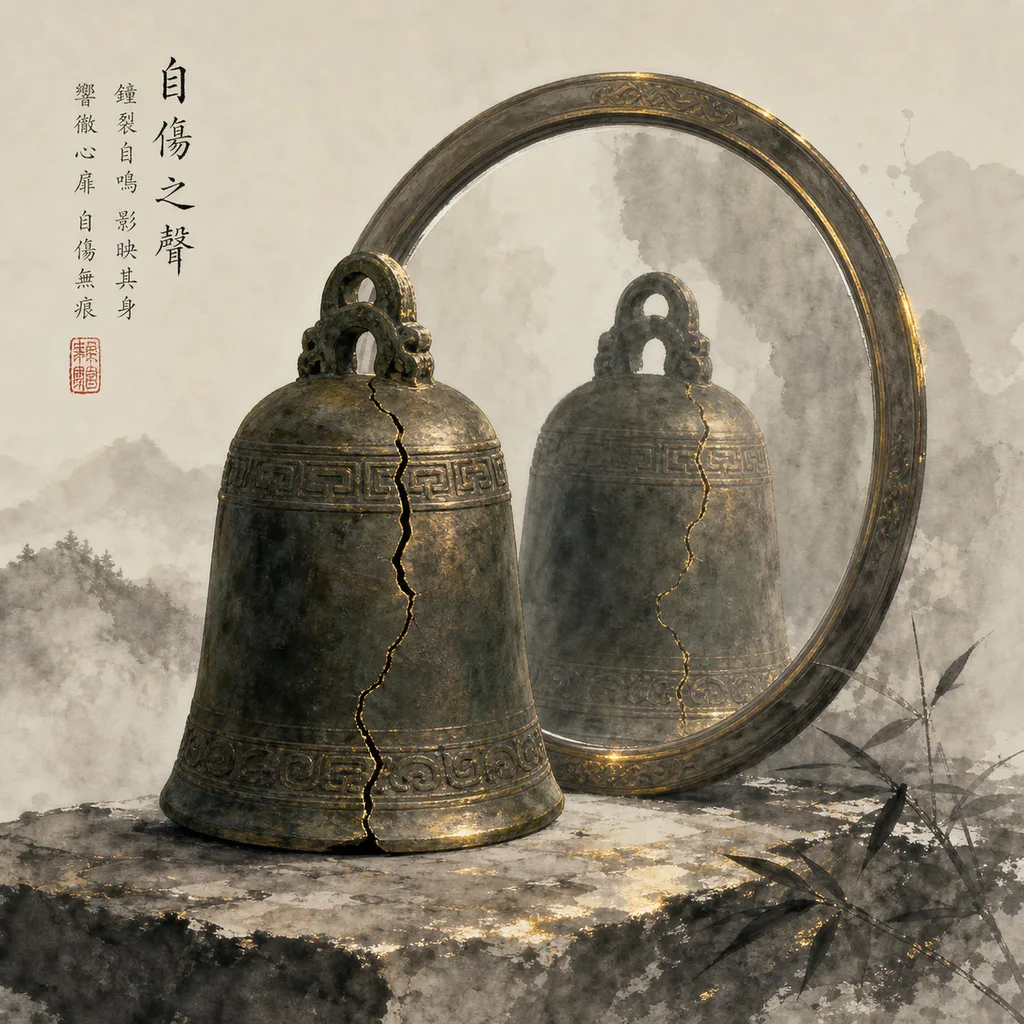
In BaZi astrology, the Self-Punishment (Zi Xing) (自刑) is one of the fundamental interactions between Earthly Branches (地支). A branch punishing itself, representing internal conflict, self-sabotage, and the inability to escape one’s own patterns. The four self-Three Punishments are Chen-Chen, Wu-Wu, You-You, Hai-Hai.
Self-Punishments only occur when the same Earthly Branch appears twice in a chart, making it a rare and chart-specific configuration that signifies internal conflict.
The hidden stems of the duplicated branch reinforce each other, turning a potential strength into a destructive loop of self-criticism, stubbornness, or emotional flooding.
Unlike other punishments, Self-Punishments do not transform elements. Instead, they create stagnation and indecision, blocking progress despite having resources.
| Quick Facts | |
|---|---|
| Chinese Name | 自刑 (Zi Xing) |
| Category | Punishment |
| Interaction Type | Internal contradiction |
| Number of Interactions | 4 self-punishment pairs |
| Core Mechanism | A duplicated branch turns against its own nature, causing self-sabotage. |
| Transformation Rule | No transformation; creates internal conflict instead. |
| Hidden Stem Role | Hidden stems amplify each other, leading to destructive self-reinforcement. |
| Directional Pattern | Same-branch duplication; no directional relationship. |
| Classical Source | Yuan Hai Zi Ping (淵海子平), Discourse on Self-Punishment |
| Practical Significance | Indicates inner turmoil, indecision, and self-inflicted obstacles. |
Requires Exact Duplication of Branch
Self-Punishments only occur when the same Earthly Branch appears twice in a chart, making it a rare and chart-specific configuration that signifies internal conflict.
Hidden Stems Fuel Self-Sabotage
The hidden stems of the duplicated branch reinforce each other, turning a potential strength into a destructive loop of self-criticism, stubbornness, or emotional flooding.
No Transformation, Only Turmoil
Unlike other punishments, Self-Punishments do not transform elements. Instead, they create stagnation and indecision, blocking progress despite having resources.
Structural Mechanics of Self-Punishments
Self-Punishments are unique among branch relations because they require the exact duplication of a single Earthly Branch rather than an interaction between two different branches. The four branches involved are Chen (Dragon), Wu (Horse), You (Rooster), and Hai (Pig). When any of these branches appears twice in the natal chart — in the year, month, day, or hour pillars — the self-punishment is activated. The positional logic is purely about duplication: the branch turns inward, as if mirroring itself, creating a closed loop of energy that cannot harmonize with external influences. This is why Self-Punishments are considered a chart-specific configuration; they do not arise from interactions between different branches but from the branch’s own repetition. The classical text Yuan Hai Zi Ping states that when a branch sees itself, it ‘punishes itself’ because the energy becomes excessive and unbalanced, leading to internal contradiction. For example, two Chen branches amplify Earth energy to the point of stagnation, while two Wu branches overheat with Fire, causing restlessness. The mechanism is one of self-reinforcement without release, trapping the native in a cycle of self-defeating behavior.
Hidden Stems: The True Nature of Self-Punishment
The hidden stems (藏干) within each duplicated branch reveal the deeper dynamics of Self-Punishments. In Chen, the hidden stems are Wu (Earth), Yi (Wood), and Gui (Water). When two Chens appear, the Earth stems amplify each other, making the native stubborn, while the Wood and Water hidden stems create internal conflict — Wood controlling Earth, and Water nurturing Wood — leading to stagnation despite effort. For Wu, the hidden stems are Ding (Fire) and Ji (Earth) — Fire and Earth only. Two Wus intensify Fire while the Earth hidden stems absorb it, so the blaze and its ash feed each other without an outlet, creating a restless cycle of overexertion and burnout. You’s hidden stems are Xin (Metal) alone, but two Yous double the Metal sharpness, turning perfectionism into self-criticism and rigidity. Hai contains Ren (Water) and Jia (Wood). Two Hais flood with Water, but the Wood hidden stems try to absorb it, causing emotional overwhelm and self-doubt. The hidden stems do not transform; they merely amplify each other, turning potential strengths into destructive loops. This is why Self-Punishments are so insidious: the native has the resources but cannot use them effectively because the hidden stems create internal sabotage.
Transformation and Conditions: When Self-Punishment Fails to Transform
Unlike other punishment relations (e.g., the Yin-Si-Shen or Chou-Xu-Wei punishment triads), Self-Punishments do not transform elements under any condition. The classical texts are explicit: self-punishment is a static configuration that creates internal conflict without elemental change. This is because transformation requires different branches interacting under specific conditions (e.g., combination, clash, or punishment triangles). Self-Punishment, by contrast, is a duplication — the branch is alone with itself. There is no external trigger to catalyze transformation. However, the severity of Self-Punishment can be modulated by the presence of other branches. For example, if a Chen self-punishment is ‘rescued’ by a You (Rooster) in the chart, the Metal from You can drain the Earth, reducing stagnation. Similarly, a Wu self-punishment can be alleviated by Hai (Pig) water, which controls the excessive Fire. But these are mitigations, not transformations. The core condition for Self-Punishment to manifest is the duplication of the branch; once activated, it persists as an underlying tension. In luck pillars, if a self-punishment branch appears again (e.g., a third Chen), the punishment intensifies, often leading to a crisis point. Practitioners watch for such accumulations in critical periods.
Real-World Manifestation: Career, Relationships, and Health
In a BaZi reading, Self-Punishments reveal areas where the native is their own worst enemy. For career, Chen-Chen self-punishment indicates stubbornness and inability to adapt, leading to stagnation despite hard work. The native may stay in a dead-end job out of principle. Wu-Wu punishment shows restlessness: the native changes jobs frequently, driven by inner turmoil rather than opportunity. You-You punishment manifests as perfectionism that delays projects or causes burnout from overwork. Hai-Hai punishment leads to self-doubt and indecision, missing career opportunities due to fear. In relationships, Chen-Chen creates a rigid, controlling partner; Wu-Wu brings drama and emotional volatility; You-You results in a critical, hard-to-please partner; Hai-Hai causes emotional flooding and neediness. Health-wise, Chen-Chen affects the spleen and digestive system (Earth organs) with stagnation; Wu-Wu impacts the heart (Fire) with palpitations or anxiety; You-You affects the lungs (Metal) with respiratory issues from stress; Hai-Hai affects the kidneys (Water) and emotional health. Timing is crucial: when a luck pillar or year duplicates the self-punishment branch, the native may face a crisis of self-sabotage — e.g., quitting a job impulsively or ending a relationship over internal doubts. Practitioners advise the native to recognize patterns and seek external grounding.
Classical Wisdom and Modern Interpretation
The Yuan Hai Zi Ping (淵海子平) states: ‘When a branch punishes itself, it is like a person who, seeing their own shadow, becomes frightened and harms themselves.’ This classical teaching emphasizes the psychological nature of Self-Punishments: the conflict is internal, not external. The text warns that self-punishment leads to ‘loss of direction and self-inflicted wounds.’ In traditional practice, self-punishment was considered inauspicious, but modern interpretation is more nuanced. Today’s practitioners view Self-Punishments as indicators of deep-seated psychological patterns that, when recognized, can be transformed into strengths. For example, Chen-Chen stubbornness can become perseverance in the right field; Wu-Wu restlessness can fuel creative energy; You-You perfectionism can produce high-quality work; Hai-Hai emotional depth can foster empathy. The key is awareness. Modern readings often treat self-punishment as a ‘shadow’ aspect of the native’s personality — a tendency to self-sabotage that requires conscious effort to overcome. Unlike other punishments that involve external conflicts, self-punishment is a call for introspection. The classical advice remains relevant: ‘To resolve self-punishment, one must look outward and seek balance through the other pillars.’ This means cultivating the missing elements or using the ten gods to channel the energy productively.
Frequently Asked Questions
What does Self-Punishments mean in BaZi?
Self-Punishments (自刑) occur when the same Earthly Branch appears twice in a natal chart. It indicates internal conflict, self-sabotage, and a tendency to turn one’s own strengths against oneself. For example, two Chen branches create stubbornness and stagnation, while two Wu branches cause restlessness and inner turmoil. Unlike other punishments that involve external conflicts, Self-Punishments are purely internal. The native may have abundant resources but struggle to use them effectively due to indecision, perfectionism, or emotional flooding. It is a chart-specific configuration that requires careful analysis of hidden stems and luck pillars.
Is Self-Punishments good or bad?
Self-Punishments are generally considered challenging but not purely bad. They create internal friction that can lead to self-defeating behaviors, but they also indicate intense focus and potential for growth. For instance, You-You self-punishment can result in high-level mastery if the perfectionism is channeled constructively. The key is awareness and balance. In classical texts, self-punishment was seen as inauspicious, but modern practitioners view it as a call to develop self-awareness. If the native learns to recognize the pattern, they can mitigate the negative effects and even use the energy productively. The severity depends on the overall chart and luck phases.
How does Self-Punishments affect relationships and marriage?
Self-Punishments can strain relationships because the native’s internal conflict often spills over. For Chen-Chen, the person may be stubborn and unwilling to compromise, leading to power struggles. Wu-Wu brings emotional volatility and drama, making relationships unstable. You-You results in a critical partner who sets impossibly high standards, causing resentment. Hai-Hai leads to emotional neediness and self-doubt, which can overwhelm a partner. In marriage, self-punishment often indicates that the native’s biggest obstacle is themselves. The spouse may feel frustrated by the native’s indecision or self-sabotage. However, if the native works on self-awareness, the relationship can improve. The presence of a supportive branch (e.g., a combination or harmony) can alleviate the tension.
How does Self-Punishments affect career and wealth?
In career, Self-Punishments often lead to stagnation or self-sabotage. Chen-Chen causes stubborn adherence to outdated methods, missing opportunities. Wu-Wu prompts frequent job changes due to restlessness, preventing long-term growth. You-You results in perfectionism that delays projects or causes burnout. Hai-Hai leads to indecision and missed chances due to fear. Wealth-wise, self-punishment can mean the native works hard but undermines their own success, e.g., quitting before a promotion or making impulsive financial decisions. However, if the energy is channeled, Chen-Chen can become perseverance in a stable field; Wu-Wu can drive entrepreneurship; You-You can excel in detail-oriented work; Hai-Hai can succeed in creative or healing professions. Luck pillars that break the self-punishment (e.g., a combining branch) can bring relief.
What is the difference between Self-Punishments and other similar relations?
Self-Punishments are unique because they require exact duplication of a branch, while other punishments (e.g., the Yin-Si-Shen and Chou-Xu-Wei triads, or the Zi-Mao pairwise punishment) involve interactions between different branches. Self-Punishments do not transform elements, whereas triad punishments can lead to elemental changes under certain conditions. Compared to clashes (e.g., Zi-Wu clash), which are direct confrontations between two different branches, self-punishment is an internal conflict. Harmonies (e.g., Hai-Mu harmony) are positive interactions that combine energies, while self-punishment is negative and isolating. The key difference is that self-punishment turns the branch against itself, making it a purely psychological pattern rather than an external dynamic.
How do practitioners resolve or work with Self-Punishments in a reading?
Practitioners first identify the self-punishment by noting duplicate branches. Then they assess the severity by checking if the hidden stems are amplified or if there is a ‘rescuing’ branch (e.g., a combining or controlling element). Common resolutions include: (1) Strengthening the missing element to balance the overactive branch; (2) Using the ten gods to channel the energy — e.g., for You-You, directing perfectionism into career achievements; (3) Timing actions during luck pillars that break the self-punishment (e.g., a branch that combines with or clashes the self-punishment branch); (4) Advising the native to cultivate self-awareness and seek external feedback to counteract internal bias. In severe cases, feng shui adjustments or lifestyle changes (e.g., meditation for Wu-Wu restlessness) are recommended. The goal is not to eliminate the self-punishment but to transform it into a constructive force.