
The Plain-Wood Dog
戊戌 (Wu-Xu) · 平地木 (Plain-Wood) · Earth Stem
The Plain-Wood Dog defines those born in 1958 and 2018 under the Wu-Xu (戊戌) pillar. While mainstream astrology often classifies this year as the Earth Dog based on its Heavenly Stem (戊 = Earth), its deeper NaYin (纳音) resonance is Plain-Wood (平地木) — blending earth’s core energy with wood’s expressive quality. These individuals are creative idealists with relentless ambition. Their defining quality is deep resilience — like trees on flat ground, ordinary yet vigorously alive, rooted in steady, unflashy strength.
A quick map: this is a Earth year by its Heavenly Stem (戊 / Wu), while its NaYin is Plain-Wood (平地木), a Wood archetype — two parallel systems describing the same pillar, not a contradiction.
Quick Facts
| Years | 1958, 2018 |
| GanZhi | 戊戌 (Wu-Xu) |
| NaYin | Plain-Wood (平地木 Ping-Di-Mu) |
| Stem Element | Earth (戊) |
| NaYin Element | Wood (平地木) |
| Base Element | Earth |
| Lucky Numbers | 3, 8, 25, 38 |
| Lucky Colors | Green, Teal, Brown |
| Lucky Direction | East, Southeast |
| NaYin Season | Spring |
| Trine Group | Third Trine (Tiger, Horse, Dog) |
| Sexagenary Position | #35 of 60 in the Jia-Zi cycle |
| Lunar Year Dates | 1958: 1958-02-18 to 1959-02-08 2018: 2018-02-16 to 2019-02-05 |
| Six Harmony (六合) | Rabbit — Secret Friend |
| Three Harmony (三合) | Tiger · Horse · Dog (Fire Trine) |
| Six Clash (六冲) | Dragon — Opposing Force |
| Five Element Cycle | Generated by Water → Wood generates Fire → Controlled by Metal |
Dog Element Variants Compared
| NaYin Variant | Stem Name | GanZhi | Years | Stem Element |
|---|---|---|---|---|
| Mountain-Fire Dog | Wood Dog | 甲戌 | 1934, 1994 | Wood |
| Roof-Earth Dog | Fire Dog | 丙戌 | 1946, 2006 | Fire |
| Plain-Wood Dog | Earth Dog | 戊戌 | 1958, 2018 | Earth |
| Hairpin-Metal Dog | Metal Dog | 庚戌 | 1910, 1970, 2030 | Metal |
| Ocean-Water Dog | Water Dog | 壬戌 | 1922, 1982 | Water |
The Plain-Wood Dog spreads roots as wide as the horizon, turning loyalty into a living network. Their protection isn’t guarding a single gate but cultivating entire communities — they excel at initiatives like neighborhood watch programs or cooperative housing projects. They champion justice with the stubborn patience of an oak, building systems that shelter others without demanding center stage. Their unique edge: they make every ally feel individually cared for while serving the collective.
Yet this dog’s roots can become territorial, their sense of duty hardening into a cage. The plain’s openness makes them vulnerable to shouldering everyone’s burdens — they absorb conflicts meant for others, exhausting themselves. They may resist pruning, clinging to outdated principles long after the landscape shifts. When overextended, their guardianship turns into micromanagement, their loyalty into suspicion of anyone outside their grove.
The NaYin: Plain-Wood (平地木 Ping-Di-Mu)
In classical Chinese astrology, each of the 60 year-stem combinations carries a specific NaYin (纳音, “assigned tone”) — a poetic elemental melody refining the Five Elements into 30 archetypes. The Plain-Wood (平地木) NaYin represents a unique expression of the wood element.
Classical Sources
《三命通会》(Comprehensive Treatise on the Three Fates)
By 万民英 (Wan Minying), Ming Dynasty, 1587 — Volume 30, “On NaYin Elements”:
“平地木者,初生萌蘖,始发枝条,唯资雨露之功,不喜雪霜之积,乃地上之茂材,人间之屋木。戊戌为栋,己亥为梁,最宜互换见之。”
“戊戌,土中之木,忌重见土,若纳音土多,一生屯蹇,金不能克,盖金气至戌而散,遇金乃能致福。”
Yan Dongsou (阎东叟) commented: “戊戌之木,孤根独立,和之以水火旺气,则有英明秀实之德,入格则文章进达,福禄始终,然乘天将之气,主备历艰险,节操不移,方见晚福。”
Born in January or February?
There are two systems for determining your zodiac year. Folk tradition uses Lunar New Year (late Jan / early Feb). BaZi astrology uses Lichun (立春, Start of Spring, ~Feb 3–5). If your birthday falls in this boundary period, you might belong to the previous sign (Rooster) under one system but the Plain-Wood Dog under another. Use our BaZi Calculator to determine your exact pillar based on Lichun.
Core personality traits
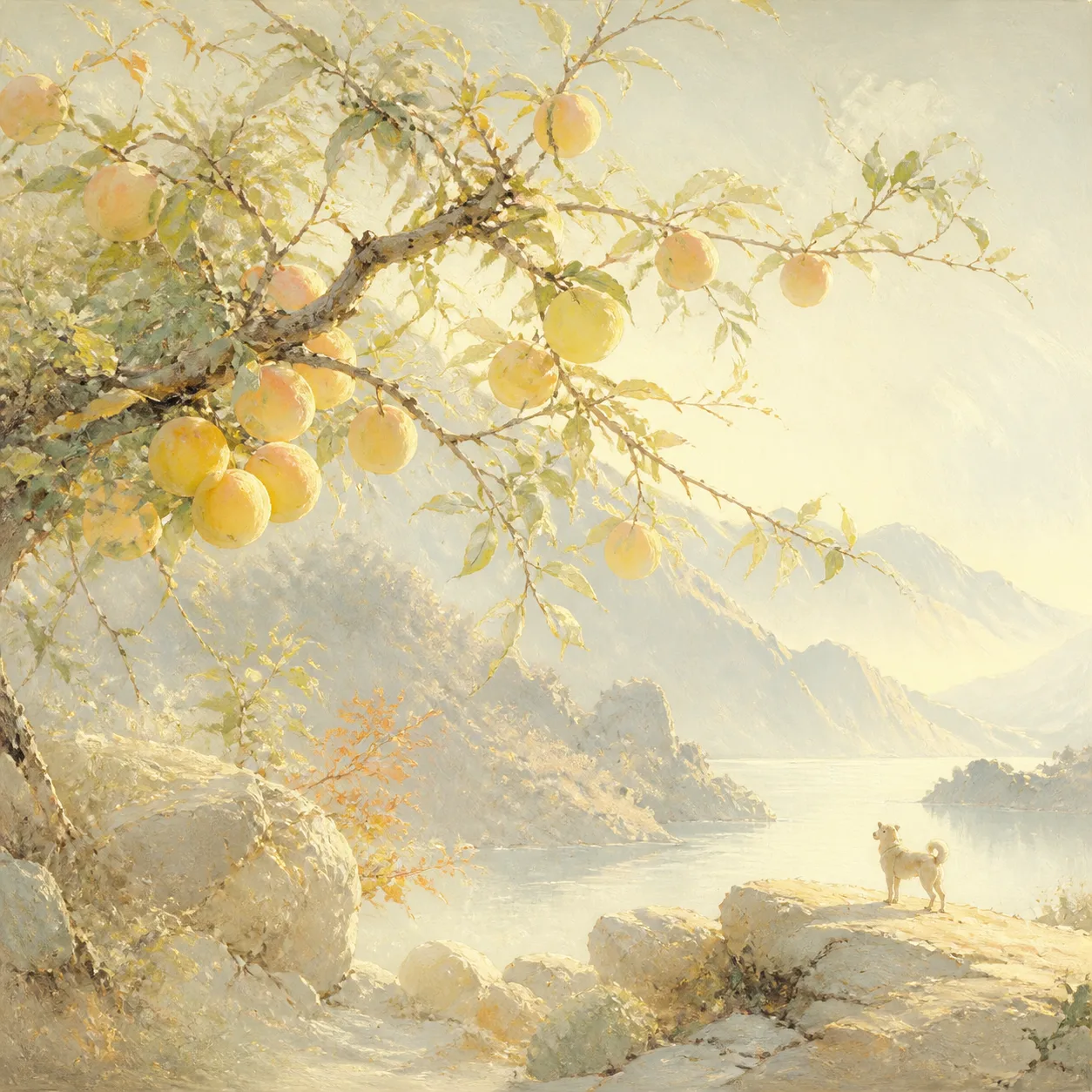
Picture a lone tree standing on an open plain, its roots gripping the earth while its branches reach for the sky — this is the Plain-Wood Dog (戊戌). The NaYin of Ping-Di-Mu (平地木) paints a portrait of grounded vitality: not the soaring ambition of a mountain pine, but the quiet, stubborn growth of a tree that has learned to thrive in ordinary soil. The Dog’s natural loyalty and protective instincts are here infused with the creative force of wood, turning the guardian into a builder. This is not a Dog content to merely guard the gate; this is a Dog that plants a garden around it.
The heavenly stem Wu (戊) — solid earth — meets the earthly branch Xu (戌), also earth, creating a foundation of double stability. Yet within this stillness stirs the restless life of wood. The Sanming Tonghui (三命通会) warns that “Wu-Xu is wood within earth, disliking an excess of earth,” for too much weight can smother the sprout. This is the central tension of the Plain-Wood Dog: a soul that craves growth and change, yet is anchored by a deep need for security. They are idealists with a realist’s feet, dreamers who build their castles brick by brick.
This pairing produces a personality of remarkable endurance — like a tree on a plain that bends in the storm but does not break. They are fair-minded to a fault, often championing causes for the underdog, but their idealism can tip into rigidity. They see the world as it should be, and struggle when reality falls short. Yet their earth-rootedness gives them patience; they will work for decades to see a vision fulfilled. The key to understanding them lies in the paradox: they are ordinary in appearance but extraordinary in resilience, unassuming yet fiercely alive.
Relationships and romance
In love, the Plain-Wood Dog approaches romance like a gardener planting an orchard — with patience, foresight, and a willingness to wait years for the harvest. Their loyalty is absolute, but their expression of affection is often practical rather than poetic. They will remember that you mentioned a leaky faucet and fix it months later, but may forget an anniversary. The earth stem gives them a stabilizing presence; they are the partner who holds the family together during crises. But the wood within them yearns for growth, and they need a relationship that evolves, not stagnates.
The Liuhe (六合) match with the Rabbit offers the perfect counterbalance: Rabbit’s gentle, artistic nature softens Dog’s bluntness, while Dog’s steadfastness grounds Rabbit’s flightiness. In a romantic partnership, the Plain-Wood Dog needs someone who appreciates their depth without demanding constant excitement. Their greatest struggle is expressing vulnerability — they guard their own hearts as fiercely as they guard others. They must learn that love, like a plain tree, needs both roots and branches: stability and the courage to reach out.
Career and professional life
The Plain-Wood Dog’s career path is that of the slow, steady builder. They are not suited to flashy, high-risk ventures; their genius lies in creating systems that last. The earth stem draws them to fields like construction, real estate, agriculture, and infrastructure — anything that involves building a physical or organizational foundation. The wood NaYin adds a creative dimension: they may excel as landscape architects, urban planners, or artisans who work with natural materials. Their Dog-like integrity makes them natural leaders in non-profits, law enforcement, or any role that requires ethical steadfastness.
Yet their career vulnerability is a tendency to overcommit. Like a tree that spreads too many branches, they can take on more than they can sustain, burning out from sheer responsibility. The Sanming Tonghui notes that “gold cannot overcome this wood, for metal’s energy disperses at Xu” — meaning external pressures rarely break them, but internal pressure can. They flourish when they focus on a single, meaningful project rather than scattering their energy. The Plain-Wood Dog’s ideal career is one where they can see the fruits of their labor grow over time — a legacy built branch by branch.
Health and wellbeing
Health for the Plain-Wood Dog centers on the earth element’s domain: the spleen and stomach. These are the organs of digestion and assimilation, both of food and experience. When out of balance, they may suffer from indigestion, fatigue, or a tendency to worry — the classic earth imbalance of overthinking. The wood element adds a need for movement; a sedentary lifestyle will literally stagnate their Qi. They thrive with moderate, consistent exercise like walking, gardening, or tai chi — activities that connect them to the earth while allowing gentle growth.
The NaYin image of a tree on flat ground suggests a need for proper nourishment. Just as a plain tree needs well-balanced soil, the Plain-Wood Dog must avoid extremes in diet. They do well with warm, cooked foods that are easy to digest — soups, stews, root vegetables. Raw, cold foods weaken their earth energy. Emotionally, they must guard against the Dog’s tendency to carry the world’s burdens. A daily practice of releasing tension — perhaps through journaling or a simple breathing exercise — helps keep their inner soil aerated and fertile.
Wealth and finances
The Plain-Wood Dog’s wealth pattern is that of the steady accumulator. They are not gamblers; they prefer assets that grow quietly over time — real estate, land, index funds, or a family business. The earth stem gives them a natural feel for tangible value; they would rather own a piece of land than a volatile stock. The wood NaYin, however, adds a twist: they may have occasional bursts of idealism where they invest in a cause or a creative project that touches their heart, even if the financial return is uncertain.
Their financial pitfall is a reluctance to let go. Like a tree that hoards every leaf, they can become overly frugal or attached to possessions. They need to learn that money, like soil, must be turned and aerated to remain fertile. Generosity — whether through giving to others or investing in their own growth — actually strengthens their financial foundation. The Sanming Tonghui hints that this wood thrives when it exchanges with its counterpart, the Plain-Wood Pig (己亥). Collaboration, rather than solitary hoarding, unlocks their true wealth potential.
Personal growth and development
The Plain-Wood Dog’s greatest growth edge is learning to let go of control. Their earth-rootedness makes them cling to what is safe and known, but the wood within them can only grow if they occasionally risk the unknown. The NaYin image of a tree on flat ground offers a teaching: a plain tree must sometimes shed its leaves to survive winter. In the same way, this Dog must release outdated beliefs, relationships, or routines that no longer serve them. The Sanming Tonghui says that this wood “endures hardships and maintains integrity, only seeing late fortune.” The lesson is patience with themselves — growth is slow, but real.
A specific practice for them: every month, intentionally do one small thing that scares them — speak up in a meeting, travel to a new place, or start a creative hobby. This loosens the soil of their psyche, allowing new seeds to take root. Their ultimate potential is to become a ‘dwelling tree’ — a being that provides shelter and strength for others, not by dominating, but by simply growing tall and true. The Plain-Wood Dog who embraces change becomes not just a guardian, but a giver of life.
Plain-Wood Dog Years
| Year | GanZhi | Type | Details |
|---|---|---|---|
| 1958 | 戊戌 | Plain-Wood Dog | View Profile → |
| 2018 | 戊戌 | Plain-Wood Dog | View Profile → |
Famous Plain-Wood Dogs
Notable figures born in 1958, 2018.
King of Pop; emotional expressiveness and dedication to craft; most awarded artist ever.
Queen of Pop; persistent reinvention across four decades.
Musical genius; 'Purple Rain,' 'When Doves Cry,' seven Grammy Awards.
Blind tenor, Time to Say Goodbye, 90M+ records sold.
A Six Harmony (六合) match — the secret friend combination, naturally aligned in energy and purpose.
Common questions
What self-development path suits a Plain-Wood Dog?
For 戊戌 (Wu-Xu) Plain-Wood Dogs, self-development should focus on cultivating stability and groundedness. The 平地木 (Plain Wood) NaYin suggests a need for steady growth like a tree in a flat field. Engage in disciplines that build patience, such as meditation, gardening, or long-term skill acquisition. Avoid rushing into new ventures without solid foundations. The Dog’s loyalty combined with Wood’s flexibility means you thrive when developing expertise in a single area over time. Years like 1958 and 2018 highlight the importance of resilience through gradual progress.
Which decisions should Plain-Wood Dogs defer until after 2026?
Plain-Wood Dogs (戊戌) should postpone major career changes, large investments, or relocation decisions until after 2026. The current period brings challenges to the Dog’s stability due to conflicting energies. The 平地木 NaYin indicates that forcing growth during this time may lead to burnout. Focus on consolidation rather than expansion. Financial risks, especially in real estate or long-term contracts, are best avoided. After 2026, the Plain-Wood Dog’s luck improves, making it a better time for bold moves. Patience now ensures stronger foundations later.
How does the Plain-Wood NaYin compare to other Wood-element tones?
The 平地木 (Plain Wood) NaYin for 戊戌 differs from other Wood tones like 松柏木 (Pine Wood) or 杨柳木 (Willow Wood). Plain Wood represents a tree growing in open fields—stable but exposed. It lacks the resilience of Pine Wood or the adaptability of Willow Wood. This NaYin suggests a steady, unpretentious nature that thrives with nurturing. Unlike the more dynamic Wood types, Plain Wood emphasizes endurance over speed. For Plain-Wood Dogs, this means success comes through consistent effort rather than flashy achievements.
Which element combinations create breakthrough for Plain-Wood Dog?
For 戊戌 Plain-Wood Dogs, breakthroughs occur when Water and Metal elements are balanced. Water nourishes the 平地木 (Plain Wood), enhancing growth, while Metal controls Wood but can be harnessed for structure. Avoid excessive Fire, which dries out Wood, or too much Earth, which can bury it. Ideal combinations include Water stems like 壬 (Ren) or 癸 (Gui) and Metal stems like 庚 (Geng) or 辛 (Xin). These elements help the Plain-Wood Dog transform challenges into opportunities, especially in career and personal development.
How do solar vs. lunar calendar differences affect Plain-Wood Dog dating?
The Plain-Wood Dog year (戊戌) is based on the lunar calendar, so its influence begins at Chinese New Year (e.g., February 16, 2018) and ends the following lunar year. For dating, use the solar calendar for general timing but consider lunar dates for more accurate BaZi readings. The 平地木 NaYin is tied to the lunar year, so events before the lunar New Year still fall under the previous animal’s influence. For 1958 and 2018, ensure you convert birth dates to lunar to correctly identify a Plain-Wood Dog. Misalignment can lead to incorrect animal assignments.
How did historical Plain-Wood Dogs navigate their era’s challenges?
Historical Plain-Wood Dogs (戊戌) like those born in 1958 faced periods of social change with resilience. The 平地木 NaYin’s steady nature helped them endure economic shifts through hard work and loyalty. They relied on community bonds and practical skills rather than quick fixes. For example, many born in 1958 adapted to industrial changes by focusing on craftsmanship. The Plain-Wood Dog’s ability to grow gradually allowed them to weather storms without breaking. Their legacy teaches that patience and persistence are key to overcoming adversity.
How do Plain-Wood Dogs navigate incompatible matches?
Plain-Wood Dogs (戊戌) may clash with Dragons and Roosters due to conflicting elements. The 平地木 NaYin suggests they should avoid forcing relationships with these signs. Instead, focus on compromise and clear communication. For example, with a Rooster, the Dog’s loyalty can feel stifled; mutual respect for differences helps. With a Dragon, the Dog’s caution may conflict with the Dragon’s boldness. Seek common ground in shared values. If incompatible, limit time together or use mediating elements like Water to ease tensions. Self-awareness of your own needs is crucial.
What does the classical Plain-Wood NaYin say about your destiny?
The 平地木 (Plain Wood) NaYin for 戊戌 signifies a destiny of steady growth and quiet strength. Classical texts describe Plain Wood as a tree in a field—unremarkable at first but deeply rooted. Your path involves building a solid foundation over time, often delayed but ultimately enduring. This NaYin warns against arrogance and encourages humility. You are destined to achieve through persistence rather than brilliance. The Plain-Wood Dog’s destiny is to serve as a pillar of support for others, finding fulfillment in loyalty and gradual progress.
Why is 1958 called Plain-Wood Dog instead of Earth Dog?
In mainstream Chinese astrology, 1958 is often called the Earth Dog because its Heavenly Stem 戊 (Wu) corresponds to Earth. However, the NaYin (纳音) system — a deeper layer of BaZi analysis — assigns this pillar the Plain-Wood (平地木) resonance. Both names refer to the same year: the Stem name (Earth Dog) describes its foundational energy, while the NaYin name (Plain-Wood Dog) reveals its poetic-spiritual quality.
Want Your Personal Reading?
Get your complete BaZi chart with all four pillars, NaYin analysis, and life chapters.
Open Free BaZi Calculator →