
BaZi is pronounced “bah dzuh”, two syllables: 八 (bā) with a high, level tone, and 字 (zì) with a sharp falling tone, and the two characters together mean “eight characters”. Those eight characters are the stem-branch pairs that make up a birth chart, which is why the system’s full English name is the Four Pillars of Destiny. Say it once with the tones and you already know what the name promises; this article walks the sounds, the meaning, and the vocabulary you will meet next.

Key Takeaways
- BaZi = 八字 = “eight characters”: 八 (bā, first tone, high and level) plus 字 (zì, fourth tone, falling).
- A close English approximation is “BAH-dzuh”, stress on the first syllable, and the “dz” blends into one sound.
- The eight characters are four pillars (one each for year, month, day, and hour), each pillar stacking one stem over one branch.
- The system’s formal English name is the Four Pillars of Destiny (四柱, sì zhù), and BaZi is its everyday name.
- The same 12 branches carry the Chinese zodiac animals, so BaZi and the zodiac share a wheel.
- To see the eight characters for your own birth data, run the free calculator and read the four columns.
How to Pronounce BaZi Correctly
Mandarin is a tonal language, and the two syllables of BaZi each carry a tone that matters. The first character, 八 (bā), uses the first tone: a high, flat, sustained vowel, like holding a note. The second character, 字 (zì), uses the fourth tone: a short, sharp fall, like saying “done!” with finality. Together the word sounds like “bah dzuh”, with the weight up front and a firm pitch drop on the second syllable.
In practice, the second syllable trips most English speakers, so take it slowly. The pinyin “z” is a buzzing “dz” sound, as at the end of the word “kids”, and the “i” after it is a relaxed buzz rather than the “ee” of “see”. Say “kids”, freeze on the final “dz”, add a falling tone, and you have 字. Practice pair: say “BAH”, then “dzuh”, then join them as “BAH-dzuh” without inserting a vowel between the syllables.
Tones are not decoration in Mandarin; they are meaning. The classic demonstration uses the syllable “ma”: mā (mother), má (hemp), mǎ (horse), and mà (scold) are four different words distinguished only by pitch. Flattening the tones of BaZi does not destroy communication in context, the way English listeners still understand flattened foreign words, but using the tones is the difference between pronouncing the word and recognizing it.
| Syllable | Pinyin | Tone | Sound guide |
|---|---|---|---|
| 八 | bā | First (high, level) | “BAH”, like a held note |
| 字 | zì | Fourth (falling) | “dzuh”, sharp drop, as in the end of “kids” |
What BaZi Means: The Eight Characters of a Birth Chart
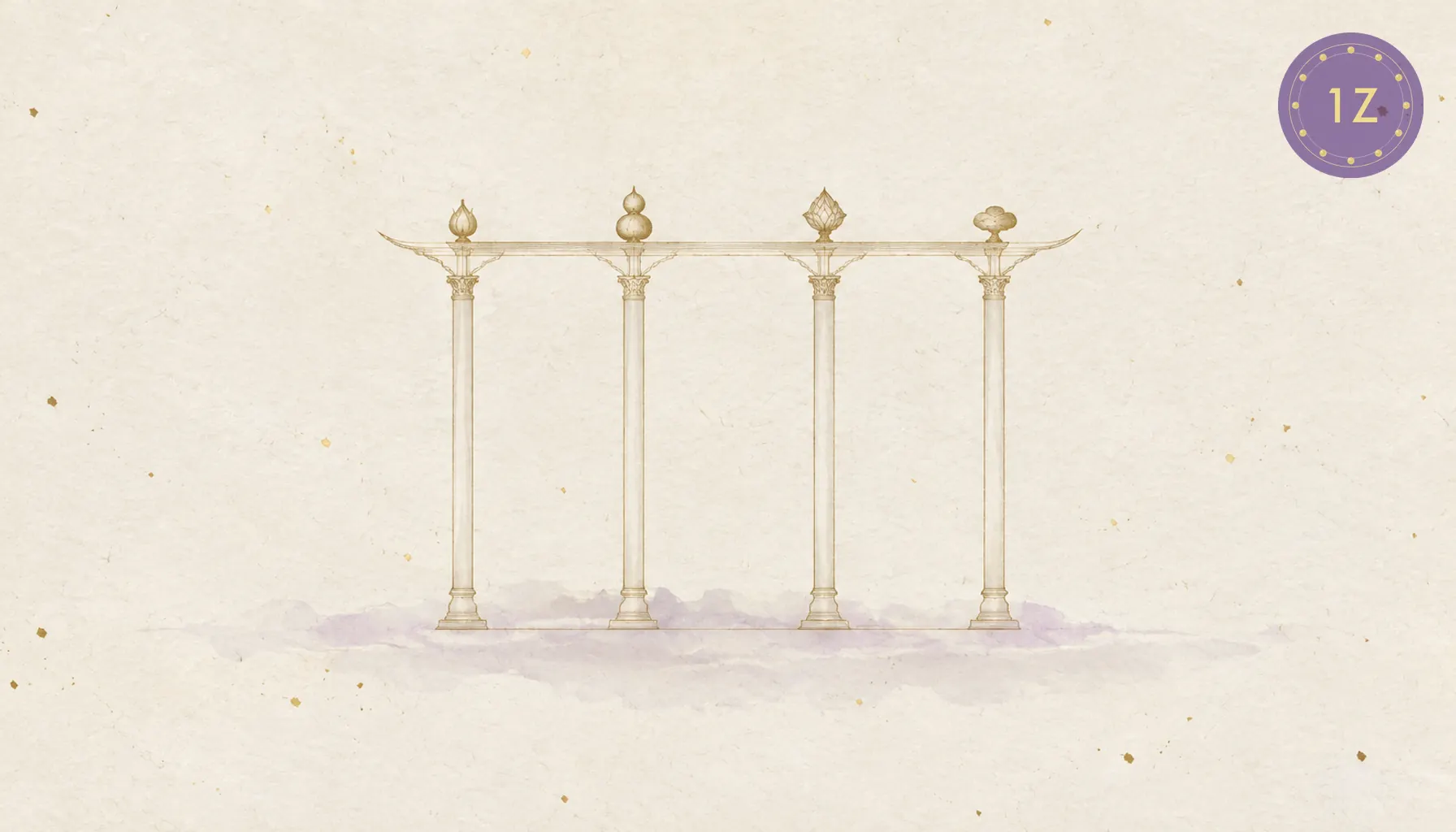
The name is a headcount. A birth chart in this system contains exactly 8 characters: four pillars, one each for the birth year, month, day, and hour (the hour itself one of 12 windows of 2 hours each), and each pillar stacked from two characters, a Heavenly Stem above an Earthly Branch. Eight positions, four time frames, one chart. The Four Pillars of Destiny is the formal English rendering of the same idea (the Chinese term is 四柱, sì zhù, “four pillars”), and BaZi is simply the everyday name that counts what the pillars are made of.
The two character sets inside the pillars have their own names you will hear constantly, summarized here:
| Term | Pinyin | Meaning in the chart |
|---|---|---|
| 八字 | bā zì | the eight characters, the everyday name |
| 四柱 | sì zhù | the four pillars, the formal architecture |
| 天干 | tiān gān | the 10 Heavenly Stems |
| 地支 | dì zhī | the 12 Earthly Branches |
The 10 Heavenly Stems are tiān gān (天干), and the 12 Earthly Branches are dì zhī (地支). Pairing one stem with one branch produces 60 combinations, the sexagenary cycle that classical references document across 3,000 years of recorded use. The cycle of 60 years drives the year level, and the same 60 pairs turn over in 60 days at the day-pillar level, which is why two people born weeks apart can hold different day stems.
Common Mispronunciations You Will Hear at Birth Chart Readings
Three mispronunciations cover most of what you will hear. The first is “bay-zee”, reading the letters as English vowels; the fix is shortening the first vowel to “bah” and blending the second syllable into “dzuh”. The second is “BAY-zee” or “bazzy” with stress on the second syllable; the natural Mandarin stress leads on 八, so keep the weight up front. The third is flattening both tones into a monotone “bah dzeh”; the fix is overdoing the tones at first, a high held “BAH” and a sharply dropped “dzuh”, until the pair feels natural at normal volume.
What most guides skip is the spelling side, and one note there saves confusion in text. You will see “BaZi”, “Ba Zi”, “bazi”, and 八字 used interchangeably, and they all name the same system; the capitalized compound “BaZi” simply marks the two syllables for English readers. When you write for an audience new to the subject, the two-syllable marking helps them avoid “bay-zee” on sight. My advice after years of watching readers mangle the term is simple: keep the stress up front and let the falling tone do the pointing.
That said, practice beats theory here, and 1 minute is enough. I have watched beginners retire “bay-zee” in a single sitting once they hear the “dz” hiding at the end of the word “kids”. Say “BAH-dzuh” 5 times with exaggerated tones, then use it in a sentence about a birth chart, and the word will feel like yours by the sixth.
Is BaZi the same as the Four Pillars of Destiny?
BaZi is the same system as the Four Pillars of Destiny, just named from a different angle. The Chinese name 八字 (bā zì) counts the parts: four pillars, one each for the birth year, month, day, and hour, each pillar built from one Heavenly Stem stacked over one Earthly Branch, eight characters in total. The English name 四柱命理 (sì zhù, four pillars) describes the architecture instead: the four vertical columns a chart is written in. Both names circulate in English-language writing, along with the shorter “Eight Characters” translation, and they all point to the same stem-branch machinery of 10 stems and 12 branches. When a writer switches between the names, nothing about the system changes; the chart, the pillars, and the characters remain identical. Choose whichever name your audience already knows, define it once, and stay consistent afterward.
Why do some sources write BaZi, others Ba Zi, and others 八字?
Sources write BaZi, Ba Zi, and 八字 differently for typographic reasons, and the three spellings mark the same word at three levels of formality. 八字 is the original Chinese, the two characters themselves, and it appears wherever a text wants to show the real written form. “Ba Zi” with a space mirrors the two spoken syllables and is common in instructional contexts that teach pronunciation. “BaZi” as a single capitalized compound is the everyday English convention, compact and searchable, and it dominates site names and modern writing. None of the three is wrong, and none changes meaning; they are typography, not terminology. The practical habit is to match the source you are citing, define the term on first use, and lean on the Chinese characters when precision matters, because 八字 carries no spelling ambiguity at all.
How should you practice the two tones if English is your first language?
Practice the two tones as music first and words second, because English speakers hear pitch as emotion while Mandarin hears it as meaning. Start with 八 (bā): sing a comfortable high note on “bah” and hold it flat, like the first note of a scale, and keep the volume steady. Then practice 字 (zì): say “dzuh” while letting your pitch drop sharply, the way English says a firm “no.” or “stop.” at the end of a sentence. Alternate them slowly, high-flat then high-to-low, until the contrast feels physical rather than remembered. A useful self-check comes from the classic four-way example mā, má, mǎ, mà, four words distinguished by pitch alone; if you can hear those four as different, your ear has the machinery BaZi needs. In my experience teaching this term to new readers, 5 minutes of daily repetition beats an hour of reading about it, and using the word aloud in conversation locks it in faster than any drill.
Conclusion
BaZi (八字, “BAH-dzuh”) is a two-character name for an eight-character chart: four pillars of stems and branches that record the moment you were born. Say it with the tones, and the name already explains the system. Curious what your own eight characters look like? Run your birth data through our free BaZi calculator.
Sources
- Four Pillars of Destiny (Wikipedia): backs the system’s structure and its English naming.
- Sexagenary cycle (Wikipedia): backs the 10-stem, 12-branch, 60-pair cycle the name counts.
- Chinese astrology (Britannica): backs the historical setting of the stem-branch system.