
In BaZi (八字, the Four Pillars of Destiny), a birth chart reads too strong when its Day Master draws more support than the rest of the chart can spend. The month branch sets the starting verdict, companions and resources stack the rest of the weight, and the classical tradition gave a surplus three ways out. This piece walks the source of the strength, the whole-chart call that separates strong from too strong, and the three outlets one by one.

Key Takeaways
- A birth chart reads too strong when the Day Master’s element holds the month seat and the helper count keeps stacking behind it
- A Wood Day Master in a Wood month hits 旺 (Prosperous), the strongest state on the scale, with peer support at full volume
- Earth and Metal day masters hold 6 strong months each in our validated matrix, while Wood, Fire, and Water hold 4
- Strong enough versus too strong is a whole-chart judgment, and no single pillar settles it
- An excess element has three classical outlets: output, wealth, and officer pressure
- Every remedy is conditional, because which outlet a chart needs is a full-reading verdict
When a BaZi Birth Chart Reads Too Strong
Every reading starts from eight characters, two stems and two branches per pillar across the year, month, day, and hour columns of the Four Pillars framework. The Day Master is the stem at the day column, the heavenly stem of your day pillar and the character standing in for you. Strength describes where that stem sits on a five-state scale, from 旺 (Prosperous) at the top down through 相 (Supported), 休 (Resting), 囚 (Imprisoned), and 死 (Dead). At 12Zodiacs, the strength computation behind every chart takes the month branch (the Earthly Branch under the month pillar) as its heaviest single input.
“Too strong” names a trend on that scale rather than a chart type: the Day Master’s element draws so much support that the reading runs past the useful middle. The scale itself is mechanical. The trend line is where interpretation earns its keep.
The month seat matters first because the month is the season the chart was born into, and the season crowns one element. A Wood Day Master born in the Yin month sits in a Wood month, the first month of spring, which opens at Li Chun (立春, the February solar term, around February 4). The canonical reading runs verbatim: “Wood in a Wood month is 旺 (Prosperous): the month element is the same as the Day Master, peer support at full volume.” One branch out of eight characters placing the verdict at the top of the scale is the first clue that the final call needs the other seven.
Where the Strength Comes From in a Birth Chart
Strength accumulates from two directions. The first is the season itself, which puts the Day Master in 旺 or in 相 (Supported); the second is the helper count behind it.
The supported state arrives when the month element generates the Day Master’s element, and a Water month does it for Wood. The canonical sentence again, verbatim: “Wood in a Water month is 相 (Supported): Water generates Wood (the month element generates the Day Master), so the state is Strong, never Neutral.” Behind the month sit the helpers, in two kinds: companions (比劫, elements identical to the Day Master) and resources (印, the element that generates it), plus the roots where those elements hide inside branches. The helper tally and the root count get their own walkthrough in our guide to a balanced chart.
The full matrix below comes from our validated strength table, and its asymmetry is the part worth memorizing. Earth and Metal day masters each hold 6 strong months, while Wood, Fire, and Water hold 4. The reason is structural: Earth alone holds 4 of the 12 Earthly Branches (辰戌丑未, the storage quartet), and Metal’s four extra strong months are exactly those four Earth branches generating it.
| Day Master | Strong months (旺+相) | Weak months (囚+死) | Draining months (休) |
|---|---|---|---|
| Wood | Zi, Yin, Mao, Hai | Chou, Chen, Wei, Shen, You, Xu | Si, Wu |
| Fire | Yin, Mao, Si, Wu | Zi, Shen, You, Hai | Chou, Chen, Wei, Xu |
| Earth | Chou, Chen, Si, Wu, Wei, Xu | Zi, Yin, Mao, Hai | Shen, You |
| Metal | Chou, Chen, Wei, Shen, You, Xu | Yin, Mao, Si, Wu | Zi, Hai |
| Water | Zi, Shen, You, Hai | Chou, Chen, Si, Wu, Wei, Xu | Yin, Mao |
No neutral column exists: 相 (Supported) counts as strong, and 囚 (Imprisoned) counts as weak. The Zi month, to anchor one row in time, runs roughly December 7 to January 5, about 30 days, a solar-term month rather than a lunar one.
I’ve watched readers miscount this exact table, usually by scanning only the month they were born in and never the helper columns behind it.
Strong Enough vs Too Strong: The Whole-Birth-Chart Call
The ladder itself is mechanical, and the table below shows all five states for a Wood Day Master with the canonical reading attached to each.
| Month branch | Month element | State | Canonical reading |
|---|---|---|---|
| Yin, Mao | Wood | 旺 Prosperous | the month element is the same as the Day Master, peer support at full volume |
| Zi, Hai | Water | 相 Supported | Water generates Wood, so the state is Strong, never Neutral |
| Si, Wu | Fire | 休 Resting | Wood generates Fire, the Day Master’s energy pours into generating the month element, a moderate drain |
| Chou, Chen, Wei, Xu | Earth | 囚 Imprisoned | Wood controls Earth, the Day Master restrains the month element, which costs effort; restrained, not generated |
| Shen, You | Metal | 死 Dead | Metal controls Wood, the month element restrains the Day Master, the weakest configuration |
What the table cannot do is draw the line between a strong chart that performs and a chart carrying more than it can spend. That line runs through all eight characters: the roots, the visible companions, the resources, and the opposition all weigh in. The same 旺 placement can land in either territory depending on what the other seven characters contribute.
The gap between strong and too strong is not a number on the table. It is whether the support still has somewhere to go.
Some schools name dedicated structures for the most extreme charts, and identifying any of them is a full-reading verdict. This article stays with the trend: charts where one element keeps stacking tend toward rigidity on one end and exhaustion on the other. Reading the trend backwards matters just as much, because a chart already running hot gets no help from more of the same element. Piling companions onto a dominant grove works against the chart. That said, the mechanism stays public even where the verdict is personal, and that is why the classical prescriptions for a strong chart never read “add more of what you have.”
The Three Classical Outlets When an Element Runs Too Strong
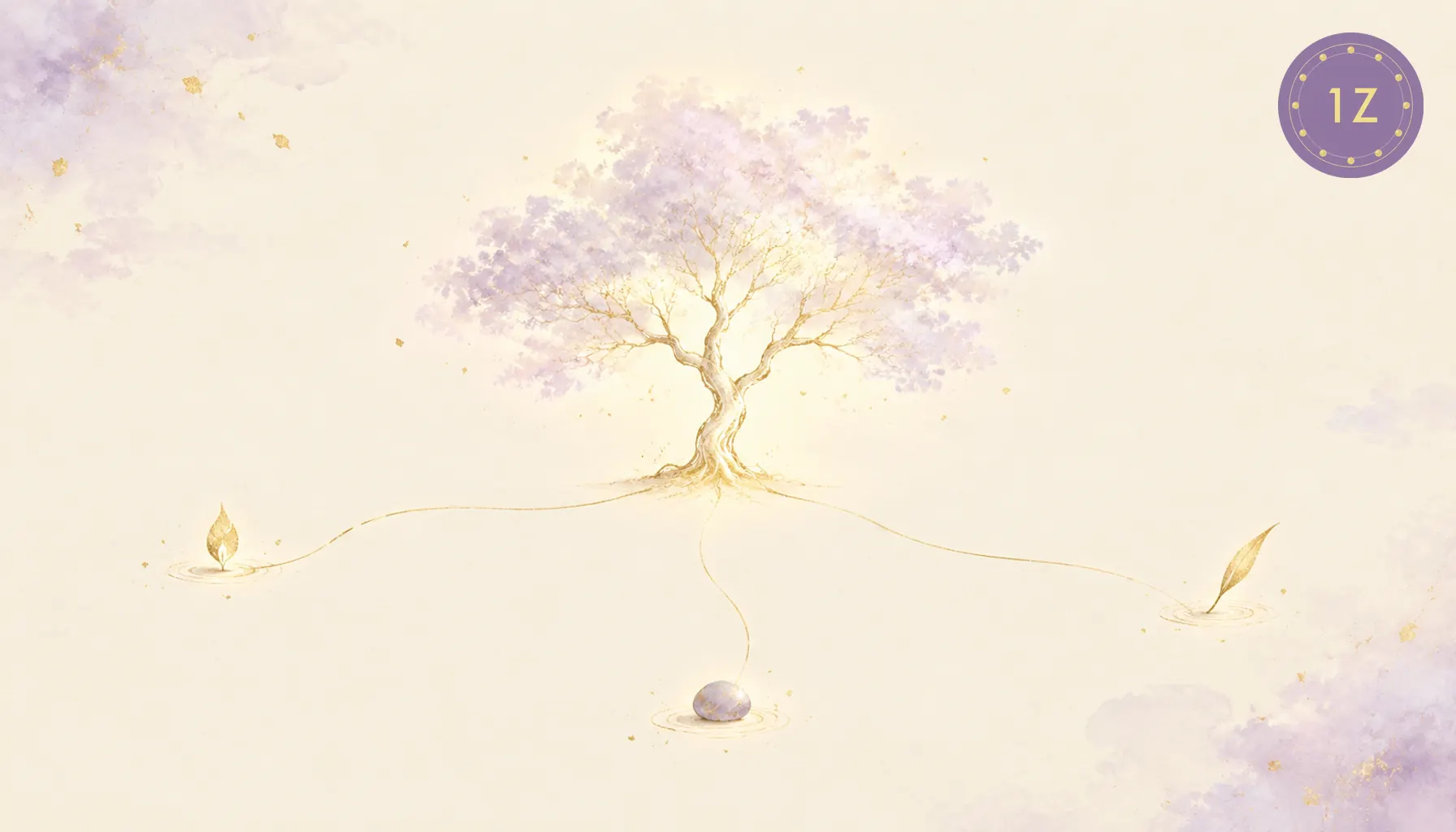
The two five-element rings supply the exits, and for a Wood surplus they run through three lines. When I read a chart that smells of excess, I look for the outlet before I look at the volume.
| Outlet | Classical line | Direction (tool-verified) | What it does with the surplus |
|---|---|---|---|
| Output (泄, release by expression) | 食伤 line | Wood generates Fire (相生: Wood→Fire) | the surplus burns as production, fuel leaving the grove |
| Wealth (耗, spending by control) | 财 line | Wood controls Earth (相克: Wood克Earth) | holding ground costs effort, so the surplus pays as it works |
| Officer (克, checked from outside) | 官杀 line | Metal controls Wood (相克: Metal克Wood) | the pruning blade trims the canopy, pressure applied from outside |
The output line converts surplus into expression, the wealth line spends it on what it works, and the officer line is the check from outside. Two of the five control pairs in the ring touch Wood this way, one as controller and one as controlled.
Which outlet a chart needs is not a menu choice. The favorable element (喜用神, the element a full computation names as most useful) decides it, and the conditional has to stay attached. If a full reading confirms the excess and names the useful god, the classical lines run exactly this way. Our useful god explainer covers how that computation reaches its answer. Without that confirmation, the table above is mechanism, not prescription. Check the direction before you trust any advice built on this table. Every remedy that works runs one of these three arrows, and a reversed arrow is the most common way this mechanism gets miswritten.
What a Full Birth Chart Reading Changes: Two Case Files
A 1988 Earth Dragon client shows the excess side of the widest strong band. Her year pillar, Wu Chen (戊辰, the 1988 stem-branch pair), carries Earth in both seats. In Mei Lin Chen’s practice notes, the reading ran that the Earth was extremely thick and needed Wood to regulate it, with the relevant Wood period beginning gradually from 2028, the Wu Shen year, onward. Wood controls Earth, so the regulator sits on the officer line. The timing question, which year the regulator arrives, is exactly the part no table can answer.
A 1960 Metal Rat entrepreneur moved the opposite way. His year pillar, Geng Zi (庚子), stacks Metal over Water, and Metal generates Water. Discipline fed flow until the pair ran too rigid for the creative field he wanted. The pivot into hospitality at 42 activated the Fire his chart lacked, and the restaurant chain he built reached 12 locations in 8 years. Water had been receiving everything Metal paid out, and the missing Fire was the warmth neither element supplied.
The surplus element, in my reading, is usually the one its owner is proudest of.
Neither case is a template. Whether a given chart needs a regulator, an outlet, or nothing at all is the whole-chart verdict this article keeps refusing to fake. Both clients got their answers from readings that weighed all eight characters.
Is a strong day master the same as too much of one element in a chart?
No, a strong day master and too much of one element overlap but answer different questions. Strength tracks the support directly attached to the Day Master: the month state plus the companions and resources. An element can pile up anywhere in the eight characters and outweigh every other element without the Day Master itself reading strong. The too-much-Earth question often arrives from traditional Chinese medicine, where Earth is classically mapped to the spleen and stomach and to pensiveness among the emotions, a traditional wellness correspondence rather than medical advice. Structure gives the cleaner test: every element holds exactly 2 of the 10 heavenly stems, so excess is always a tally, never a birthright.
Is the control cycle the same as the destructive cycle in Feng Shui?
Yes, the control cycle and the destructive cycle are two English names for the same classical sequence, the one Chinese sources call 相克 (xiang ke, mutual restraint). Running the full ring in order: Wood controls Earth, Earth controls Water, Water controls Fire, Fire controls Metal, and Metal controls Wood, five pairs that close the loop. The generation ring runs alongside it: Wood generates Fire, Fire generates Earth, Earth generates Metal, Metal generates Water, and Water generates Wood. Every classical remedy, feng shui included, works by adding or redirecting along these two rings, and direction is the part to verify, because a flipped arrow changes the advice completely.
How should you check a chart you suspect is too strong?
If you suspect your chart is too strong, start with the three mechanical checks before any remedy talk. Find your day stem, the heavenly stem of your day pillar, and note its element. Check which month branch your birth date falls in, and whether that month’s element matches or generates the day stem’s element, the two strong states. Then count visible companions and resources among the remaining characters. If the month lands in the strong column and the helper tally keeps stacking, the trend is worth a full reading. That is where the favorable element gets computed and the outlet question gets answered. Our nine free zodiac tools include the BaZi calculator that runs the first check for you, and the reading that follows weighs what no checklist can.
Conclusion
The too-strong reading is a measurement with a mechanism: a month seat that crowns an element, helpers that keep stacking, and three classical arrows that carry the surplus away. The verdict itself stays with the full chart. For the month state your own birth date computes, run your data through the free BaZi calculator and start from the seat that tips the scale.
Sources
- Wuxing (Chinese philosophy), Wikipedia: backs the five-element generation and control rings quoted in the FAQ
- Four Pillars of Destiny, Wikipedia: backs the eight-character chart structure and the Day Master definition
- Hong Kong Observatory, Gregorian-Lunar calendar conversion: backs the Li Chun solar-term boundary used for month placement