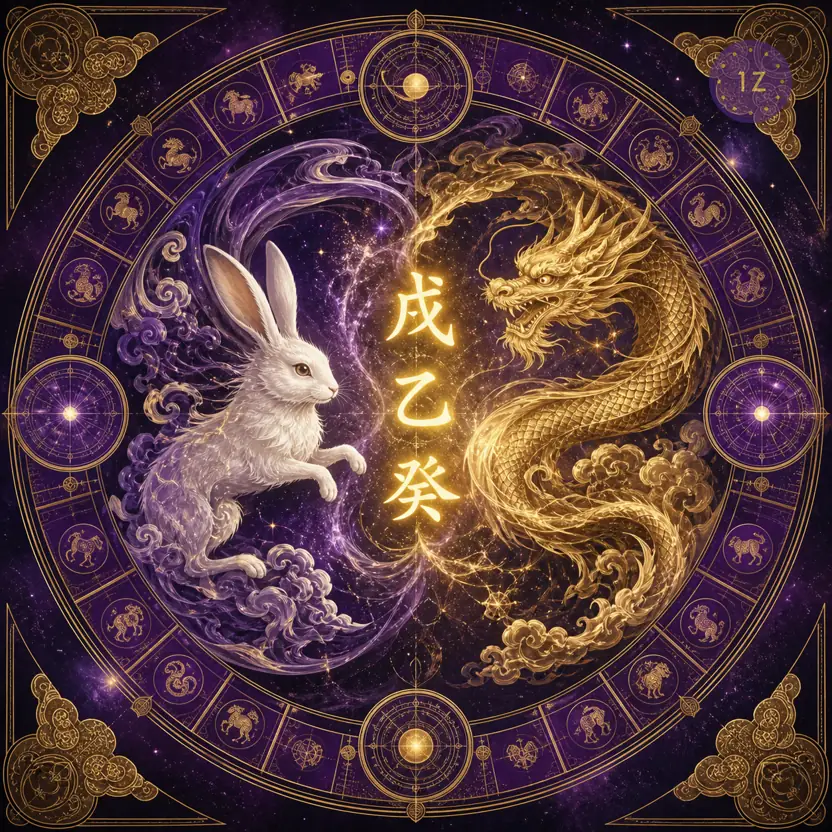

Tomb Sweeping Day in 2027 begins at the precise moment of 08:17 on April 5, Beijing time (UTC+8), when the sun crosses the 15° mark of celestial longitude. Known in Chinese as Qingming (清明, “pure brightness”), this single day festival unites ancestral remembrance with the fifth of the 24 solar terms in the traditional Chinese calendar.
Key Takeaways
- Tomb Sweeping Day 2027 falls on April 5, with the solar term arriving at 08:17 Beijing time; in 2026 it arrived earlier, at 02:39 on the same date
- Qingming is both a national festival (ancestral tomb sweeping) and a solar term (fifth of 24) tracked to minute precision by astronomical calculation
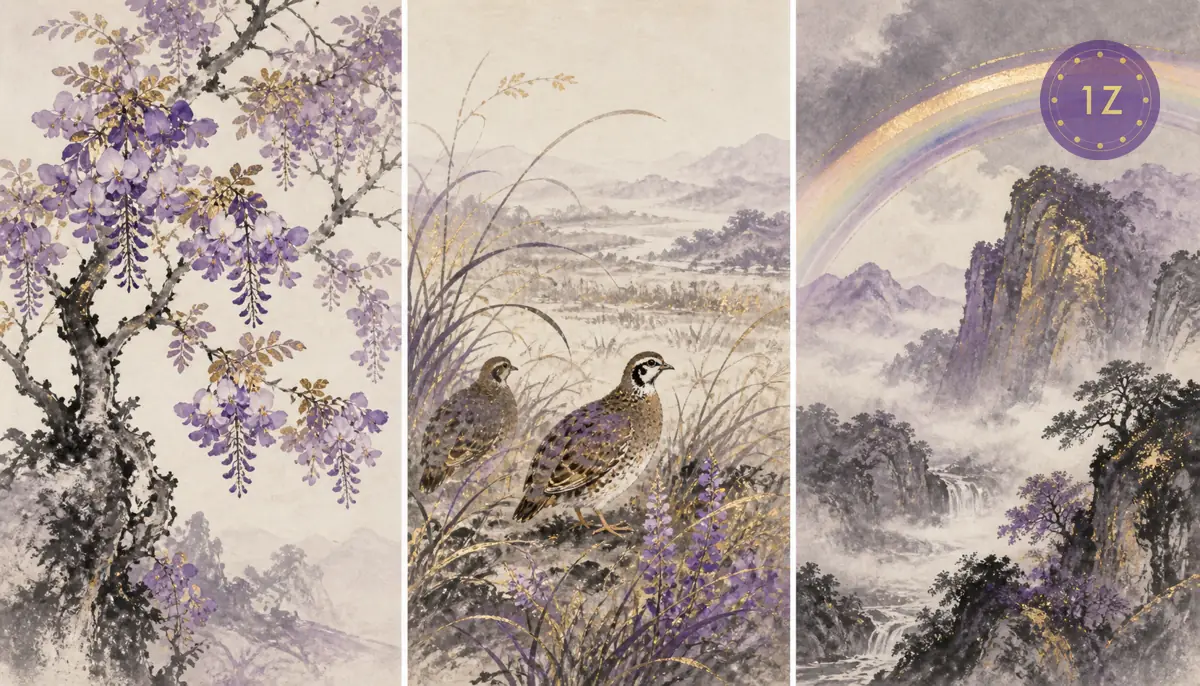
- Ancient phenology divides Qingming into three pentads: paulownia blooming, field mice retreating as quails appear, and the first rainbows of the year
- The day marks the start of the Dragon month (辰月) in BaZi astrology, switching the month pillar for everyone’s charts
- Traditional observances include tomb sweeping, willow branches, spring outings, kite flying, and eating qingtuan green rice balls
What Is Tomb Sweeping Day?
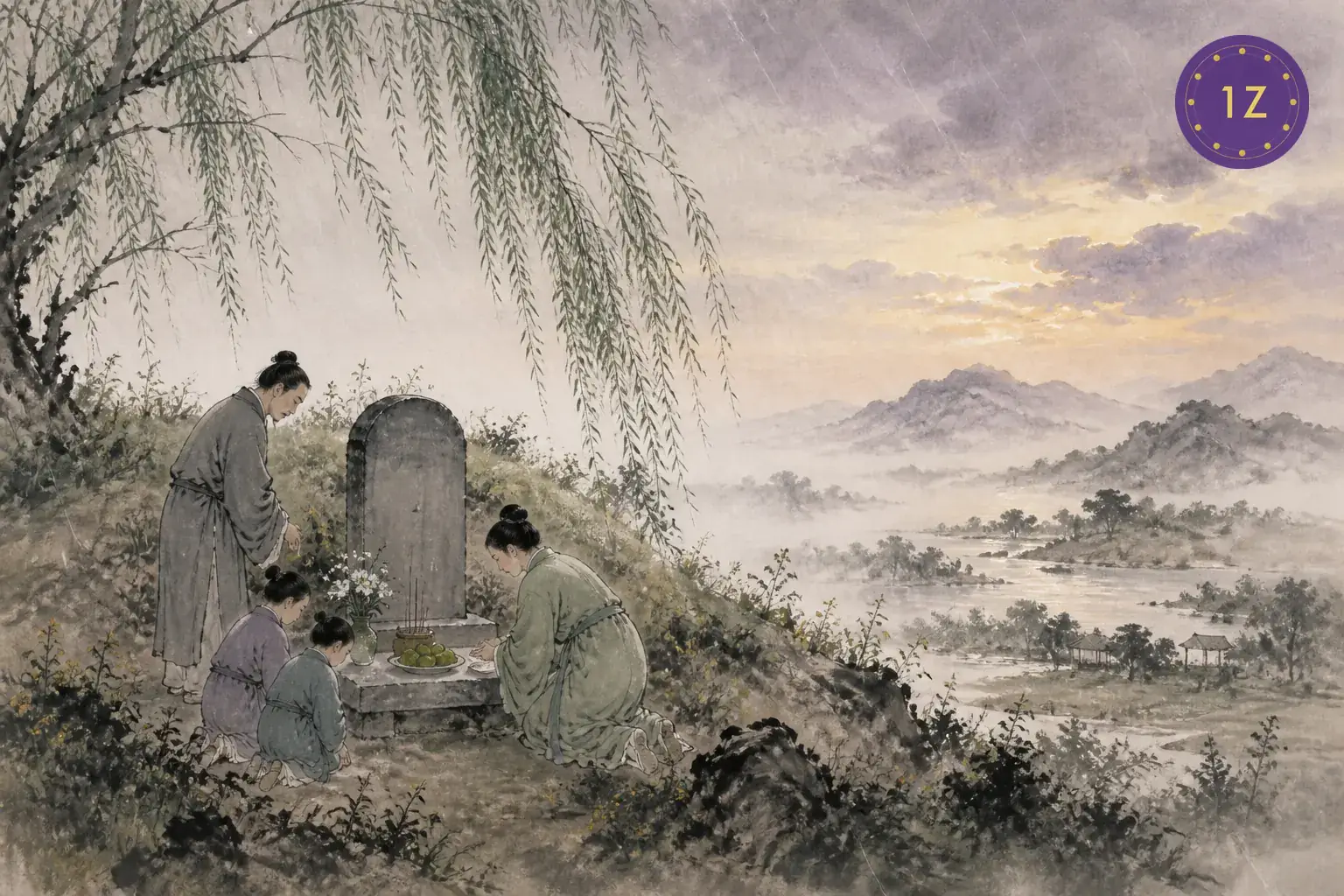
Tomb Sweeping Day is the English name for the Qingming Festival, a traditional Chinese observance that falls on the first day of the fifth solar term. Families visit ancestral graves to clean the tombstones, make food offerings, burn joss paper, and pay respects to deceased relatives. The festival carries a double identity: it is a statutory public holiday in mainland China (since 2008) and simultaneously one of the 24 solar terms that structure the traditional Chinese lunisolar calendar.
The date is fixed by astronomy, not by the lunar phases. Qingming arrives when the sun reaches 15° celestial longitude, which lands on April 4, 5, or 6 depending on the year, exactly 104 to 106 days after the winter solstice. Emperor Xuanzong of Tang formalized the annual observance in 732 AD, limiting extravagant ancestral ceremonies to one formal occasion per year. That imperial decision cemented Qingming as the designated day of remembrance for over twelve centuries. The lesson holds today: scarcity of occasion is what preserves the weight of ritual. The observance is documented across the Chinese diaspora, from Hong Kong’s Ching Ming customs to regional variants catalogued by China Culture, and the underlying solar term system is recognized by UNESCO as intangible cultural heritage.
The Exact Moment Qingming Begins in 2026 and 2027
Most published calendars record Tomb Sweeping Day as “April 4 or 5” without a time. The solar term, however, arrives at a precise minute that shifts every year:
| Year | Exact Moment (UTC+8) | Days After Winter Solstice |
|---|---|---|
| 2026 | April 5, 02:39 | 104 |
| 2027 | April 5, 08:17 | 104 |
These times are computed by the 12Zodiacs almanac engine using JPL DE440s ephemeris data, the same precision standard used by professional astronomy. The five-hour-38-minute drift between the two years reflects the quarter-day mismatch between the calendar year and the true tropical year, corrected by leap years.
In practice, the exact moment matters most for BaZi practitioners. In BaZi astrology, a person born before 02:39 on April 5, 2026 belongs to the Rabbit month (卯月); born after, the Dragon month (辰月). The same boundary applies at 08:17 in 2027. Birth charts within hours of the transition require the minute-level data.
The Three Pentads: Nature’s Calendar During Qingming
Ancient Chinese phenology, recorded in the Yizhoushu (《逸周书·时训解》) roughly two millennia ago, divides each solar term into three five-day pentads. Qingming’s pentads track spring’s acceleration:
| Pentad | Chinese | English | Phenology Type |
|---|---|---|---|
| First (days 1-5) | 桐始华 | Paulownia trees begin to bloom | Plant |
| Second (days 6-10) | 田鼠化为鴽 | Field mice retreat as quails appear | Animal |
| Third (days 11-15) | 虹始见 | Rainbows begin to appear | Weather |
The second pentad reflects an ancient transformation belief: villagers observed voles vanishing into their burrows as quail grew visible in the fields, reading the shift as one species changing into another. Modern phenology explains the same signal as seasonal behavioral change. The pentad system, recognized by UNESCO as intangible cultural heritage alongside the full 24-term calendar, encoded agricultural timing instructions a thousand years before weather satellites. What stands out about the pentad ledger is its accuracy: paulownia blossoms in northern China still open within days of the recorded schedule.
Why Ancestral Veneration Happens on This Day
Qingming absorbed an older festival called Hanshi (寒食), the Cold Food Festival. The story traces to 636 BC and the nobleman Jie Zitui of the state of Jin. Jie followed his exiled prince through years of hardship, reportedly cutting flesh from his own thigh to feed him. When the prince became duke and rewarded his followers, Jie was overlooked. He retreated to Mount Mian with his mother, and when the duke set fire to the forest to force him out, Jie and his mother died in the flames. The duke ordered that no fires be lit on the anniversary, creating the cold food tradition.
The Tang emperor Xuanzong stepped in during 732 AD for a different reason. Wealthy families were staging extravagantly expensive ancestral ceremonies dozens of times a year. His edict restricted formal tomb offerings to a single annual occasion on Qingming, turning a diffuse custom into a national institution. The festival spread with the Chinese diaspora: today Malaysia and Singapore observe it with the same gravity, with traditional practice permitting tomb visits within a ten-day window before and after the solar term.
Tomb Sweeping Day Traditions and Customs
The customs divide into remembrance rituals and spring activities:
| Custom | Practice | Purpose |
|---|---|---|
| Tomb sweeping | Cleaning gravestones, weeding, repainting inscriptions | Care for ancestors’ resting place |
| Offerings | Food, tea, liquor, burning joss paper | Provision for the afterlife |
| Kowtow ritual | Three to nine bows by family seniority | Confucian filial piety |
| Willow branches | Wearing sprigs or hanging on gates | Ward off wandering spirits |
| Spring outing (踏青) | Family walks in the countryside | Embrace the season’s renewal |
| Kite flying | Flying kites, sometimes cutting the string | Release misfortune with the wind |
Food anchors the festival regionally. Jiangnan families eat qingtuan (青团), bright green dumplings of glutinous rice mixed with Chinese mugwort or barley grass juice. Taiwan’s version, caozaiguo, uses Jersey cudweed. The tea trade adds an economic layer: green tea picked before Qingming earns the prestigious “pre-Qingming” (明前茶) designation and commands significantly higher prices, because the early leaves are more tender and aromatic.
In Mei Lin Chen’s practice advising family businesses on succession timing, Qingming week is treated as a natural annual review point. One second-generation client, a Wood Ox born 1985, timed his family business transition discussions to the Qingming gathering over three consecutive years, using the guaranteed family assembly to align his Fire Snake uncle’s strategic pivots with his own stewardship pace. The festival’s real function, she observes, is that it forces scattered families into one room on a fixed astronomical schedule. We recommend treating it as the calendar anchor it proved to be: no other mechanism in modern life achieves this reliability, which is why the tradition outlasted every dynasty that codified it.
What to Avoid During Qingming
Traditional guidance frames Qingming observance around respect, and families checking the daily Tung Shing almanac often cross-reference auspicious hours before scheduling their tomb visit, the same engine behind our auspicious dates calendar:
- Avoid tomb visits at dusk. Custom holds that ancestral grounds are best visited before late afternoon, when yang energy remains strong.
- Skip bright, celebratory clothing. Muted colors signal solemnity at grave sites; red is reserved for festivals of celebration.
- Do not photograph tombstones casually. Pointing cameras at other families’ graves during private mourning is considered intrusive.
- Wear willow if you follow old custom. The proverb “no willow on Qingming, beauty fades to white hair” (清明不戴柳,红颜成皓首) recorded the protective custom of wearing willow sprigs.
- Schedule within the traditional window. Overseas Chinese communities in Malaysia and Singapore observe a ten-day permissible window before and after the solar term, favoring visits before the exact day when the date itself is impractical.
Qingming in Your BaZi Chart: The Dragon Month Begins

For BaZi practitioners, Qingming carries technical weight beyond the festival. The solar term switches the month pillar from Rabbit (卯) to Dragon (辰), and the transition happens at the exact minute listed above. In 2026, charts shift from Xin Mao (辛卯) to Ren Chen (壬辰) at 02:39 on April 5.
The Dragon branch stores three hidden stems: Wu (戊) primary Earth, Yi (乙) Wood, and Gui (癸) Water, the same Earth-dominant signature that shapes Dragon year natives. Earth dominates, which classical texts associate with foundations, land, and ancestry, a fitting resonance for the month when families return to family grounds. A person born in the Dragon month carries this mixed Earth-Wood-Water signature in their month pillar, influencing how the chart processes stability and rootedness.
Checking a birth date against this boundary is one of the most common minute-level questions in BaZi practice. The 12Zodiacs BaZi calculator handles the Qingming transition automatically, along with the eleven other solar term switches through the year.
Why do some calendars list Qingming on April 4 while others say April 5?
Tomb Sweeping Day 2027 begins when the Qingming solar term arrives at 08:17 on April 5, Beijing time (UTC+8). This is the astronomical start of both the festival and the Dragon month in BaZi charts. The moment converts to 00:17 UTC, which lands on April 4 at 20:17 in New York (UTC-4): the solar term crosses the date line, which is why global calendars sometimes disagree by a day. Chinese communities worldwide observe April 5 as the festival date based on Beijing time.
How should you greet someone during Qingming Festival?
Wishing “happy Qingming” is considered mismatched in most Chinese communities, because the festival centers on mourning and remembrance rather than celebration. The safer greeting acknowledges the spring aspect instead, such as commenting on the season or the family gathering. Some younger Chinese, particularly in mainland urban areas, use the phrase loosely among friends, but it remains risky with elders. A parallel exists in how English speakers treat “happy Memorial Day”: tolerable in casual contexts, jarring at a cemetery. When in doubt, a simple acknowledgment that you hope the family gathering goes smoothly carries the right register, and questions about qingtuan or spring outings invite conversation without touching grief.
Can siblings born around Qingming have different BaZi month pillars despite sharing a year?
The Qingming week affects charts through the month pillar switch from Rabbit to Dragon. Siblings born in the same year but on opposite sides of the boundary carry different month branches, which changes their month hidden stems from Yi Wood dominance to Wu Earth dominance. The switch happens at 02:39 in 2026 and 08:17 in 2027, so a birth even one hour before or after the boundary lands in a different month pillar. In family readings, Mei Lin Chen notes that Dragon-month members often anchor the family’s practical decisions while Rabbit-month members drive its aesthetic and relational choices, a pattern visible in the succession cases she has advised since the 1990s. Checking a birth certificate against the exact solar term minute is the only reliable way to settle which pillar applies.
Tomb Sweeping Day earns its longevity through astronomical precision and emotional necessity in equal measure. The 2027 solar term arrives at 08:17 on April 5 Beijing time, the Dragon month begins on that exact minute, and families across the Chinese diaspora will gather at ancestral grounds within the traditional ten-day window. What looks like a simple spring festival is a working calendar system that has synchronized family life for twelve centuries. Curious what the Dragon month means for your own chart? The 12Zodiacs BaZi Calculator computes all four pillars with exact solar term boundaries, and the daily Tung Shing almanac tracks auspicious timing for every day of the year.
Sources
- Qingming Festival, Wikipedia (festival dates, observance history, Jie Zitui origin)
- The Twenty-Four Solar Terms, UNESCO Intangible Cultural Heritage (heritage listing)
- Solar Terms, China Culture, Ministry of Culture (official English term translations)
- Solar term timing data computed by the 12Zodiacs almanac engine (JPL DE440s ephemeris)