
The BaZi General Star (Jiang Xing, 将星) is the symbolic star of command, and its address is pure lookup: each trine fixes it at the middle branch, the frame element’s Prosperity station. You look it up from your year branch or day branch, never from the day pillar’s stem (the Day Master); in 2026 the year itself stands on a star address.

Key Takeaways
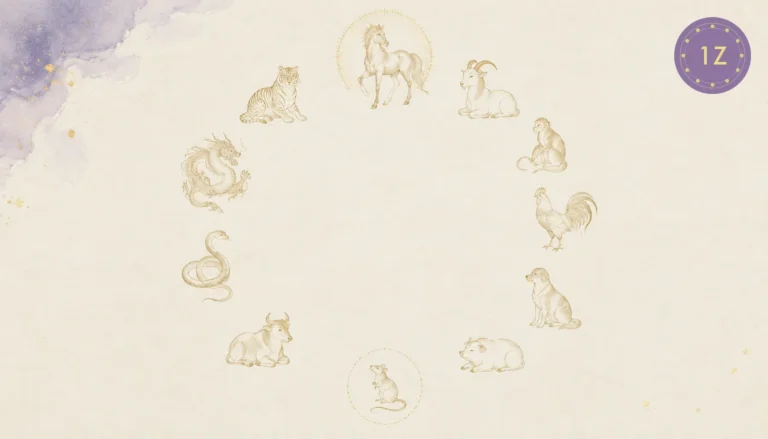
- The General Star is the middle branch of your trine: Tiger-Horse-Dog read it at Wu 午 (Horse), Monkey-Rat-Dragon at Zi 子 (Rat), Snake-Rooster-Ox at You 酉 (Rooster), Rabbit-Goat-Pig at Mao 卯 (Rabbit).
- Each star address doubles as the frame element’s Prosperity station (帝旺), fifth of the twelve life stages, so the four addresses are exactly the Four Cardinals: Zi, Wu, You, Mao.
- The lookup anchor is the year branch or the day branch; classical manuals read the year, much modern practice the day, and both resolve the same table.
- The goat blade shares the same four addresses but answers a different table, the Day Master’s stem, so the Horse can be one reader’s General Star, another reader’s blade, both, or neither.
- 2026 (Bing Wu) is a star-seat year: the year branch occupies the fire frame’s star address, while for the water frame the same branch is the Disaster Sha, the star’s clash.
- The star is a modifier layer classically associated with command and steadiness, not an office or a promotion date.
What the General Star Is: Command as a Lookup, Not a Title
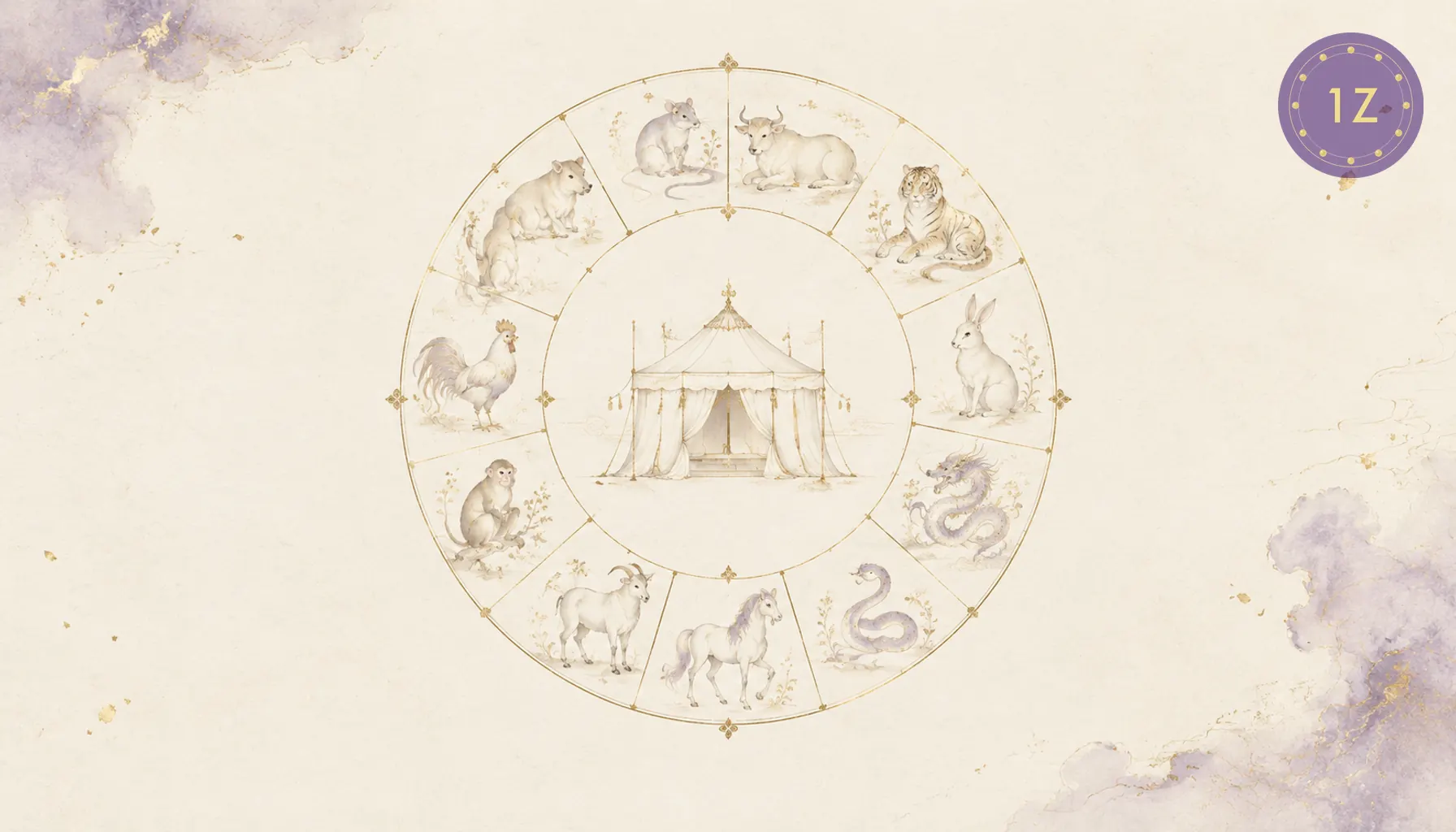
Every trine in BaZi runs on three branches and one frame element, and the classical star tables post a symbolic star at the formation’s middle branch. The star posted there is the General Star (将星, Jiang Xing), and the name carries its own image: a general commands from the tent at the formation’s center. 《三命通会》(San Ming Tong Hui), the Ming dynasty compendium, files the star in its trine-family chapter alongside the Elegant Seal (华盖, Hua Gai), the Calamity Sha (劫煞, Jie Sha), and the Disaster Sha (灾煞, Zai Sha).
The mechanism under the folklore is the twelve-stage cycle, and classical readings treat its peak as the natural home of the command temperament. Each trine’s middle branch is the frame element’s Prosperity station (帝旺), the fifth stage and the element’s high-water mark: fire crests at Wu, water at Zi, metal at You, wood at Mao.
The trine is not just a star map in our framework. The alliance structure the star is carved from is scored, not assumed. In our editorial analysis of 78 zodiac pairings, trine-ally pairs sit on a tight 88-89 shelf, one tier below the secret-friend ceiling, documented on our methodology page.
The Full General Star Table: Four Trines, Four Seats
Here is the complete lookup, identical whether you anchor on the year branch or the day branch. Find the branch’s trine and read the frame’s row.
| Trine | Frame element | General Star | Star’s animal |
|---|---|---|---|
| Yin, Wu, Xu (Tiger, Horse, Dog) | Fire | Wu 午 | Horse |
| Shen, Zi, Chen (Monkey, Rat, Dragon) | Water | Zi 子 | Rat |
| Si, You, Chou (Snake, Rooster, Ox) | Metal | You 酉 | Rooster |
| Hai, Mao, Wei (Rabbit, Goat, Pig) | Wood | Mao 卯 | Rabbit |
Two structural facts fall out of the table without any derivation. First, the star is always the trine’s own middle branch, so eight of the twelve branches pass their star to a different branch while the four cardinals keep their own. Second, the four star addresses are exactly the Four Cardinals (四正), the wheel’s axis points, so a star-seat year arrives whenever the year branch is a cardinal.
The star is one voice in a four-star cabinet that partitions the wheel with nothing left over.
| Trine-family star | Classical station | Branch family |
|---|---|---|
| General Star 将星 | Prosperity station (帝旺) | Four Cardinals: Zi, Wu, You, Mao |
| Elegant Seal 华盖 | Tomb and storage station (墓库) | Four vault branches: Chen, Xu, Chou, Wei |
| Calamity Sha 劫煞 | Extinction station (绝) | Four Birth Branches: Yin, Si, Shen, Hai |
| Disaster Sha 灾煞 | The clash position of the star | Four Cardinals (each star’s opposite) |
One terminology caution keeps English readers out of a common trap. The Calamity Sha (Jie Sha, 劫煞) and the Disaster Sha (Zai Sha, 灾煞) are two different stars, the first living on the Four Birth Branches and the second on the clash of each General Star. English glosses that flatten both into one word erase a distinction the classical tables keep.
How to Find Your General Star: Two Steps and a 2026 Star-Seat Year
The lookup takes two steps. Step one: choose your anchor branch, the year branch in classical manuals or the day branch in much modern practice, a schools-differ point both camps resolve with the same table. Step two: find the anchor’s trine and read the star row.
A year example makes the steps concrete: someone born in 1985, a Yi Chou Wood Ox year, anchors on Chou, a Snake-Rooster-Ox metal frame branch, so the General Star sits at You. The birth branch contributed the frame but not the star.
A day-branch example runs identically. A chart whose day branch is Xu (Dog) anchors on the Tiger-Horse-Dog fire frame and reads its star at Wu, the Horse’s branch, no matter what the year branch says.
Then there is 2026. The year runs Bing Wu (丙午), and the year branch Wu is itself the fire frame’s General Star address, a value-year alignment: the seat the year stands on is a star address. For readers in the Tiger-Horse-Dog camp, the year occupies their star address for all of 2026. For readers in the Monkey-Rat-Dragon camp, the same branch is their Disaster Sha, the clash of the star at Zi, one of the six clash pairs. My case files keep confirming one pattern here: clients arrive asking whether 2026 hands them a promotion, and the table hands them an address.
General Star or Goat Blade: Same Four Addresses, Different Tables
The most common mix-up in English-language searches pairs this star with the goat blade (Yang Ren, 羊刃), because both stars land on the same four addresses. The overlap is real; the tables are different instruments. The General Star is read from a branch’s trine membership, while the goat blade is read from the Day Master‘s stem, counted as the Prosperity station of a yang stem’s own element. The five yin stems carry no blade in the mainstream convention.
Run both tables and four outcomes appear. The Horse address is the blade of Bing Fire and Wu Earth 戊 day masters and the star of the fire frame, so a Bing day master born in 1966 carries both tags on the same branch. A Ji Earth day master in the Rabbit-Goat-Pig camp carries a star at Mao and no blade anywhere. A Geng Metal day master born in a Horse year, 1990 say, carries the star by year and a blade at You instead.
| Chart | General Star | Goat blade | Where the tags land |
|---|---|---|---|
| Fire-frame native, Bing day master (b. 1966) | Yes, at Wu | Yes, at Wu | Both tags on the Horse |
| Fire-frame native, Ji day master | Yes, at Wu | No, yin stems carry none | Star only |
| Geng day master, Horse year (b. 1990) | Yes, at Wu | No, blade at You | Star and blade on different branches |
| Metal-frame native, Bing day master | Yes, at You | Yes, at Wu | Both carry, on different branches |
The blade’s own article walks the five-stem table in detail; the two stars coexist without merging.
One Address, Three Registers: Lu, Blade, and General Star at the Horse
The Horse address rewards one more pass through the tables, because three classical registers meet on Wu. The twelve-stage tables give the Official seat (临官, the Lu or salary station) of the Ding and Ji day stems to Wu. The same tables give the Prosperity station (the blade register for yang stems) to Bing Fire and Wu Earth 戊. The trine tables give the fire frame’s General Star to the same branch again.
| Register | Table consulted | Who reads the Horse this way |
|---|---|---|
| Lu (Official seat, 临官) | Twelve-stage table, by day stem | Ding Fire or Ji Earth day masters |
| Goat blade (Prosperity, 帝旺) | Twelve-stage table, by yang day stem | Bing Fire or Wu Earth 戊 day masters |
| General Star (将星) | Trine table, by year or day branch | Anyone anchored in Tiger-Horse-Dog |
None of the three registers cancels the others. A Ji Earth day master reads Wu as a salary station, a Bing Fire day master reads it as an edge, and a Tiger-Horse-Dog reader reads it as the star of command. The registries stay straight, in my reading, as long as you ask which question the chart is answering: the wheel is shared, the registers are not.
The salary register is the scarcest of the three: the ten stems’ Lu seats occupy only eight branches in total (Yin, Mao, Si, Wu, Shen, You, Hai, Zi). The Horse is one of the eight, which is what lets the registers stack.
What the General Star Actually Colors: A Layer, Not a Verdict
Classical readings attach a consistent temperament to the star: composure, steady command presence. The word to hold onto is “associated”: the star modifies a chart as one layer among several, and no classical table converts it into an office or a promotion date. I tell clients that a starred chart is a chart read in command vocabulary, nothing more deterministic, and the Nobleman star article applies the same layer discipline to its own famous lookup.
One consultation file shows the layer working at reading speed. A 1967 Fire Goat client, Ding Wei, anchors on Wei, which sits in the Rabbit-Goat-Pig wood frame, so her General Star reads at Mao. She spent years declining management roles before a mentor pointed at the latent authority her chart kept describing, and she accepted a department leadership role at 45. That said, the star did not hand her the job; it gave the conversation a vocabulary, the way modifier layers behave in every file I keep.
There is also a structural floor under all star talk. In our editorial analysis of 78 zodiac pairings, 48 of 78 pairs (62%) carry no classical branch relationship at all, per the same branch-relationship scoring on our methodology page. Most charts share no mechanical bond to argue about; based on our analysis of the branch tables, the relationship floor comes first, and the symbolic star cabinet fills in temperament above it.
Is the BaZi general star the same as the goat blade, since both sit at the Horse and the other cardinals?
No, and the cleanest proof is the shape of the two tables. The blade table has exactly five rows, one per yang Day Master, and it never grows, while the star table has twelve rows, one for every anchor branch on the wheel. Both tables land on the same four cardinal addresses, yet the inputs differ, a stem against a branch, so the tags never transfer between the tables. A 1966 Bing Wu native stacks both tags on the Horse. A 1990 Geng Wu native reads the star at Wu and the blade at You. A Ji Earth day master carries a star with no blade anywhere. Same addresses, different questions, so neither table substitutes for the other in a reading.
How can I tell which years are General Star years, and does 2027 continue the 2026 alignment?
Star-seat years are cardinal years, because the star addresses are the Four Cardinals. The rhythm is every three years: 2026 is a Wu year. 2029 runs Ji You, 2032 runs Ren Zi, and 2035 runs Yi Mao, a cadence fixed by the cardinals sitting three apart on the wheel. Each stands on a different frame’s star address, fire 2026, metal 2029, water 2032, wood 2035, so the spotlight camp rotates on a four-cycle of its own. 2027 (Ding Wei) sits outside the pattern entirely: Wei is a vault branch and the wood frame’s Elegant Seal branch, so no reader’s star address is the year’s own seat.
Why do some English star lists label the Jiang Xing star as a Prosperity Star or a Sword Star?
The labels are related without being the same registry, and unstable English glossing causes most of the confusion. “Prosperity” is the standard translation of the fifth twelve-stage station (帝旺), the station this star sits on, yet the stage belongs to the per-stem ladder while the General Star belongs to the trine cabinet. One term names a rung, the other a star posted on it. “Sword Star” in most English lists points to the blade lineage, which the section above separates by lookup axis. The stable identifiers are the Chinese tables, which is why this article prints the hanzi for every star and address.
Conclusion
The General Star reduces to one clean mechanism: your branch’s trine posts its star at the frame’s Prosperity station, and the four star addresses are the wheel’s four cardinals. The star shares those addresses with the goat blade and, at the Horse, the Lu register, yet the tables never blur: each register answers a different question. Read the star as a temperament layer, check your anchor branch, and let the table do the talking; to place it in your own four pillars, try our free BaZi calculator.
Sources
- Four Pillars of Destiny, Wikipedia: frames the BaZi pillar system and the place of shen sha stars in chart reading.
- Sexagenary cycle, Wikipedia: backs the ten-stem, twelve-branch wheel.
- Hong Kong Observatory calendar conversion: the calendar service our engine cross-checks year pillars against.