
The goat blade (Yang Ren, 羊刃) is the peak station of a yang Day Master’s own element, the fifth of the twelve stages, called Prosperity (帝旺). Five stems carry one: Jia Wood at Mao, Bing Fire and Wu Earth at Wu, Geng Metal at You, Ren Water at Zi. The goat in the name is a romanization accident, because the 羊 in 羊刃 is a classical phonetic loan for 阳 (yang), so the star has nothing to do with the Goat of the zodiac.

Key Takeaways
- A goat blade is the Prosperity station (帝旺), fifth of twelve stages, counted for a yang Day Master.
- The five carriers: Jia (甲) at Mao 卯, Bing (丙) and Wu 戊 at Wu 午, Geng (庚) at You 酉, Ren (壬) at Zi 子. Yin stems carry none in the mainstream convention.
- All five addresses sit on the Four Cardinal branches (子午卯酉); the four storage branches (辰戌丑未) host no blade for any stem.
- The blade branch stores the Day Master’s opposite-polarity twin, filing as Rob Wealth (劫财) in four of five cases, with Wu Earth the flip: its Horse address files Direct Resource as main qi.
- Only the cardinal opposite a blade address can clash it awake, so the 2026 Bing Wu Horse year both lands on the blade of Bing and Wu Day Masters and strikes the Rat blade of Ren Day Masters.
What the Goat Blade Is: Peak Station of a Yang Day Master
Every stem walks a twelve-station cycle (十二长生) across the branches: Growth, Bathing, Capping, Official, Prosperity, then seven of ebb. Station five, Prosperity (帝旺, Di Wang), is the element’s high-water mark. Classical practice gives that address a second name when the stem is yang: Yang Ren (羊刃), the goat blade. The reading is intensity, not character, the point where a stem’s own element tips from abundant into excessive. The five yin stems take no blade in the mainstream convention this article follows.
The 羊 in 羊刃 is a phonetic loan standing in for 阳 (yang), so the literal meaning is “yang edge”, and some classical texts write 阳刃 outright; the 刃 is the edge of a blade, not the weapon. In translation the loan character got read as the animal, and “goat blade” stuck. The star therefore has nothing to do with the Goat, whose branch Wei 未 is a storage branch hosting no blade address. The 2027 Ding Wei Goat year will carry animal and star in name only, and no stem’s blade will sit in it.
English sources use several labels: Goat Blade, Yang Blade, Yang Knife, Sword Star. Classical manuals such as Yuan Hai Zi Ping carry the blade among their star chapters. Every address in this article is drawn from the engine-validated twelve-stage tables behind the 12Zodiacs methodology.
The Five Addresses: Every Goat Blade Sits on a Cardinal
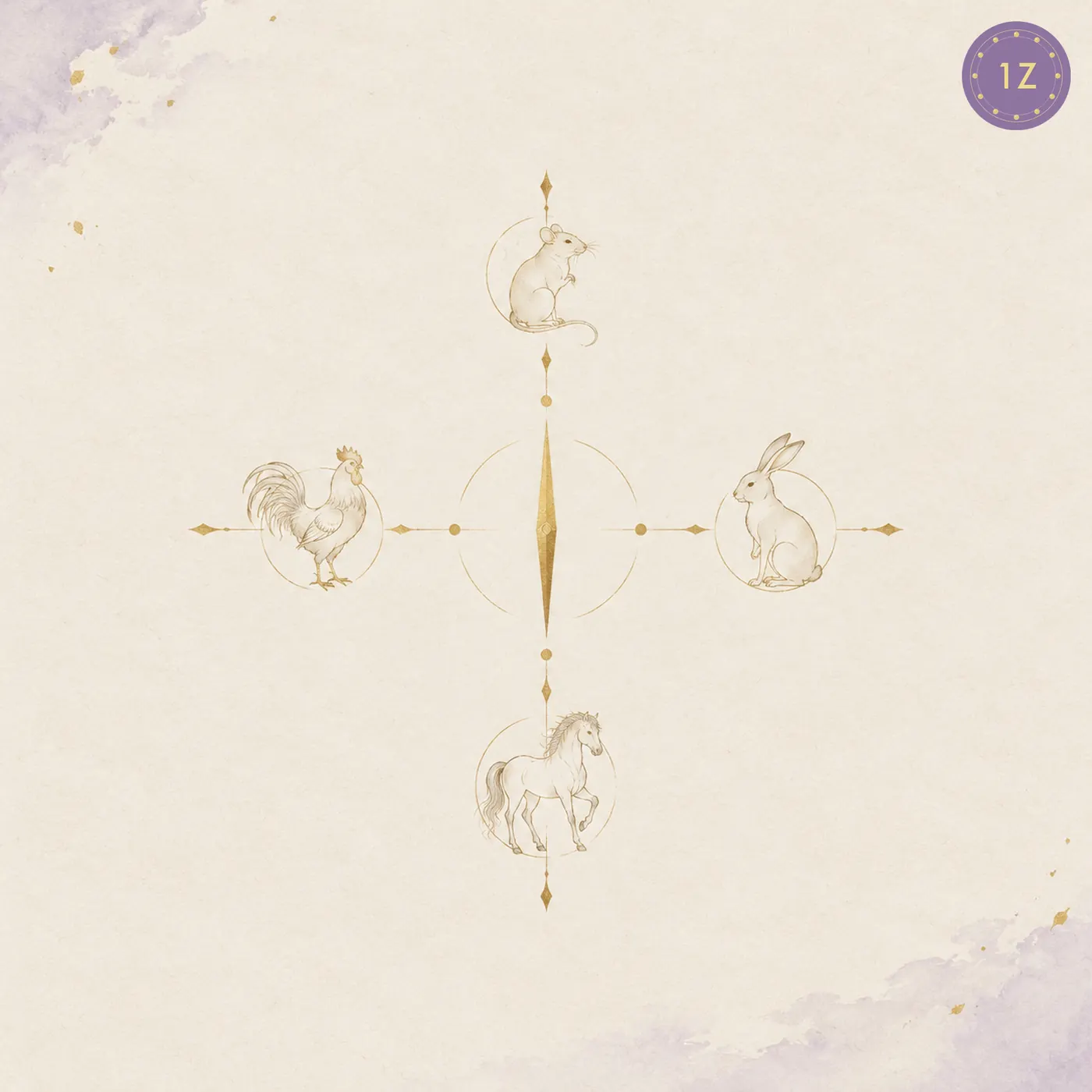
The mainstream table fits in five rows: count each yang Day Master down its twelve stations and read the fifth.
| Day Master | Element | Blade address | Animal | Stored main qi | Clash-trigger year |
|---|---|---|---|---|---|
| Jia (甲) | Yang Wood | Mao (卯) | Rabbit | Yi Wood | Rooster year |
| Bing (丙) | Yang Fire | Wu (午) | Horse | Ding Fire | Rat year |
| Wu (戊) | Yang Earth | Wu (午) | Horse | Ding Fire | Rat year |
| Geng (庚) | Yang Metal | You (酉) | Rooster | Xin Metal | Rabbit year |
| Ren (壬) | Yang Water | Zi (子) | Rat | Gui Water | Horse year |
One structural fact sits under the table: five stems, four addresses, all Cardinals, with the Cardinal set (子午卯酉) fully occupied and the Horse hosting two tenants. Mao, You, and Zi are single-qi branches, each holding exactly one hidden stem. The Horse is the exception, storing Ding Fire as main qi and Ji Earth as middle qi.
What stands out about the double tenancy at the Horse is that it is not an accident. Bing Fire and Wu Earth share their blade the same way they share their salary station at Si 巳, because fire and earth stems run one shared ladder in the twelve-stage table, cresting together. In my reading, the shared address is quiet proof that the blade belongs to the element’s cycle, not to any single stem.
One Ladder, Two Rungs: The Blade Looks Down at the Lu
The blade’s downstairs neighbor on the same ladder is the Lu (禄), the Official station, fourth of twelve. Classical readers give the two rungs different tempers: the Official station is where a stem holds office, the Prosperity station is where the element stands surplus to its own comfort. The addresses sit exactly one branch apart, always inside the same element pair. Read downward, the pairings run Jia from Mao 卯 back to Yin 寅, Bing and Wu Earth from Wu 午 back to Si 巳, Geng from You 酉 back to Shen 申, and Ren from Zi 子 back to Hai 亥.
Three confusions drive most blade misreadings. Growth (长生, station one) is a third thing entirely: Jia Wood sprouts at Hai 亥, draws its Lu at Yin 寅, and crests at Mao 卯. The storage branches host neither rung, so no chart files a blade or a Lu at Chen, Xu, Chou, or Wei, while a blade address and a Lu address can coexist as two stations, not one read twice.
The Rob Wealth Register Inside the Blade Branch
What the blade branch stores explains most of the star’s reputation. At every address the main qi is the Day Master’s own element in opposite polarity: Yi Wood in Mao, Ding Fire in Wu, Xin Metal in You, Gui Water in Zi. Against the Day Master that twin files as Rob Wealth (劫财), the peer register of the Ten Gods, in four of the five cases.
| Day Master | Blade address | Main qi files as | Middle qi files as |
|---|---|---|---|
| Jia (甲) | Mao (卯) | Rob Wealth | none, single qi |
| Bing (丙) | Wu (午) | Rob Wealth | Hurting Officer |
| Wu (戊) | Wu (午) | Direct Resource | Rob Wealth |
| Geng (庚) | You (酉) | Rob Wealth | none, single qi |
| Ren (壬) | Zi (子) | Rob Wealth | none, single qi |
Wu Earth is the one flip. The Horse’s main qi is Ding Fire, which relates to Wu Earth as Resource (Fire generates Earth, opposite polarity). The main qi therefore files as Direct Resource (正印), nurture rather than peer, while Ji Earth in the middle slot files as Rob Wealth. A Bing Fire Day Master reads the same Horse as Rob Wealth over Hurting Officer (伤官). One branch, two star pairs.
The money folklore follows the register: the classical Companion line, Friend and Rob Wealth together, shares what the Day Master controls, the Wealth line. Trend reading only: a chart wanting company reads borrowed strength, a chart already strong reads partners at the till.
Goat Blade by Pillar: Where the Address Sits Changes the Reading
Placement changes the reading. The classical palaces run in life stages, year as roots, month as parents and the career palace, day as self and the spouse palace, hour as children and the later years, so a blade colors the family field through roughly ages 1 to 16, the career palace through ages 17 to 32, marriage dynamics through roughly 33 to 48, and legacy projects from about 49 onward. The month branch carries the classical structure name Goat Blade Chart (羊刃格), assigned when it equals the Day Master’s blade address, the exact mirror of Jian Lu, which holds when the month branch carries the Lu.
One boundary keeps palace readings honest. The spouse palace is the day branch alone. A clash arriving at a month-branch blade therefore presses the career palace, never the marriage zone directly. In my files the month-blade pattern shows up as career intensity far more than anything domestic.
Governed and Ungoverned: The Classical Control Reading
Classical lore on the blade is a control story, told entirely in conditionals: a blade serving a Day Master that needs the strength, or answering to a strong governing star such as the Seven Killings line, classically reads as cutting ability, decisiveness, endurance under pressure, the will to finish. The same address in a chart already dense with its own element reads as heat with nowhere to go. Neither is a verdict on a person; how the control line works is its own topic.
The ungoverned side is quieter than the folklore suggests. A consultation file from our practice illustrates the temper: a 1961 Metal Ox manufacturing executive whose chart ran Earth feeding Metal in a loop his file describes as a perpetual-motion engine, who reached 50 with a cardiac warning after years without rest. The recovery cut his workload by 30 percent, added structured rest, and his company’s revenue grew during the recovery year. Nothing in his file turns on a blade address; the pattern is the temper.
In practice, an ungoverned blade shows up as a calendar problem long before it looks dramatic. I read the blade as borrowed power with a due date. Folk practice once attached physical rituals to blade-clash years; this site treats them as cultural history, never advice. The structural reading instead: strength on loan wants a schedule of repayment. An edge kept busy does not turn on its keeper.
Clash Activation: Only the Opposite Cardinal Wakes the Address
Activation is the narrowest part of the system. A dormant blade address wakes only under a branch clash, and the pattern that emerges from the Six Clash table is narrow, exactly one partner per branch, the cardinal standing opposite. A Rooster year clashes a Mao blade, a Rat year clashes a Wu blade, a Rabbit year wakes a You blade, a Horse year wakes a Zi blade. Storage years and growth years never touch a blade address by clash, because their clash partners are each other, never the Cardinals.
The 2026 year currently running demonstrates both sides of the axis. Bing Wu places the year branch on the Horse, itself the blade address of Bing and Wu Earth Day Masters, and the same Horse clashes the Rat, the blade address of every Ren Water Day Master, one year and two blade events. The arrival is not automatic activation for Bing and Wu charts, since a branch meeting its own address repeats rather than clashes. The Ren-side clash is the mechanical event, and branch clashes keep their classical priority.
Is the goat blade the same star as the Sword Star or the Yang Knife?
Yes: Goat Blade, Yang Blade, Yang Knife, and Sword Star all translate Yang Ren (羊刃), the fifth-station address of a yang Day Master. Goat Blade transliterates through the loan character. Sword Star translates the keen-edge sense, and 阳刃 is the classical spelling that skips the loan. The mainstream table underneath stays the same five addresses, whichever label sits on the cover. This site keeps goat blade in headings because it is the name readers search, and Yang Ren wherever the star itself is meant. One caution travels with the name list: tables that assign blades to all ten stems, or two addresses per yin stem, are variant schools and should not be mixed row-by-row with the mainstream five.
Does a goat blade mean I was born in the year of the Goat?
No, and the confusion is the most common misreading of this star. The blade is counted from the Day Master, the stem of the natal day pillar, never the birth-year animal, so your goat blade is a question about your day stem, not your year sign. The day stem cycles through all ten stems every ten days, so two people born in the same Goat year can carry different blades or none, and a Goat-year native’s branch Wei 未 hosts no blade for any stem. In the 2027 Ding Wei Goat year, no blade address receives a clash, because Wei’s clash partner is Chou, another storage branch.
How does the Rob Wealth connection in a goat blade bazi work?
The connection is a register fact before it is a money story. At four of the five addresses the stored main qi is the Day Master’s own element in opposite polarity, Yi for Jia, Ding for Bing, Xin for Geng, Gui for Ren, and that twin files as Rob Wealth (劫财) under the two-step Ten Gods check. The Horse then splits by owner. A Bing Fire Day Master reads Rob Wealth over Hurting Officer, while a Wu Earth Day Master reads Direct Resource over Rob Wealth. The classical Companion line shares what the Day Master controls, the Wealth register, hence the money-dispute folklore, though a weak Day Master is classically glad of the borrowed strength.
I have a strong Day Master and a goat blade. What do I actually do with it?
A strong Day Master with a goat blade wants two things from you: a workload and a rest schedule, in that order. A consultation pattern from this site shows the shape: a 1960 Metal Rat client, an engineer by training, spent years forcing a rigid chart through corporate structures, until a pivot at 42 moved him into hospitality, the missing domain. The restaurant chain that followed grew to 12 locations in 8 years, the same edge cutting material it was shaped for. Favor work that rewards decisiveness under pressure, schedule recovery before the calendar schedules it for you, and treat any clash-activation year, a Horse year for a Zi blade, as a quarter for pacing.
Conclusion
The goat blade was never about a goat. It is the Prosperity station of the five yang Day Masters: four Cardinal addresses, a Rob Wealth twin at four, a Resource flip at the fifth. It wakes only when the opposite cardinal clashes it. To see which address your own chart holds, run your birth data through the free 12Zodiacs BaZi calculator.
Sources
- Yuan Hai Zi Ping, Wikipedia: classical manual whose star chapters carry the blade.
- Sexagenary cycle, Wikipedia: the ten-stem, twelve-branch system the stations are counted in.
- Hong Kong Observatory calendar conversion: the calendar service our engine cross-checks against.