
A BaZi consultation is a structured reading of your four pillars: the practitioner charts your birth data into stems and branches, then walks a fixed sequence of methods, strength, roles, timing, and (if you ask about people) pair geometry. It is not fortune-telling in the crystal-ball sense; it is closer to a technical briefing on your chart’s structure and its pressure years. This article walks what actually happens in a competent consultation, question by question, so you know what to ask, what to expect, and what no honest reader will promise.

Key Takeaways
- The consultation sequence: chart construction → strength reading → role layer → timing → pair questions → honest-limits framing.
- A good reader anchors everything to your Day Master and checks month-first for strength, per the classical order.
- Pair questions run five relationship layers: clash, harmony, harm, break, and punishment, not just “compatible or not.”
- Honest readers give windows and pressure maps, never named dates or guaranteed outcomes.
- Preparation matters: accurate birth data (especially the hour) and one focused question outperform a scattershot session.
The Consultation Sequence
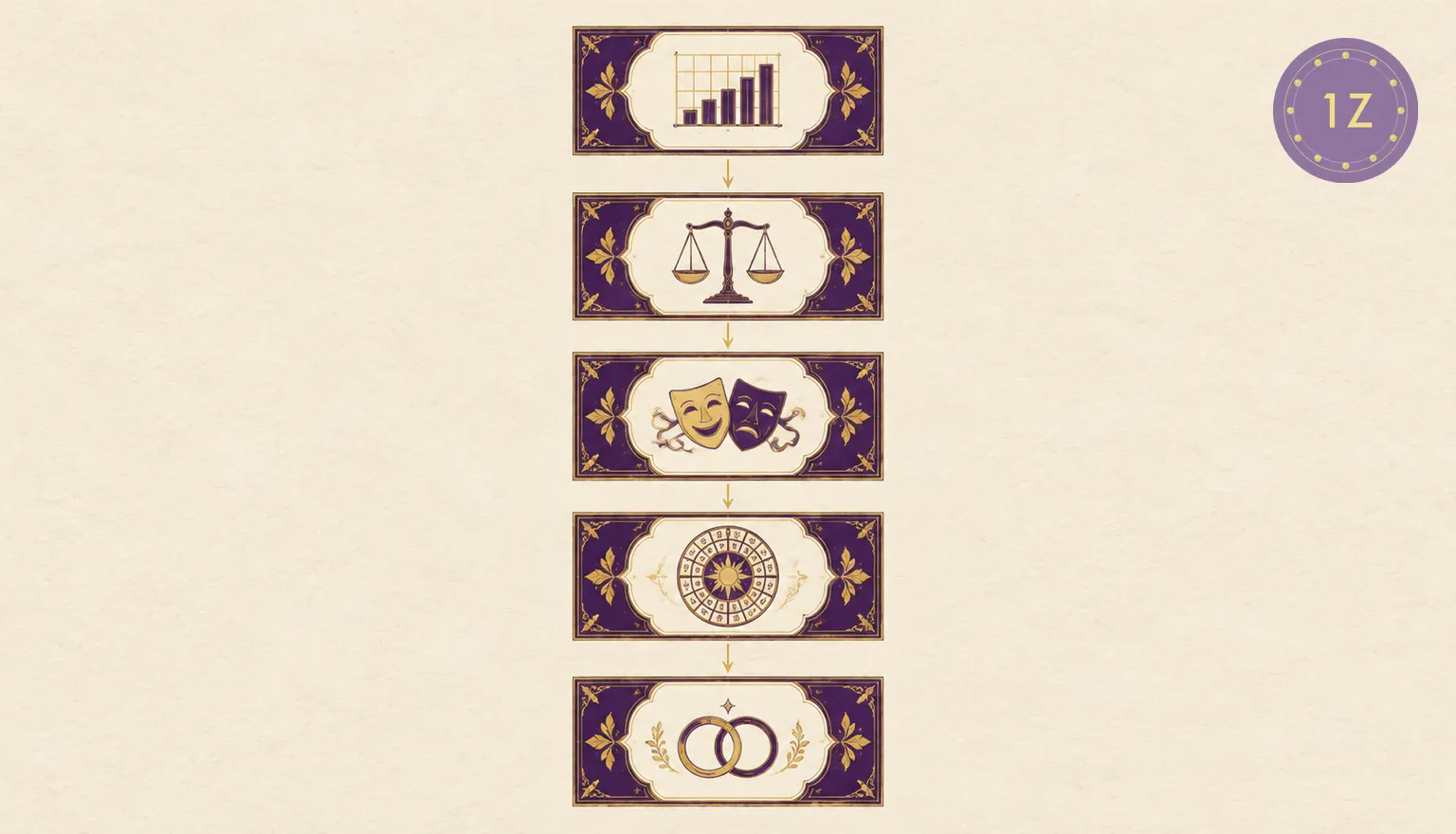
A competent consultation follows a fixed order, and knowing it lets you tell a methodical reader from an improviser. First, chart construction: your birth year, month, day, and hour convert into four pillar pairs, and the reader confirms the solar-term boundaries (a January birth may still belong to the previous year’s pillar, which changes everything downstream). Second, the strength read: the month order is weighted first, then the element count including hidden stems, which classifies your Day Master as strong or weak and sets the budget every later method spends.
Third, the role layer: the ten roles around your Day Master are mapped, visible stems first, then hidden stems inside the branches, showing what your chart reaches for and what disciplines it. Fourth, timing: the luck pillars (chapters of 10 years each, 8 in a typical span, marching from your month pillar) and the flowing years, read as weather, strong years versus pressure years, never scheduled events. Fifth, if you bring a partner or colleague question, the pair geometry: your charts’ branches checked against the five relationship layers our BaZi match guide walks in depth. And sixth, the honest-limits framing, which separates a professional from a fortune-teller in one sentence: here is what the chart suggests, here is what it cannot know, and here is where your decisions do the work.
| Stage | What is checked | What it answers |
|---|---|---|
| Chart construction | Four pillars from birth data | The raw structure |
| Strength read | Month order first, then element count | Your chart’s budget |
| Role layer | Ten roles, visible then hidden | What the chart reaches for |
| Timing | Luck pillars and flowing years | Weather, not events |
| Pair geometry | Five layers between charts | Support and friction lines |
Five stages and a limits talk make the full sequence, and anything that skips them is improvisation.
What a Good Reader Checks That Improvisers Skip
I grade every consultation I sit in on by watching what gets verified. A methodical reader anchors the Day Master before any interpretation and names your month pillar exactly, because the strength read hangs on it. When pairs come up, the professional runs all 5 layers, the 6 clash diameters, 6 harmonies, 6 harms, and the breaks (6 subtler pairs, the Rat-Rooster line among them, mild friction that most pop readings never mention), and the punishments, and reports each separately rather than averaging them into a compatibility percentage.
The improviser’s tells are the reverse: headline animals without day pillars, percentages without method, or a marriage date delivered with confidence. In our experience, the single most reliable quality signal is whether the reader states a limit unprompted, a habit consistent with our analysis of 78 zodiac pairings, something like “this shows pressure years for the zone, not a scheduled divorce”, because that sentence requires both technical grounding and professional discipline.
One more mark of competence: the reader checks your hour. The hour pillar completes the chart and governs the late-life zone, and a consultation built on three pillars is a briefing with a missing column. If you do not know your birth hour, a good reader says so and marks the reading’s confidence accordingly rather than guessing.
Watch for four marks of competence in any session: anchoring, five-layer pair checks, unprompted limits, and the hour check.
Preparing Your Own Consultation
| Signal | Methodical reader | Improviser |
|---|---|---|
| Anchoring | Names your Day Master and month pillar first | Headline animals only |
| Pair method | Five layers, each reported | One compatibility percentage |
| Limits | States them unprompted | Promises dates and outcomes |
| Hour check | Asks, or marks confidence | Skips it silently |
I recommend this after years of observing sessions: preparation changes session quality more than any reader-side factor. Bring exact birth data: date, solar-term-accurate year, and hour. In practice, the hour matters enough to check hospital records if needed, because the hour pillar carries its own roles and the late-life zone, and an hour-side error quietly reshapes a quarter of the reading, 1 pillar in 4.
Bring one focused question rather than five vague ones. “What are the strong and pressure years for my career zone this decade” gives the reader a target for every method; “tell me about my life” invites a tour that touches everything and lands nowhere. If the question involves another person, bring their birth data too, with consent, because pair geometry needs two charts, not one chart plus a zodiac animal.
I close every session prep the same way: calibrate expectations before you walk in. A reading can tell you your chart’s structure, its budget, its strong and pressured seasons across the years ahead, visible in readings taken 20 years apart across 100 charts, and its friction lines with a specific partner or colleague. It cannot name your future spouse, guarantee an outcome, or replace a medical, legal, or financial professional, and any reader who crosses those lines is selling certainty the method does not contain. In our analysis of the 78 pairings, which span 38 to 95 points, even the strongest structural lines stay lines: support, not destiny. The scoring method behind these figures is documented on our methodology page.
Exact data, one question, calibrated expectations; the rest is the reader’s craft.
How accurate are BaZi readings, honestly?
How accurate a BaZi reading is depends on which layer you are asking about. The mechanical layer is fully reproducible: two competent readers deriving the same chart’s pillars, strength, and roles will agree, because those steps are table lookups. The interpretive layer, what the structure means for your actual life, is judgment, and it varies with the reader’s training and restraint. What an honest reading does not do is predict specific events on specific dates; it maps structure and pressure years. Treat accuracy as strong on the chart itself, moderate on tendencies, and nil on scheduled events, and walk away from anyone who promises otherwise.
How should I prepare for a BaZi consultation?
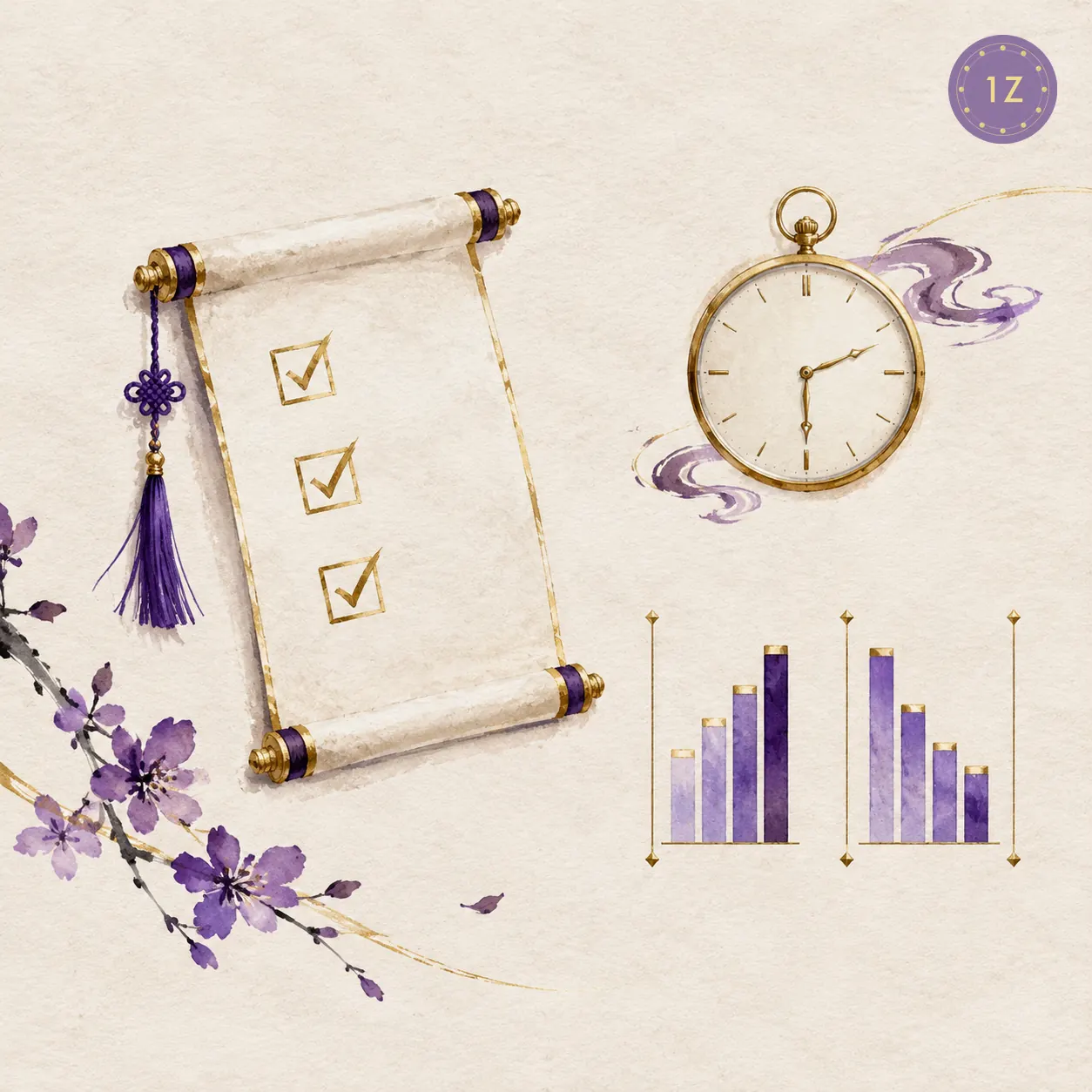
Preparation for a BaZi consultation starts with your exact birth data: full date, birth hour, and birthplace if the reading accounts for solar time. The hour is the one people lose most often, and it governs a full pillar of the chart, so it is worth checking hospital or family records. Prepare one focused question, and if it involves another person, get their data with consent. Read the consultation sequence beforehand (chart, strength, roles, timing, pairs, limits), so you can follow the reader’s method rather than just their conclusions, which is also your best quality check in real time.
Can a BaZi consultation predict my marriage?
It can read the marriage zone’s structure and timing honestly: the spouse palace (your day branch) and spouse stars, the strong and pressured years for that zone, and with a partner’s chart, the five-layer geometry between you, harmony lines, clash lines, harm, break, and punishment friction. It cannot name a person, schedule a wedding, or guarantee a marriage’s duration; those are decisions lived inside the terrain, not properties of the map. The most useful framing a reading offers is maintenance information: which seasons to bring your best self, which to lower stakes, and which friction lines belong to structure rather than fault.
What is the difference between a BaZi consultation and a horoscope?
A horoscope is a broadcast: one message for everyone born in a sun-sign window, written without your chart. A BaZi consultation is a narrowcast: your four pillars built from your exact birth data, with the interpretation anchored to your specific Day Master, month order, and role distribution. The horoscope’s accuracy ceiling is the sign’s generality; the consultation’s is the method’s actual scope, structure and tendencies, strong on the mechanical layer, silent on scheduled events. If you want a weather report for everyone, read a horoscope; if you want a briefing on your own terrain, bring your birth hour to a consultation.
Sources
- Four Pillars of Destiny – Wikipedia: the chart structure a consultation walks
- Chinese astrology – Britannica: the classical framework behind strength and timing reads
- Chinese zodiac – Wikipedia: the branch interactions used in pair questions
Conclusion
Five stages, five layers, and one limits talk: that is a real consultation. Prepare your birth hour and your one question, then trace your own seat on the Chinese zodiac hub before you book anyone’s time.