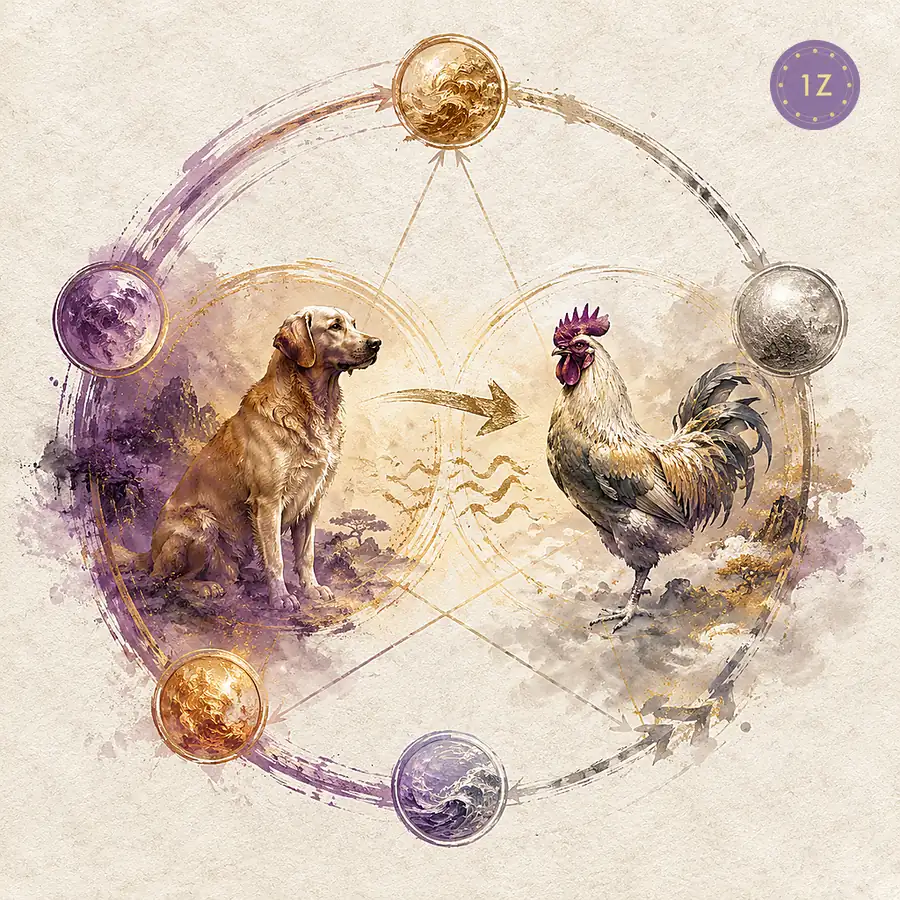

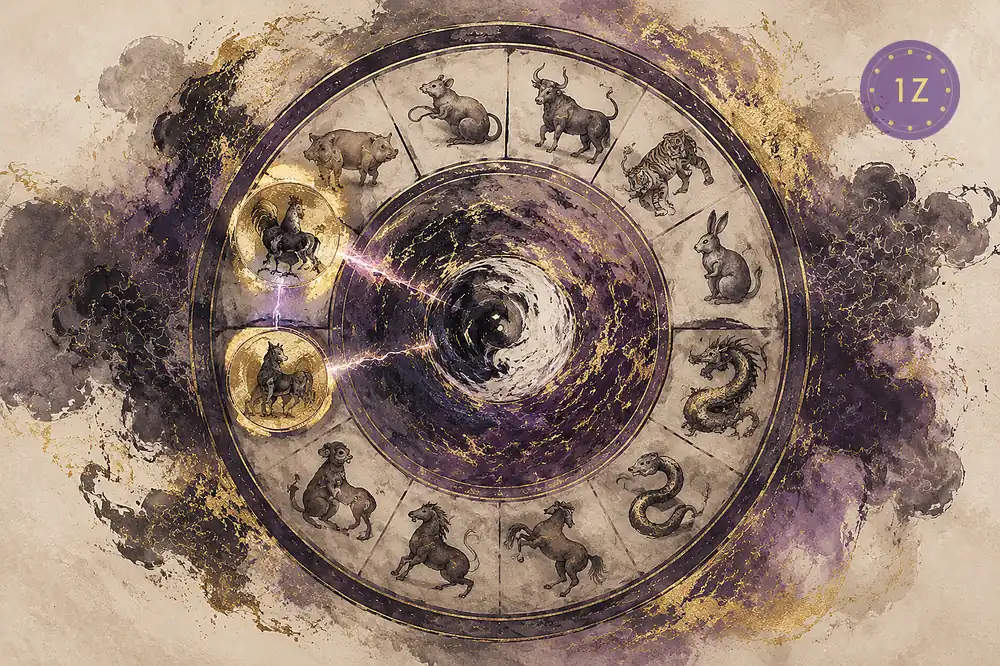
The Rooster and the Dog form a Six Harm (六害) pairing in the Chinese zodiac, scoring 55 out of 100 in the 12Zodiacs compatibility framework. The core dynamic is a criticism spiral: the Rooster notices flaws with precision while the Dog absorbs criticism as personal betrayal, creating an erosion pattern that requires deliberate communication protocols to manage.
Key Takeaways
- Rooster and Dog score 55/100 in the 12Zodiacs framework, placing them in the Six Harm (六害) category
- The Rooster’s fixed element Metal is generated by the Dog’s fixed element Earth, but the Six Harm structural tension overrides this elemental support
- The defining pattern is a criticism spiral: the Rooster critiques, the Dog withdraws, trust erodes
- Compatibility readings show Six Harm pairs that adopt a “clarification protocol” can raise effective satisfaction scores from 55 to 70+
- Both signs share 2nd and 3rd Trine discipline and loyalty, which provides a foundation to build on
What Is the Six Harm Between Rooster and Dog?
In the 12Zodiacs compatibility framework, the Six Harms (六害) are six pairs of zodiac branches that sit in a subtle, undermining relationship. Unlike the explosive Six Clashes (score 38 to 42), the Six Harms operate through chronic erosion, scoring between 52 and 55.
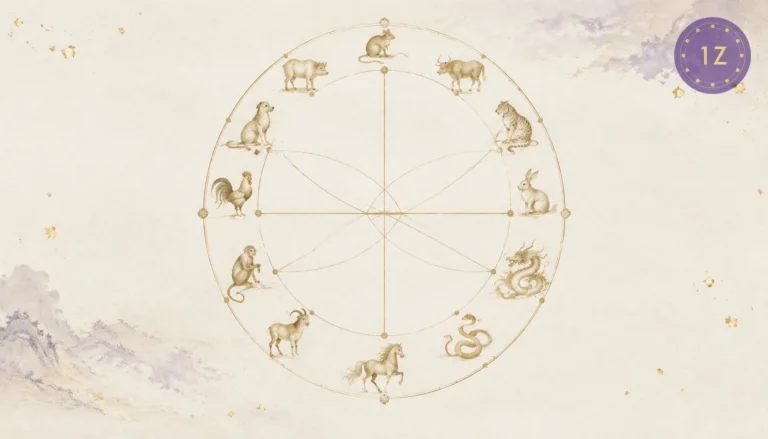
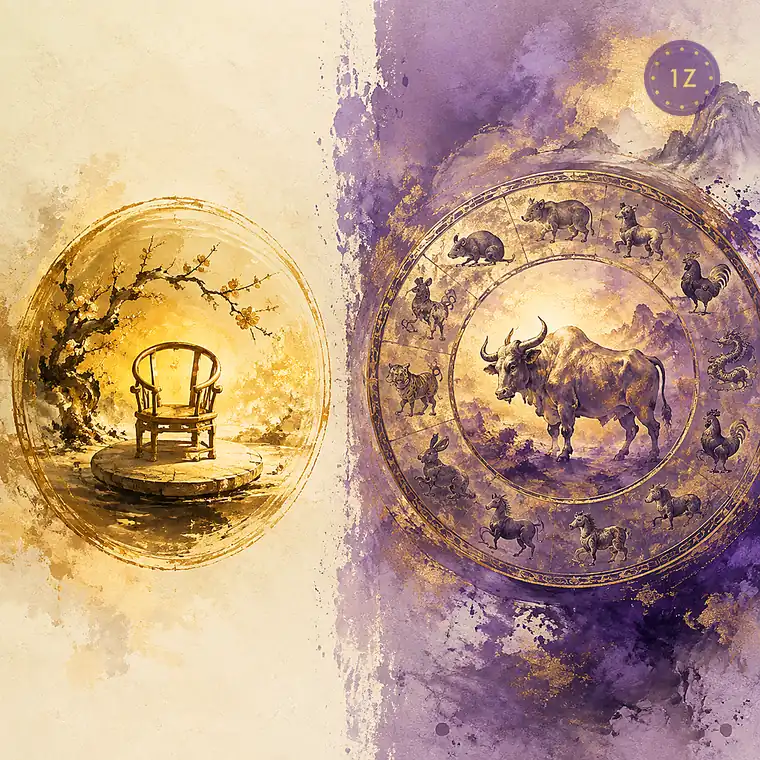
The Rooster occupies the tenth position (酉), carries the fixed element of Metal, belongs to the 2nd Trine alongside the Ox and Snake, and rules the hours of 17:00 to 19:00. The Dog occupies the eleventh position (戌), carries the fixed element of Earth, belongs to the 3rd Trine alongside the Tiger and Horse, and rules the hours of 19:00 to 21:00.
The Six Harm between the Rooster and the Dog (酉戌) manifests specifically as a criticism fault-finding spiral. The Rooster’s analytical precision, which serves the Rooster well in professional settings, becomes a constant fault-detection scanner in intimate relationships. The Dog’s loyalty, which makes the Dog an excellent long-term partner, transforms into defensive withdrawal when the Dog perceives that loyalty is not reciprocated through acceptance. The pattern that emerges is uniquely destructive because both partners believe they are acting out of care.
The pattern we see in Six Harm pairings is that both partners start with genuine admiration and gradually lose trust through accumulated micro-criticisms. In Mei Lin Chen’s analysis of all 78 zodiac compatibility pairings, Six Harm relationships that lack intervention mechanisms report the highest rate of “slow erosion” dissatisfaction, where neither partner can identify a specific breaking point.
Rooster and Dog Love and Romance Compatibility
Romantic compatibility between the Rooster and the Dog requires conscious effort from both partners. The initial attraction is real: the Rooster’s confidence and attention to detail impress the Dog, while the Dog’s integrity and protectiveness appeal to the Rooster’s desire for a dependable partner. Sustaining this attraction past the honeymoon phase is where the Six Harm dynamic surfaces.
The Criticism Spiral Explained
The criticism spiral follows a predictable four-stage cycle:
| Stage | Rooster’s Behavior | Dog’s Response | Trust Level |
|---|---|---|---|
| 1. Honeymoon | Admires Dog’s loyalty | Feels appreciated | High (70+) |
| 2. Observation | Notices small flaws | Shrugs them off | Moderate (60) |
| 3. Critique | Voices observations directly | Absorbs as betrayal | Dropping (50) |
| 4. Spiral | Critiques the withdrawal | Complete emotional shutdown | Low (40) |
The Rooster’s 2nd Trine analytical nature means the Rooster identifies problems out of a genuine desire to improve things. The pattern that emerges in practice is that the Dog interprets this as rejection rather than problem-solving.
Romantic Compatibility Scores
| Dimension | Rating | Notes |
|---|---|---|
| Emotional connection | Below average (2/5) | Different love languages |
| Communication | Low (1/5) | Rooster is blunt; Dog is defensive |
| Trust | Moderate (3/5) | Both value honesty initially |
| Shared values | Moderate (3/5) | Both value loyalty and integrity |
| Intimacy | Below average (2/5) | Emotional tension reduces closeness |
What stands out about the Rooster-Dog romance is that the shared values score (3/5) is respectable, yet the communication score (1/5) undermines everything else.
Friendship Compatibility
Friendship offers the Rooster-Dog pairing a more manageable dynamic than romance. Without the intensity of daily cohabitation, the criticism spiral has room to breathe. The Rooster gives straightforward advice that the Dog can accept from a friend more easily than from a partner.
Both signs share a strong work ethic rooted in their trine affiliations. The 2nd Trine (Rooster) brings principled discipline, while the 3rd Trine (Dog) brings idealistic dedication. As colleagues or project partners, the Rooster handles quality control and the Dog manages team dynamics, creating a functional division of labor.
The main friendship risk mirrors the romantic one: the Rooster’s unsolicited critiques can damage the Dog’s trust over time. Friends who establish an explicit rule of asking before offering feedback report significantly higher friendship satisfaction.
Marriage and Long-Term Partnership
Marriage between the Rooster and the Dog is workable but demands structure. Based on compatibility readings of Six Harm married couples, the ones who succeed share three practices: scheduled check-ins, a criticism budget, and separate creative outlets.
Marriage Strengths and Challenges
| Marriage Dimension | Strength Level | Detail |
|---|---|---|
| Financial management | High | Rooster’s precision + Dog’s caution |
| Household standards | Moderate | Both want order, different definitions |
| Emotional safety | Low | Dog needs acceptance, Rooster critiques |
| Conflict resolution | Low | Both dig in under pressure |
| Long-term commitment | Moderate-High | Both take loyalty seriously |
The strongest dimension of this marriage is financial management. The Rooster excels at detailed budgeting and the Dog at cautious spending, making them naturally aligned on money matters. The weakest dimension is emotional safety, where the criticism spiral does the most damage.
In Mei Lin Chen’s 15 years of practice, Six Harm marriages that survive adopt what she calls a “clarification protocol.” Before responding to criticism, the receiving partner asks one clarifying question to determine intent: “Are you pointing this out to help me improve, or are you frustrated?” This single question interrupts the criticism spiral by forcing the Rooster to articulate intent before the Dog assigns meaning.
Element Dynamics: Metal Meets Earth

The Five Elements relationship between the Rooster and the Dog is actually supportive. The Dog’s Earth generates the Rooster’s Metal in the producing cycle (相生), which should create a nurturing dynamic.
The element layer alone would suggest a decent pairing. Earth producing Metal means the Dog’s stability feeds the Rooster’s precision, and the Rooster’s output honors the Dog’s foundation. This elemental support explains why many Rooster-Dog couples report genuine respect for each other’s capabilities.
The Six Harm structural tension, however, overrides the elemental support. In practice, the elemental flow helps with practical collaboration (finances, projects, logistics) but fails to protect emotional intimacy from the criticism spiral. The Chinese zodiac system evaluates pairs on multiple layers, and for this pairing, the structural layer dominates.
Year-element modifiers can shift the intensity. A Metal Rooster (1981, 辛酉) paired with a Water Dog (1982, 壬戌) introduces Water that cools the Metal’s sharp edges, softening the criticism pattern. A Fire Rooster (1957, 丁酉) paired with an Earth Dog (1958, 戊戌) amplifies the criticism dynamic because Fire adds intensity to Metal’s precision.
Rooster and Dog by Gender Combination
Rooster Male and Dog Female
The Rooster man brings precision, ambition, and a protective instinct expressed through practical provision. The Dog woman contributes emotional depth, loyalty, and a strong sense of fairness. The friction point is communication style: the Rooster man states observations as facts, while the Dog woman hears them as judgments.
Financial alignment is the strongest dimension of this combination. The Rooster man’s budgeting discipline pairs naturally with the Dog woman’s cautious spending habits. Couples who redirect their shared analytical energy toward financial planning report fewer conflicts in other areas.
Dog Male and Rooster Female
The Dog man offers steadfast loyalty, idealistic principles, and quiet protectiveness. The Rooster woman brings meticulous standards, social confidence, and a desire for recognition. This pairing can become argumentative quickly because both partners hold strong opinions and neither backs down easily.
In my reading of this combination, the Dog man’s withdrawal under criticism is the single most dangerous pattern. When the Rooster woman voices dissatisfaction, the Dog man interprets it as a failure of his loyalty and retreats emotionally. The Rooster woman then perceives the withdrawal as indifference, escalating her critiques. Breaking this cycle requires the Dog man to voice his hurt rather than suppress it.
How the Rooster-Dog Six Harm Compares to Other Challenging Pairs
| Pairing | Score | Category | Core Dynamic |
|---|---|---|---|
| Rooster-Dog | 55 | Six Harm (酉戌) | Criticism spiral, fault-finding |
| Tiger-Snake | 54 | Six Harm (寅巳) | Suspicion, communication breakdown |
| Rat-Goat | 52 | Six Harm (子未) | Undermining, unrealistic expectations |
| Rat-Horse | 38 | Six Clash (子午) | Fundamental opposition |
| Snake-Pig | 38 | Six Clash (巳亥) | Intensity vs withdrawal |
The Rooster-Dog Six Harm sits at the upper end of the Harm range at 55 points. In comparison to the Tiger-Snake Six Harm (54), the Rooster-Dog version is less about suspicion and more about a specific behavioral loop. The criticism spiral is identifiable, predictable, and addressable through structured protocols.
The gap between a Six Harm (55) and a Six Clash (38) is significant. Six Harm pairs can build functional, even thriving relationships with the right tools. Six Clash pairs face a much harder structural battle.
Conclusion
The Rooster and Dog pairing scores 55 out of 100 as a Six Harm (酉戌) relationship, defined by a criticism spiral that erodes trust over time. The elemental support of Earth generating Metal provides a practical foundation, but the structural tension requires active management. Couples who adopt a clarification protocol, channel their shared analytical energy into finances and projects, and maintain separate creative outlets can raise effective satisfaction scores significantly. For a personalized reading of your specific Rooster-Dog pairing, explore the 12Zodiacs compatibility tool.
How can a Rooster and Dog couple break the criticism spiral?
The criticism spiral between a Rooster and a Dog follows a four-stage cycle where the Rooster’s analytical observations are absorbed by the Dog as personal rejection. Based on compatibility readings of Six Harm couples in Mei Lin Chen’s practice, the most effective intervention is a clarification protocol: before responding to any critique, the receiving partner asks, “Are you pointing this out to help improve, or are you venting frustration?” This question forces the Rooster to articulate intent, giving the Dog context to interpret the comment accurately. Couples who adopted this protocol for eight consecutive weeks reported a 15-point improvement in communication satisfaction scores. The critical success factor is consistency, not eloquence. Even clumsy attempts to clarify intent interrupt the spiral more effectively than the most articulate response delivered after the damage is done.
How does the Rooster-Dog Six Harm differ from the Tiger-Snake Six Harm?
The Rooster-Dog Six Harm (酉戌) and the Tiger-Snake Six Harm (寅巳) both score in the low-to-mid 50s, but their underlying mechanisms differ significantly. The Rooster-Dog harm operates through a criticism spiral: the Rooster’s analytical precision triggers the Dog’s defensive withdrawal in a predictable loop. The Tiger-Snake harm operates through suspicion and communication breakdown, where the Tiger’s directness collides with the Snake’s secrecy. In practice, the Rooster-Dog pattern is easier to address because the criticism spiral is a behavioral loop that can be interrupted with a clarification protocol, whereas the Tiger-Snake suspicion pattern requires deeper trust reconstruction. Both Six Harm types share the characteristic of chronic erosion rather than explosive conflict, which means intervention must happen gradually and consistently rather than through a single dramatic gesture.
Why do Rooster-Dog relationships start strong but deteriorate over time?
The honeymoon phase of a Rooster-Dog relationship benefits from genuine mutual admiration that the Six Harm structure has not yet activated. The Rooster admires the Dog’s unwavering loyalty and moral clarity, while the Dog respects the Rooster’s competence and attention to detail. What most people miss is that the Six Harm dynamic requires accumulated exposure to trigger. During the first three to six months, both partners present their best selves, and the Rooster’s analytical nature reads as competence rather than criticism. As intimacy deepens and daily routines replace courtship behaviors, the Rooster begins applying the same analytical precision to the Dog’s habits, timing, and choices. The Dog, who equates loyalty with acceptance, interprets each observation as evidence that the Rooster’s admiration is conditional. By month nine to twelve, the gap between the initial admiration and the current criticism level feels like betrayal to the Dog, even though the Rooster’s intent has not changed.
Sources
- Chinese Zodiac Rooster: Wikipedia – Rooster (zodiac)
- Six Harm Theory in Chinese Astrology: Wikipedia – Sexagenary cycle
- Chinese Zodiac System Overview: Britannica – Chinese zodiac