
An age clasher in BaZi is any birth branch standing in one of four fixed friction contacts with Tai Sui (太岁), the Earthly Branch presiding over the current year: sharing its seat, opposing it, punishing it, or harming it. English star lists print the label with little machinery behind it; on the 12Zodiacs tables it is pure branch geometry. In the 2026 Bing Wu year, the Fire Horse, the contacts fall on the Horse, Rat, Ox and Rabbit; the 2027 Ding Wei year rotates them to the Goat, Ox, Dog and Rat.

Key Takeaways
- An age clasher year is a branch-geometry fact, not a verdict: your branch meets the year’s presiding branch through Zhi (same seat), Chong (opposition), Xing (punishment) or Hai (harm).
- In 2026 the contact seats are the Horse, Rat, Ox and Rabbit; in 2027, the Goat, Ox, Dog and Rat.
- Under our 78-pair scoring framework every opposition contact sits at 38 and every harm contact inside the 52 to 55 band: friction with a known shape, never a doom sentence.
- The seat runs Li Chun to Li Chun, February 4 to February 4, regardless of birthdays.
What the Term Age Clasher Actually Points To
The label circulates in English BaZi references as a symbolic-star name beside aliases such as Major Squander or Day Breaker. Strip the label and the question is structural: how the year’s ruling branch relates to your chart’s branches. That ruling branch is Tai Sui, in the stem-branch calendar simply the year’s own Earthly Branch, so 2026 reads as Bing Wu (丙午), seat 43 of the 60-pairing cycle. Seat 44, Ding Wei (丁未), follows for 2027.
The folk layer deserves one honest paragraph before the mechanics. Tai Sui literally names stars tracked opposite Jupiter through its roughly 12-year circuit, later personified as sixty year-generals built from twelve divisions times five elements:
“Tai Sui is a Chinese name for stars directly opposite the planet Jupiter (Chinese: 木星; pinyin: Mùxīng) in its roughly 12-year orbital cycle.”
Source: Wikipedia, “Tai Sui”
Taoist practice holds that people whose birth signs stand in the wrong relation to the year’s presiding general face disturbances, applied to four of the twelve signs each year, exactly the structure the branch tables produce. The umbrella term for holding any contact is Fan Tai Sui (犯太岁), offending the year, and your own animal’s year returning, the best-known case, is Zhi Tai Sui, with the traditions side covered in the Ben Ming Nian guide.
The Four Tai Sui Contacts and Their Mechanics
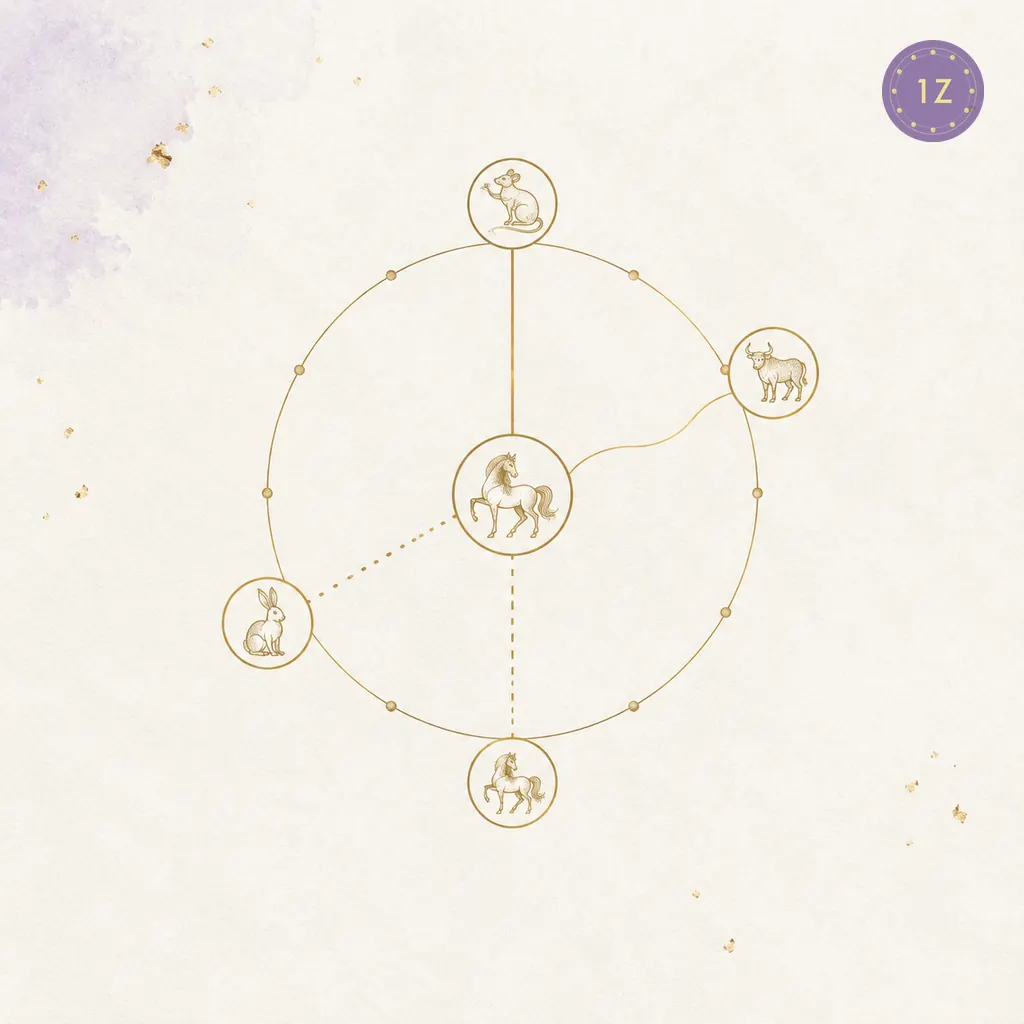
| Contact | Chinese | Branch rule | 2026 holder | Reading |
|---|---|---|---|---|
| Zhi (same seat) | 值太岁 | Identical to the year’s branch | Horse | Shared-seat amplification |
| Chong (opposition) | 冲太岁 | Six Clash pair with the year | Rat | Open, negotiable opposition |
| Xing (punishment) | 刑太岁 | Punishment group or self-punishment | Horse | Inward-facing friction |
| Hai (harm) | 害太岁 | Six Harm pair with the year | Ox | Slow seam erosion |
| Po (break) | 破太岁 | Six Break pair with the year | Rabbit | Mild internal snagging |
Chong is the loudest contact. Six Clash pairs sit diametrically across the wheel; the clash mechanics page works them in depth. The complete Rat-Horse pair analysis scores 38 out of 100 under our 78-pair framework, and so does every other clash pairing, the only relationship family with zero variance. The uniformity says the score measures structure, not misfortune.
Xing and Hai are quieter. Punishment contacts come from fixed groups: the Chou-Xu-Wei and Yin-Si-Shen triangles, the Zi-Mao pair, and four self-punishing branches, Chen, Wu, You and Hai. Punishment layers carry no pair score; the framework counts four bond families and leaves punishment outside by design.
Harm contacts have an elegant derivation: your harm partner is the branch that clashes your harmony partner, so the Ox harms the Horse because the Ox clashes the Goat, the Horse’s secret friend. The compatibility hub lays out the full six-harm set. The 2026 reading sits on the Ox-Horse pair page at 54, inside a harm band three points wide under the same scoring framework. Punishment and harm are seam friction, the kind that wears rather than bursts.
Po, the fifth row, appears because some schools fold it into the umbrella: the lightest layer, with the 2026 午卯 break in the strongest break tier yet still below harm. The six break pairs reference sets the full scale.
The gap between a 38 and a 54 is not intensity. It is geometry, and geometry is what tailors the response.
Who Holds an Age Clasher Contact in 2026, Branch by Branch
| Sign | 2026 contact | Mechanics | Framework score |
|---|---|---|---|
| Horse | Zhi plus Xing | Seat shared, 午午 self-punishment | 76 same-sign |
| Rat | Chong | Zi-Wu diametric opposition | 38 |
| Ox | Hai | Chou-Wu harm | 54 |
| Rabbit | Po | 午卯 break, strongest tier | No pair score, lightest |
| Tiger, Dog | Support | Trine allies of the Horse seat | 88 to 89 |
| Goat | Support | Secret friend of the Horse | 95 |
The Horse carries the only doubled seat of the year. Sharing the year’s branch is the amplification every twelfth year brings, and Wu is one of just four branches that also punish themselves, so the return arrives with an inner-friction rider. The doubling, in my reading, is a pacing instruction: slower launches, double-checked commitments, never a warning light. A Rat branch faces the outside-in version, a year that actively opposes it, making negotiation with deadlines, authorities and markets the year’s work. (When the full pillar repeats, stem and branch together, classical texts call the echo Fu Yin, 伏吟.)
Support seats decide how friction lands. Tiger and Dog branches ride with the Horse in its trine alliance at 88 to 89 under our scoring framework. The Goat is the Horse’s secret friend at 95, arriving with its own year immediately after. When I map a year for a client, I mark friction seats first and support seats second, because supports set the recovery speed.
One clock note: the Horse seat holds office from one Li Chun (立春, the February 4 solar term crossing) to the next, while the civil animal year switches at Chinese New Year, February 17, 2026. The animal follows the New Year date, the pillar follows the solar term, so a birth between those two dates reads as a Snake while already carrying the Horse seat’s pillar. Corridor births should check both dates before claiming a contact.
The 2027 Preview: Age Clasher Seats One Over, Two Signs Doubled
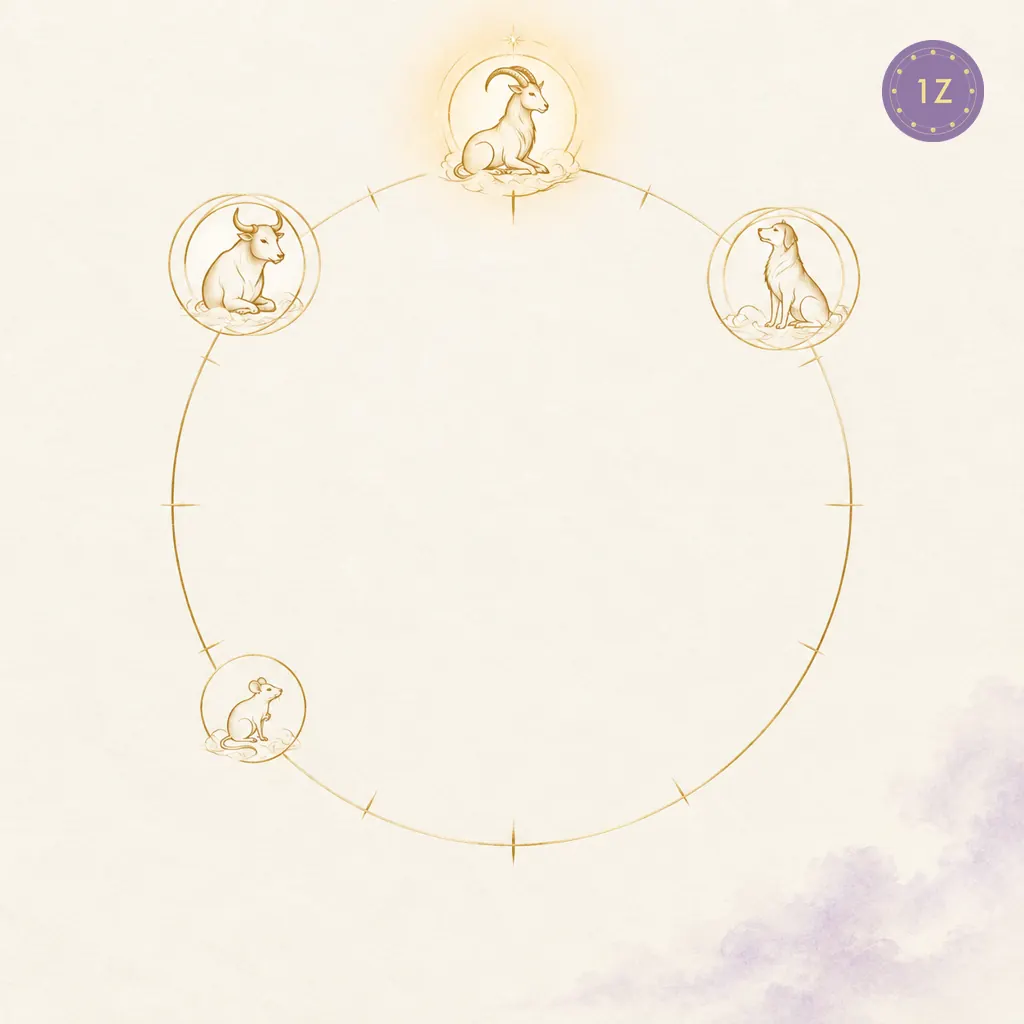
| Sign | 2027 contact | Mechanics | Framework score |
|---|---|---|---|
| Goat | Zhi | Seat shared, no self-punishment layer | 76 same-sign |
| Ox | Chong plus Xing | Chou-Wei clash plus punishment triangle | 38 |
| Dog | Xing plus Po | Punishment plus Wei-Xu break | No pair score, doubled |
| Rat | Hai | Zi-Wei harm via the Horse bond | 52 |
| Rabbit, Pig | Support | Trine allies of the Goat seat | 88 to 89 |
| Horse | Support | Secret friend of the Goat | 95 |
The Goat year is gentler at its own seat: Wei does not punish itself, so the return runs as plain amplification without the inner rider the Horse carried. The interest moves to the edges, where the Ox stacks two contacts, opposition plus punishment, and the Dog stacks punishment plus break. That makes 2027 a year of doubled commitments rather than doubled luck, the Rat’s harm seat repeating at 52 through the Goat’s bond with the Horse.
Every seat move reshuffles the fixed geometry: one opposition holder, one harm holder, two trine allies, plus the same-seat return, so planning starts a year early. For Ox and Dog natives with major 2027 decisions queued, the doubled layer is one reason to front-load what can finish in 2026 and give contested matters room to breathe.
Is an Age Clasher Year an Unlucky Year?
Bad luck is the wrong unit of measurement, and the reasoning is structural. Across our 78-pair dataset, each sign’s year activates exactly one clash, exactly one harm and two trine allies, a fixed geometry, while 48 of 78 pairs, about 62 percent, share no classical branch relationship at all. The calendar is mostly neutral territory with four marked seats in 2026 and again in 2027, and the contact marks where attention concentrates.
A family I worked with shows the practical difference. A father born in the 1988 Earth Dragon year and his son kept colliding over jurisdiction in the family business, the son, a Water Dog born in 1982, carrying the annual opposition whenever the Dragon seat came around while the father held the seat itself. The resolution was territorial, separate divisions with separate authority, not ritual. The contact told them where the squeeze would repeat; management decided how it ended.
The traditional response is culture: temples hold An Tai Sui (安太岁) pacifying ceremonies at the year’s turn, documented alongside Ben Ming Nian’s red accessories in Wikipedia’s Tai Sui entry. The practitioner’s version is quieter: mark the seat, slow the launches, audit the zone the contact touches. For most Horse natives in 2026, that means deliberate cooling, fewer simultaneous commitments, with trine supporters as the recovery bench.
How the Contact Meets Your Full BaZi Chart
The sign-level shortcut, Rats clash in Horse years, uses the year branch alone, but a full chart gives every pillar a voice. If any of your four pillars carries a branch in contact with the year’s seat, that pillar’s zone is under pressure. The palace map is fixed: the year pillar for roots and the childhood frame, the month pillar for parents and career, the day pillar for the self and the spouse palace, the hour pillar for children and later years. A 2026 Rat branch in your month pillar reads as career-frame pressure, and the spouse palace enters only when your day branch itself is the contacted seat, never by splash from another pillar.
Two further layers sit beside the contacts: the year’s stems and elements interact with your Day Master through the favorable-element check, covered in the Day Master explainer, which can soften or sharpen anything the contacts announce. Annual stars form a third layer keyed to trine frames; the annual stars guide draws that map. To read the stack, pull your four pillars from the free BaZi calculator, mark which branches hold the year’s four seats, then check the element question: geometry tells you where, balance tells you how much.
How do I calculate my BaZi age clasher contact for any year?
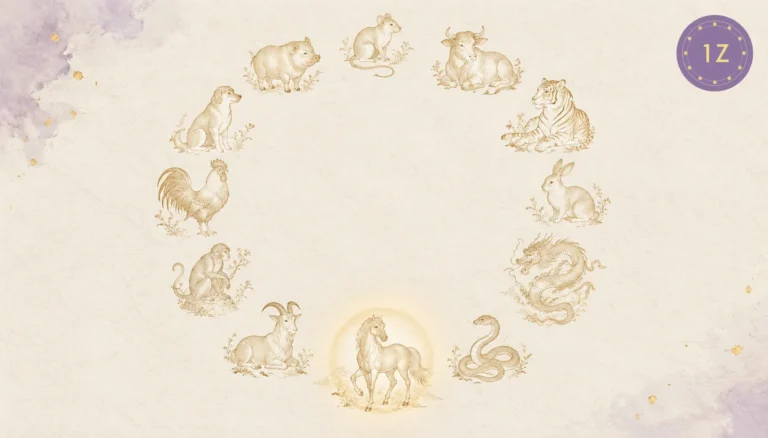
Start from the year’s branch, then count. The same-seat contact belongs to anyone sharing that branch, and the opposition holder sits six seats away on the 12-animal wheel, so in a Horse year you count Goat, Monkey, Rooster, Dog, Pig, Rat and land on the Rat. Harm and punishment holders come from the fixed tables above, their groups triangular or paired, not diametric. Two boundary rules protect the arithmetic: your animal follows Chinese New Year on February 17, 2026, while the year pillar and its seat follow Li Chun, the February 4 crossing, and the check should run against all four pillars, since a month-branch contact lights the career frame even when your sign sits clear.
Is the age clasher the same star as the Day Breaker?
The names overlap in the wild but answer different questions. English symbolic-star references often print Age Clasher, Major Squander and Day Breaker as near-synonyms, some deriving the star from the day branch rather than the year’s seat. Mechanically, everything these names gesture at reduces to branch opposition: one seat directly across the wheel from another, the same six pairs between two natal pillars or between your branch and the year’s. What differs is the anchoring, since a natal-chart label describes fixed wiring while an annual contact describes this year’s weather against that wiring. Verify the geometry on a wheel in seconds.
Do age clasher years actually bring bad luck?
Bad luck is the wrong unit of measurement; the framing that survives contact with the tables is probabilistic. Taoist practice describes disturbances for the four signs in contact with the year, and that framing is tendency rather than guarantee, a limitation worth stating. Our scoring framework backs the softer reading: all six opposition pairs score an identical 38, impossible if outcomes tracked individual fate rather than structure. In my own files, contact years read strongest as scheduling information: which projects to stagger, which negotiations to front-load. The cadence is fixed: a branch’s own seat and its opposite alternate every six years, so a Rat reads the Horse seat in 2026 and 2038 around its own seat in 2032. The contact is real, the outcome is management.
Conclusion
An age clasher year is the calendar naming a seat, not a sentence: the geometry fixed, the reading management. For a map of your own seats across all four pillars, start with the free BaZi calculator.
Sources
- Wikipedia, “Tai Sui”: Jupiter-opposite star definition, sixty year-generals, An Tai Sui practice, four-of-twelve annual structure.
- Wikipedia, “Sexagenary cycle”: the 60-pairing stem-branch calendar behind each year’s presiding branch.
- Wikipedia, “Solar term”: Li Chun as the seat-change boundary.
- Purple Mountain Observatory: astronomical calendar authority behind our year-boundary data.